
Date: 2026-03-03 Page is: DBtxt003.php txt00029417
CANADA
WW2 CANADIAN CORVETTES ... Canada's Frontline
German U Boat Crews Laughed At Canadian Corvettes — Until They Started Disappearing In The Atlantic
WW2 CANADIAN CORVETTES ... Canada's Frontline
German U Boat Crews Laughed At Canadian Corvettes — Until They Started Disappearing In The Atlantic
Original article: https://www.youtube.com/watch?v=Lxj9BpenGGY
Canada's Frontline
Oct 30, 2025
451 subscribers ... 1,187 views ... 37 likes
German U Boat Crews Laughed At Canadian Corvettes — Until They Started Disappearing In The Atlantic
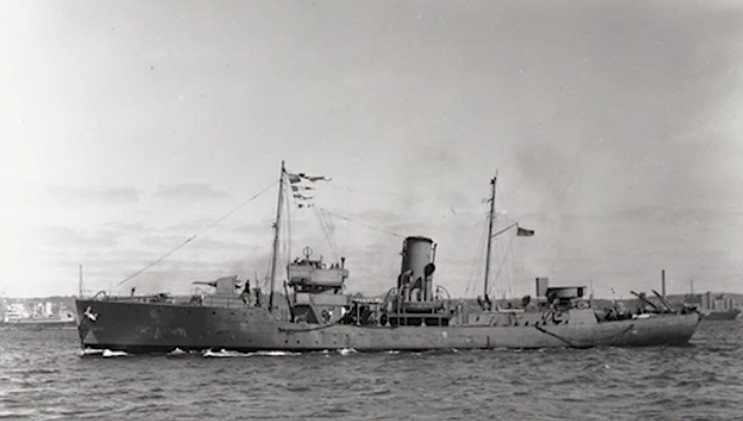
When the Battle of the Atlantic reached its darkest hour, German U-boat crews believed nothing could touch them beneath the waves. Their “wolf packs” tore through Allied convoys with deadly precision, sinking thousands of tons of shipping every week. And when they first spotted the tiny, crude-looking Canadian corvettes escorting the convoys, they laughed. They called them “fishing boats with guns.”
But the laughter didn’t last.
This is the true story of how Canada’s improvised navy—made up of fishermen, mechanics, and farmhands—turned the tide of the longest battle of the war. Built in small shipyards along the St. Lawrence and Great Lakes, the Flower-class corvettes were rough, slow, and soaked to the bone in every storm. Yet, these “toy ships” became the relentless hunters of the Atlantic, forcing the German U-boats they once feared to disappear without a trace.
Join Canada's Frontline as we uncover how an untested force of volunteers built one of the world’s most effective anti-submarine fleets. From the freezing fog off Newfoundland to the deadly wolf pack battles of 1943, the Canadians learned, adapted, and fought with unmatched endurance. They turned the Atlantic into their battlefield—and made even Dönitz’s U-boat captains whisper a new warning: “Beware the short ships with high bows—they bite.”
Subscribe for more untold stories of Canada’s courage, endurance, and ingenuity in the Second World War.
Peter Burgess COMMENTARY
Peter Burgess
Transcript
- 0:00
- March 10th, 1941. The Battle of the Atlantic had reached its deadliest phase. German Yubot
- prowled the sea lanes in coordinated wolf packs, cutting through Allied convoys that carried vital supplies to
- Britain. That spring, Admiral Carl Donuts' headquarters in Paris recorded
- record sinkings. Hundreds of thousands of tons of Allied shipping lost in a single month. Crews of the Marine were
- confident. They believed they were untouchable beneath the Atlantic waves. Among the reports that reached Donuts'
- desk, one detail kept appearing. A new type of small escort ship sailing with
- Canadian convoys. They were short, slow, and crude looking vessels barely 200 ft
- long with stubby boughs and strange lines. German sailors who spotted them through periscopes or captured
- photographs called them fisherbo mitonan fishing boats with guns. Officially they
- were the Royal Canadian Navy's flowerclass corvettes. To yoat captains they were a joke. But the joke wouldn't
- 1:05
- last long. When the first Canadianbuilt corvette HMCS Agaze joined convoy escort
- duty in early 1941, the Royal Canadian Navy had fewer than a dozen major ships.
- It was an untested navy. Many of its officers had come from merchant or fishing backgrounds, and its crews were
- young men with only basic training. The corvettes they sailed were hastily constructed in civilian shipyards that
- had never built warships before. Everything about them seemed improvised.
- The halls were narrow, the decks cramped, the living quarters miserable. In high seas, the ships pitched so
- violently that men described being thrown from bunks at night. German Yubot
- officers reading intelligence summaries laughed at the idea that such vessels could pose a threat to them. These ships
- represented desperation, evidence that Britain was running out of professional escort vessels. Donuts himself
- 2:01
- reportedly remarked that such toys will not keep the sea against us. Yet within
- months, those toys began to show their worth. The first Canadian corvettes encountered hubot along the treacherous
- routes between St. John's Newfoundland and Iceland. It was one of the most dangerous stretches of water in the
- world. Fogbound, freezing, and patrolled night and day by yubot waiting for easy
- targets. Convoys moved slowly, rarely faster than 8 knots for a submerged
- yubot. That made them perfect prey. HMCS Snowberry was part of convoy HX113 when
- the Corvette crews faced their first real test. Late at night on April 3rd, 1941, the convoys merchant ships were
- cutting through rough seas under blackout conditions when a sharp sonar contact was detected. The operator
- aboard Snowberry, called out the range, 900 yd, moving fast, bearing to port. It
- was a Yuboat closing in. The ship's commander, Lieutenant Commander John Apprentice, ordered a hard turn and
- 3:03
- depth charges set to shallow detonation. The charges detonated with a deep roar,
- throwing columns of water skyward. Moments later, a slick of oil rose to the surface. The crew cheered, but
- Apprentice didn't. He knew the oil didn't necessarily mean a kill. What mattered was that the yubot had broken
- off its attack, and that for the first time was enough. The convoy arrived in
- Iceland intact. It was a small victory, but to the Canadians, it proved that their little corvettes could fight. To
- the Germans, it was the first hint that the Atlantic was changing. At the Yubot bases in Laurant and Sant Nazair,
- returning submarine crews began reporting odd difficulties. They spoke of convoys with escorts that seemed to
- appear out of nowhere in fog and heavy weather. Small, fast ships that reacted
- faster than the Germans expected. Yubot commanders assumed these must be Royal Navy vessels. But when intercepted
- 4:00
- wireless transmissions were analyzed, they revealed something else. The call signs were Canadian. The Criggs Marines
- intelligence section BDS dismissed the reports at first. Canada did not possess
- the ship building capacity to produce enough warships to matter, but they underestimated what had happened across
- the Atlantic in the previous 6 months. Dozens of civilian shipyards, many
- previously used for fishing trwlers and cargo vessels, had been converted into wartime construction lines. Each one was
- building flowerclass corvettes at breakneck speed. These ships were simple, but they could be built
- anywhere, even in small ports along the St. Lawrence in the Great Lakes. By late
- 1941, Canada was launching a new corvette nearly every week. The Royal
- Canadian Navy exploded from a force of 13 ships before the war to over 200 by
- the following year. German reports soon reflected the change. Yubot captains
- complained of increasingly tight convoy defenses aboard U552.
- 5:04
- Captain Liton and Eric Top, one of Donuts's aces, recorded in his patrol diary that the enemy's escorts are more
- numerous and more aggressive than ever before. In one encounter, he noted that the Corvette sonar had forced him to
- stay submerged for over 18 hours, unable to attack. The constant pinging of sonar
- pulses wore down crews nerves. 'They hunt us now,' one petty officer wrote.
- 'Canadian crews were learning fast. They didn't have the polish or professionalism of the Royal Navy, but
- they had stamina, discipline, and an unshakable sense of duty. Life aboard a
- Corvette was brutal. Food spoiled, decks flooded, and sleeping quarters stank of
- diesel and sweat, but morale remained high. The men developed routines to fight exhaustion, keeping watch in
- freezing rain, mopping oil from the BGE, and listening for the telltale hum of a submarine's propellers through the sonar
- 6:01
- headset. By the end of 1941, the Canadians were no longer seen as amateurs. The battle of the Atlantic had
- turned into a constant duel between yubot and corvettes fought in darkness, fog, and freezing seas. And while the
- Germans still had the advantage and experience and tactics, their overconfidence was beginning to fade. In
- intercepted German communications that December, one recurring message was passed between yubot commanders. Beware
- the short ships with high boughs. They bite. The laughter had stopped. But the
- real shock for the German crews was yet to come. In 1942, new tactics, improved
- radar, and Canadian escort groups would turn the hunters into the hunted, and yubot that once stocked the Atlantic
- freely would begin to disappear without a trace. By early 1942, the Battle of
- the Atlantic had entered a new and brutal phase. With the fall of France
- 7:01
- giving Germany direct access to Atlantic ports, Dunit's hubot were operating
- farther west than ever before. For a time, it seemed nothing could stop them.
- Between January and June alone, Allied shipping losses reached staggering levels. Over 3 million tons sunk. The
- Marines propaganda machine glorified the Yubot arm as Germany's silent hunters.
- And for the men returning from patrols at Laurent, Breast, and Santa, the mood
- was triumphant. They had crippled Allied supply lines and forced Britain to the
- edge of starvation. And yet, buried deep within the daily reports reaching Dunit's headquarters, a
- troubling pattern was forming. Convoys from Halifax and St. John's, previously
- the easiest prey, were now among the most heavily defended. Many hubots were
- returning damaged, shaken, or with missing crew. Others were simply vanishing. The reason was the same ships
- 8:02
- the Germans had once mocked, Canada's corvettes. The transformation had begun quietly in
- late 1941. The Royal Canadian Navy, desperate to improve convoy protection, reorganized
- its escort groups. Instead of spreading ships thin across hundreds of miles,
- they began forming small coordinated hunter killer units, typically four or
- five corvettes working under a single commander. They were equipped with improved sonar, Azdic type 123A, and
- crucially, the new 10 cm wavelength radar sets that could detect a yubot's
- conning tower even in fog or darkness. The Germans didn't know it yet, but the
- Atlantic battlefield had shifted in Canada's favor. One of the first tests came in February 1942 with convoy SC67
- bound from Halifax to Liverpool. The convoy was escorted by a Canadian group
- 9:01
- led by HMCS Sackville under the command of Lieutenant Commander Alan Eastston.
- For 4 days, Yubot shadowed the convoy, waiting for the right moment to strike.
- On the fifth night, Yubot U402 moved into position. Its commander,
- Ziegfrieded Fryher Vonforsener, lined up a torpedo shot on a freighter when
- suddenly the calm surface of the ocean erupted. Flares burst overhead. The
- silhouette of a Corvette appeared out of the darkness, cutting across the Yubot's periscope. Vonforner dove, expecting the
- attack to pass, but it didn't. The Corvette's sonar locked on and within
- seconds, a pattern of five depth charges dropped in perfect formation. The explosions shook the submarine
- violently. Bolts rattled loose, glass shattered, and one of the gauges ruptured. When U42 finally serviced
- hours later, the crew found their periscope damaged and half their batteries destroyed. They barely limped
- 10:03
- back to France. The ship that had caught them, HMCS Sackville, became one of the
- most feared corvettes in the Atlantic. Her radar had spotted the Yubot's conning tower at night, something German
- crews still believed was impossible. In the months that followed, similar
- encounters multiplied. Canadian ships began scoring confirmed kills. HMCS
- Oakville rammed and boarded U94 near Jamaica. HMCS Moosejaw and Shambli
- combined sonar and depth charge attacks to sink U501 in the Denmark Strait, the
- first Yubot destroyed by the Royal Canadian Navy. What shocked the Germans
- most was how fast these new crews were adapting. These were not veteran destroyer captains or fleet officers
- from the Royal Navy. They were Canadians, former fishermen, mechanics, and farm hands, learning the deadliest
- profession in the world by doing it in real time. Yubot survivors began speaking of a new kind of enemy. They
- 11:06
- said the Canadians fought with an almost reckless aggression, chasing sonar contact for hours in raging seas,
- attacking with little regard for their own safety. One survivor of U94 recalled, 'They
- didn't stop. Even when they lost contact, they came again. It was like they could smell us.
- The flower class corvettes were far from perfect. Their short holes made them roll terribly in heavy waves, and the
- bridge was constantly drenched in seaater. Men described living in conditions worse than submarines. Damp
- bunks, no heating, and constant seasickness. But in return, they gained unmatched
- familiarity with the sea. Crews learned to operate their sonar in storms, to
- maintain radar sets coated in salt spray, and to reload depth charges blindfolded.
- The Germans soon noticed something else. The corvettes were appearing everywhere. By mid 1942, Canadian shipyards had
- 12:07
- delivered over a 100 vessels, and they patrolled the Atlantic in growing numbers. Even the Americans began
- requesting their use for convoy escorts between New York and the Caribbean. Yubot communications intercepted by the
- Allies revealed an increasing frustration among commanders. Patrol logs recorded incidents where submarines
- failed to close in on convoys due to numerous small escorts unusually alert.
- Others described being hunted for days by ships that refused to break off pursuit. At Dunit's headquarters,
- analysts began charting Yubot losses and noticed a trend they couldn't explain.
- Boats operating in the New Finland Gap, the central Atlantic region previously beyond aircraft range, were disappearing
- without distress calls. Dunit knew this meant something drastic had changed. But
- he couldn't yet understand just how Canada had turned the tide of the Atlantic battle. Dozens of patrols were
- 13:06
- lost in early 1943, and most had last reported contact with convoys under
- Canadian protection. What the Germans didn't yet understand was that Canadian
- corvettes were no longer operating blind. Working closely with Royal Air Force Coastal Command and US Navy patrol
- aircraft, they were now part of an integrated detection network. Shore-based directionf finding stations
- triangulated yubot radio transmissions and relayed positions directly to escort groups at sea. When the corvettes
- arrived, they already knew roughly where to look. In one engagement in March 1943, convoy ONS 166 came under attack
- from a wolfpack of 11 Yubot. The weather was atrocious. Thick fog, gale force
- winds, and freezing spray, but the Canadians fought relentlessly for 4 days. HMCS Dolphin, Shediak, and
- Trillium coordinated sonar sweeps while merchant ships zigzagged through the storm. One after another, the Ubot were
- 14:06
- forced under. U 606 commanded by over Lieutenant Hans Derer Heinekah tried to
- surface to escape but was immediately detected on radar and rammed by dolphin.
- Depth charges finished the job. When the surviving Yubot crews were pulled from the freezing water, they were stunned.
- They couldn't understand how such small primitive ships had found them in pitch darkness and zero visibility. In
- interrogation reports later filed in Britain, several captured officers repeated the same phrase. The Canadians
- see in the dark. Inside the German Naval Command, those words began circulating among technical
- staff. How could corvettes detect Yubot without light or visibility? Some
- speculated that the Allies had developed a new type of hydrophone or magnetic sensor. Few realized that centimetric
- radar had made periscopes and snorkels visible even through fog and waves.
- 15:02
- As the year went on, the numbers spoke for themselves. Between March and July 1943, Yubot losses reached catastrophic
- levels. Nearly 40% of the operational fleet destroyed. And in the center of
- those battles, Canadian corvettes were present in nearly every major victory. The toy ships that once drew laughter in
- German mesh halls had become one of the deadliest threats in the Atlantic. Crews of Yubot leaving their pens at Laurente
- began to notice that the laughter was gone. When new recruits asked about the Canadians, veterans answered quietly.
- They don't stop hunting. One said, 'If they find you, you're finished.'
- The shift in morale was unmistakable. The hunters had become the hunted. And
- as the Canadian Navy expanded into larger, faster riverclass frigots and upgraded corvettes with hedgehog mortars
- and radar guided depth charges, Donuts realized the truth too late. The smallest navy of the Commonwealth had
- 16:02
- learned to fight the hardest battle on Earth and win it through endurance, ingenuity, and sheer will. By the end of
- 1943, Yubot were dying faster than Germany could replace them. The vast Atlantic, once their domain, was now
- ruled by ships built in the ports of Halifax, Montreal, and Vancouver. Ships
- that no one in Berlin had ever taken seriously. The sea had turned against them, and every wave now carried the
- echo of a corvette's engine. By late 1943, the tide of the Battle of
- the Atlantic had decisively turned, but not by chance. What had started as a
- desperate improvisation by Canada had become one of the most disciplined and lethal anti-ubmarine forces in the
- world. The Royal Canadian Navy, barely a handful of ships of the war's start, now
- controlled entire convoy lanes stretching from Halifax to the British Isles. And at the center of it all were
- the Corvettes, the short, ugly sea tossed ships that German yubot crews
- 17:03
- once mocked as fishing boats with guns. The German command in Paris struggled to
- make sense of their losses. Admiral Carl Donuts ordered repeated analyses of patrol reports, but the numbers didn't
- lie. One in every three yubot deployed to the North Atlantic failed to return.
- In the first half of 1943 alone, 118 Yubot had been lost. For a service that
- had once operated with near impunity, it was catastrophic. Donuts' staff blamed Allied radar,
- improved air patrols, or bad luck. But deep inside captured Yubot logs, another
- factor kept reappearing. The short ships. The Canadian corvettes were
- everywhere. What shocked the Germans most wasn't the ships themselves. It was the way they fought. On board a yubot,
- every sound was life or death. The slow beat of a propeller, the fine ping of sonar, the pressure change as a corvette
- passed overhead. And the Canadians had developed a terrifying rhythm. They
- 18:04
- attacked relentlessly in coordinated sweeps that never seemed to end. Even after losing contact, they stayed in the
- area for hours, dropping single depth charges at irregular intervals to break the crew's nerves. Survivors from U447
- later described it as psychological warfare at sea. The truth was simpler. The Canadians didn't have the luxury to
- disengage. Their ships were slow, barely capable of 16 knots, and couldn't chase yubot across vast distances. Instead,
- they turned their weakness into an advantage. Once they cornered a submarine, they trapped it, circling
- above, cutting off every route of escape. Every sonar ping, every explosion was calculated to keep the
- yubot submerged, forcing it to run down its batteries and air supply. When it finally surfaced, suffocating in blind,
- the corvette would be waiting. By 1943, many of these engagements had become legendary within the escort service. One
- such battle occurred during convoy SC130 in May 1943. Known among sailors as the
- 19:05
- week of hell, the convoy consisted of 44 merchant ships and eight escorts, most
- of them Canadian. For seven straight days, they were attacked by a wolf pack of nearly 20 yubot. The weather was
- atrocious. Gale force winds, 30foot waves, and driving sleet. Yet the corvettes never broke formation. HMCS
- Drumheller, commanded by Lieutenant Commander Don Macdonald, detected a Ubot at night using radar and drove it under
- with a full pattern of depth charges. Within hours, another Corvette, HMCS Shambblei, made a separate contact and
- delivered the final blows. When the sun rose, debris and oil spread across the surface. The Canadians had destroyed
- U753, one of Dunit's veteran boats. For the sailors aboard those tiny ships,
- victories came at a terrible cost. Crews rarely slept more than 4 hours a day.
- The constant pounding of the sea left men bruised and soaked for weeks at a time. When depth charges were released,
- 20:02
- the shock waves reverberated through the hull, bursting eardrums and knocking men unconscious. The galley food, mostly
- tinned meat, bread, and tea, was barely edible, and everything smelled of diesel. Yet, despite it all, morale
- remained astonishingly high. For many, it was personal. The Canadians knew that every ship they saved meant food and
- fuel for Britain, and that failure meant men drowning in icy water. In Berlin,
- Donuts' analysts noticed something disturbing. Every time Yubot tried to avoid British controlled lanes by moving
- farther north, they still encountered corvettes. The Canadians had learned to patrol independently, creating roving
- escort groups that no longer relied on British orders. It was a stunning development. A Navy that had once been
- considered auxiliary was now setting its own operational patterns. The Criggs Marines radio intelligence branch,
- BDanced, began intercepting signals from EGC and EGD escort groups, Canadian-led
- 21:00
- task forces that worked in tandem with British and American aircraft. These small groups were responsible for some
- of the most devastating Yubot losses of the year. In one engagement west of Ireland, the Canadian corvettes HMCS
- Rosn and HMCS Calgary cornered U954 after a prolonged sonar chase. When the
- submarine attempted to dive, Calgary dropped its full load of depth charges in precise intervals. The water exploded
- in towering columns and then silence. Hours later, oil slicks surfaced. Among
- the dead aboard U953 was Hines Dunits, the admiral's own son. The loss struck
- the German naval command like a thunderclap. For the first time, donuts publicly admitted that the Allies had
- achieved technological and tactical superiority. But technology alone didn't
- explain it. Canadian sailors had developed instincts that machines couldn't match. They learned to read the
- sea through sound, to distinguish a whale from a submarine by the echo pattern of sonar, to sense when the
- 22:01
- yubot was near by the faint vibration of the hull. Many officers later recalled that their men were half listening,
- half-g guessing through the entire war. They operated like hunters, not technicians. By mid1 1943, Canadian
- shipyards were producing the next generation of escurts, the riverclass frigots. They were larger, faster, and
- more stable, but the crews still relied on the hard lessons learned aboard the flowerclass corvettes. Those lessons
- were written in salt, oil, and blood. The Corvettes became legends, not for
- their size or power, but for what they endured. They kept convoys alive in the blackest nights of the war when the
- ocean itself seemed hostile. In German bases, the tone had changed entirely.
- The young recruits who had once laughed at stories of Canadian toy ships now heard different tales. They heard of
- boats that vanished without warning, of sonar pings that never stopped, of corvettes appearing through fog like
- ghosts. In the pens of Laurant and Lar Rochelle, an unspoken fear spread. If
- 23:01
- you were assigned to the North Atlantic and especially to the Newf Finland Gap, your odds of survival were slim. By the
- time 1944 arrived, Canada's Navy was no longer a minor force. It was the third
- largest Allied Navy on Earth. Over 400 ships manned by tens of thousands of sailors guarded the Atlantic. The same
- crews who had once trained in borrowed fishing vessels now commanded fleets that stretched across hemispheres. They
- had done what few believed possible. They had turned the Hunter's Ocean into their own battlefield. And deep below,
- among the shattered hulls of Yubot lying silent on the Atlantic floor, lay the proof of that transformation. German
- engineers had once dismissed the Corvettes as crude, improvised beneath notice. But by the war's end, those same
- engineers, pouring over lost boat reports, admitted what the sea had already decided. The Canadians had built
- ships that wouldn't quit and crews who refused to lose. The laughter that began the war had long since been replaced by
- silence. The yubot arm was broken, its wolfpack scattered, and the hunters who once ruled the Atlantic were now its
- 24:06
- ghosts. The small, stubborn ships from Halifax, Montreal, and Vancouver had
- outlasted them all. By early 1944, the Battle of the Atlantic was no longer the
- same fight it had been in the grim days of 1941. What had once been a battlefield of fear
- and guesswork was now a calculated hunt, and Canada's Navy had become one of its
- most decisive weapons. The small flowerclass corvettes that had started the war as emergency escorts were now
- veterans of hundreds of battles. Their hulls were scarred, their decks patched with steel plates from years of
- relentless storms and explosions. But their crews were sharper, faster, and far more dangerous than the Germans had
- ever imagined. At the same time, the cre marines yubot fleet was collapsing from
- within. Bases in France, once filled with triumphant submariners celebrating new victories, now echoed with silence
- 25:01
- and exhaustion. The long concrete pens at Laurant Breast and San Nazar were
- half empty. Most of the veterans who had begun the campaign in 1939 were dead or
- missing. And for the younger men, barely 20 years old, the Atlantic had become a
- graveyard. When the Yubot U744 left Bergen in March 1944, her crew expected
- an ordinary patrol. Their orders were simple. Intercept Allied convoys in the North Atlantic. But as soon as they
- reached the open ocean, the atmosphere aboard turned tense. Radio intercepts warned of increased enemy presence and
- intense sonar activity. For days, they found nothing. Then on March 6th, they
- picked up propeller sounds on hydrophones. They believed it was a convoy and prepared to attack. The first
- depth charges struck less than 10 minutes later. Above them was a Canadian escort group led by the frigot HMCS St.
- Cathine's with corvettes Chiliwok and Fennel on her flanks. The sonar operator aboard Chiliwok had caught a faint
- 26:04
- contact just off the convoy starboard bow and ordered an attack run. What followed was a brutal 28-hour chase.
- Every time U744 tried to surface, the Canadians forced her back under. They
- used a new weapon, the hedgehog mortar, firing 24 contactfused bombs in an arc
- ahead of the ship. Unlike depth charges, these didn't explode unless they hit the submarine directly. Each mist salvo told
- the corvettes exactly how deep and in what direction to adjust. Inside the
- Yubot, the situation deteriorated rapidly. The air turned toxic. The
- lights flickered and the crew began hallucinating from carbon dioxide buildup. At last, the captain gave the
- order to surface and surrender. When the submarine broke through the waves, covered in oil and smoke, the corvettes
- trained their guns, but held their fire. The Canadians pulled the survivors aboard and gave them medical treatment.
- 27:00
- One German petty officer later told his interrogators that he couldn't understand it. The same men who had
- hunted them without mercy were now offering blankets and cigarettes. The sinking of U744 was one of dozens
- that spring. For the first time in the war, German submarines weren't just being destroyed, they were being
- captured, their crews rescued, and their secrets exposed. Each interrogation
- revealed the same thing. Yubot morale was collapsing. Sailors spoke of phantom
- ships that appeared on radar screens without warning, of sonar that heard everything, and of convoys that seemed
- impossible to surprise. What they were describing were the combined effects of Allied technology and Canadian
- persistence, a force that now worked with scientific precision. By the summer
- of 1944, the Canadians had fully integrated into Allied command structures. Escort groups from Halifax
- coordinated directly with coastal command aircraft out of Iceland and Northern Ireland. Using radio direction
- 28:03
- finding and encrypted communications, convoys were now tracked minuteby minute across the Atlantic. When a yubot was
- spotted, every available asset converged, ships, aircraft, and radar equipped destroyers. But the corvettes
- remained the backbone of the defense. Their crews knew the sea better than anyone, and when the weather turned
- rough, when the planes couldn't fly, it was the corvettes that carried on the hunt. That same year, as Allied forces
- prepared for the D-Day invasion, Canada's ships took on a new role, protecting the invasion convoys,
- crossing the channel and clearing German submarines from the western approaches. Many of the same corvettes that had
- started their service in the North Atlantic were now escorting the largest amphibious fleet in the history. They
- had come a long way from the fishing boats with guns that German sailors once mocked. For the Yubot, the end came
- quietly. By late 1944, Donuts had ordered most of his surviving fleet to
- 29:01
- operate closer to Europe. The Atlantic was too dangerous, too heavily patrolled, too unpredictable. Out of
- more than 1100 submarines built during the war, over 780 were destroyed. The
- vast majority of those losses had come in just 2 years when Canadian corvettes and escort groups dominated the ocean's
- midsection. Among the Canadian crews, there was no celebration. They had seen
- too much for that. They had lost friends to storms, collisions, and counterattacks. Ships vanished without
- warning, struck by torpedoes, or blown apart by their own depth charges. When a corvette was hit, there was rarely time
- for rescue. The freezing water took men in minutes. Yet, for every ship lost,
- two more were launched from Canadian shipyards. The production never stopped.
- Neither did the fighting. In the final months of the war, surviving Yubot officers began to admit what donuts
- never publicly would. They had underestimated the Canadians from the very beginning. In post-war interviews,
- 30:05
- one engineer from the Yubot testing command in Keel was asked about the Corvettes. He replied simply, 'We
- thought they were crude, but they were built for the ocean, not the harbor. They were built like the men who sailed
- them. hard, simple, and impossible to break. That sentiment was echoed by
- German survivors who spent the rest of the war in Canadian prison camps. Many were called their surprise not just at
- being defeated, but at how organized and capable their capttors were. They had
- entered the war believing Canada was a minor power, a distant dominion with no industrial or naval weight. What they
- discovered was a country that had built one of the largest merchant and escort fleets in the world and manned it with
- volunteers who learned faster than any enemy expected. The last yubot sunk by
- Canadian forces was U3, destroyed in April 1945 off the coast of
- 31:01
- Ireland by HMCS New Glasgow and HMCS Thatford Mines. The battle lasted
- through the night. Another relentless sonar chase ending in silence. When the
- crew of Thatford Mines looked out over the debris field at dawn, they didn't cheer. They simply logged the position,
- marked the oil slick, and turned back to escort their convoy. The war was nearly
- over, but their duty wasn't. By May 1945, Germany had surrendered. The Yubot
- pens stood empty. The Atlantic was quiet for the first time in six years.
- In Canadian ports from Halifax to St. John's, battered corvettes limped home
- one by one. Their hulls were rusted, their paint scorched by salt and wind.
- But they had done what no one thought possible. They had secured the lifeline across the Atlantic. Without them,
- Britain might have starved before D-Day ever happened. For the sailors who served aboard those ships, the memories
- 32:00
- never faded. The taste of salt on the wind, the smell of oil and cordite, the
- endless noise of engines and sonar pangs. They had faced one of the deadliest enemies in naval history and
- outlasted him through endurance, improvisation, and courage. In the years
- after the war, when historians asked German veterans about their most feared opponents, they didn't name the British
- destroyers or the American hunter groups. They named the Corvettes. They named the Canadians. And so the same
- Yubot crews who once laughed at Canada's tiny, awkward ships ended the war
- knowing the truth. Those fishing boats with guns had hunted them to extinction.
- Those toy ships had ruled the Atlantic. And behind every one of them stood a crew that refused to yield no matter the
- sea, the storm, or the odds. The Canadians had proven that strength wasn't in size or sophistication. It was
- in determination. And in the Atlantic's cold, endless expanse, it was that determination that
- made the difference between survival and silence.