
Date: 2026-03-03 Page is: DBtxt003.php txt00029396
UK
THE RR RB211 SAGA ... Wonder Wing
The Rise and Fall of Rolls Royce: The Engine That Bankrupted Britain
THE RR RB211 SAGA ... Wonder Wing
The Rise and Fall of Rolls Royce: The Engine That Bankrupted Britain
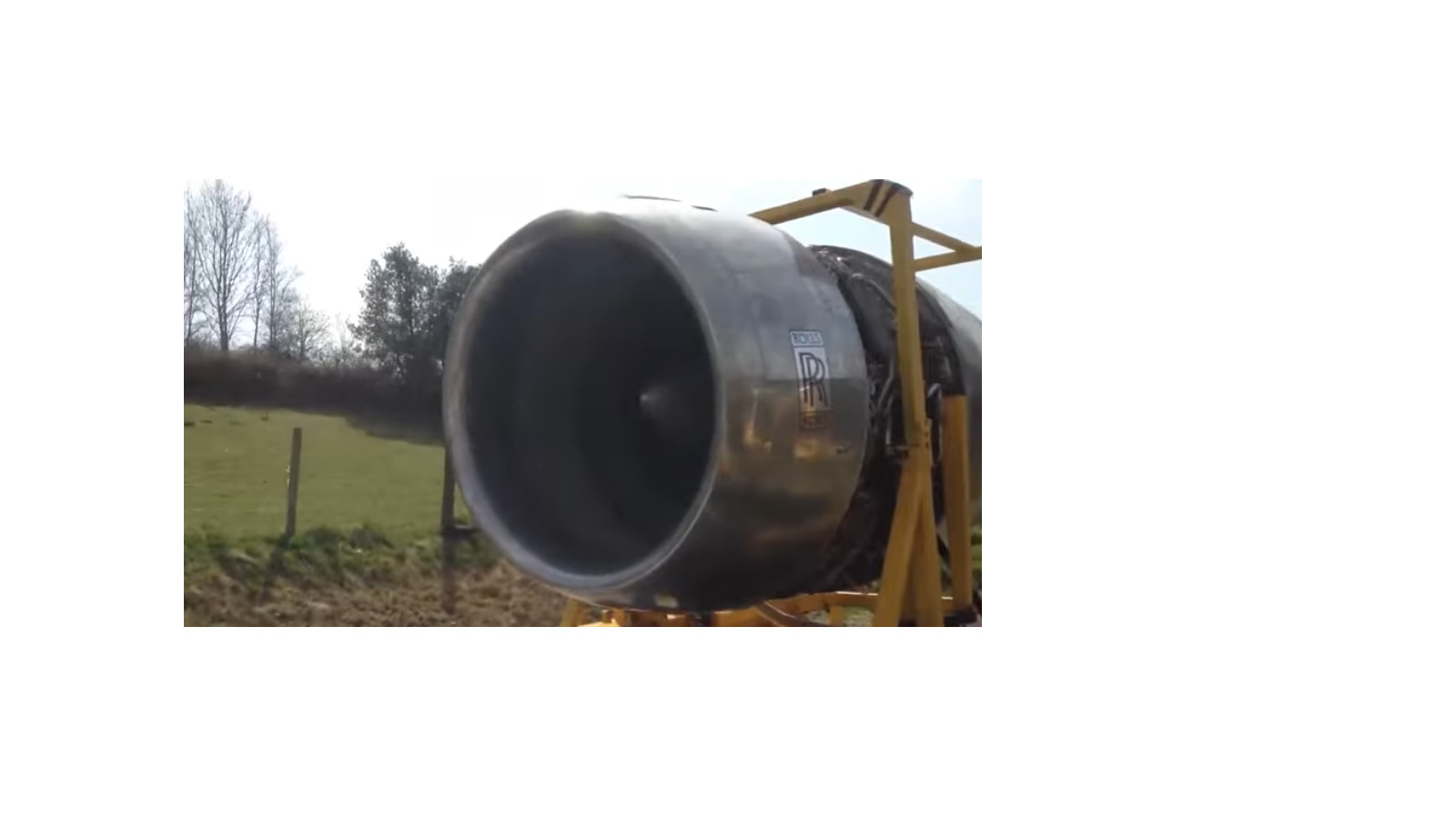
Original article: https://www.youtube.com/watch?v=bc81EyyNg_Q
- • Configuration: Three-shaft high-bypass turbofan
- • Thrust: 42,000 lbf (initial) to 60,600 lbf (later variants)
- • Fan Diameter: 84.8 inches (2.15 m)
- • Bypass Ratio: 5.0:1
- • Major Application: Lockheed L-1011 TriStar
- • Key Innovation: Three-spool design for optimized compressor speeds.
Was the RB211 worth the risk — or was Rolls-Royce doomed by the contract the moment they signed it?
#RollsRoyce #RB211 #AviationHistory
📚 Keywords:
Rolls-Royce RB211 history, Lockheed L-1011 TriStar engine, Rolls-Royce bankruptcy 1971, three-shaft turbofan engine, carbon fiber fan blade failure, Sir Stanley Hooker Rolls-Royce, British aerospace history, RB211 vs Pratt & Whitney JT9D, Rolls-Royce nationalization, aviation engineering disasters, high-bypass turbofan development, vintage aircraft engines
Peter Burgess COMMENTARY
The headline that the Rolls Royce RB211 development resulted in the bankkrupcy of Britain is total BS ... an easy headline but not useful in any way.
Early in my professional career in the 1960s in the UK, i was friendly with a number of young high profile engineers. One of these was an employee of Rolls Royce w0rking on the techologial problems associated with 'creep' of the titanium fan-blades.
The 'financial failure' of the Rolls-Royce company was a sad situation, but looking back, it was handled in a quite constructive way. The British Government allowed the bankruptcy to go forward, but took steps to ensure that a big part of the Rolls-Royce enterprise would remain a national asset. Fast forward into the future, and Rolls-Royce has delivered!
Peter Burgess
Transcript
- 0:00
- February 4th, 1971. The British
- government stands before Parliament with
- an announcement that will echo through
- aviation history. Rolls-Royce, the
- company that powered the Spitfire to
- victory that built engines synonymous
- with British engineering excellence, has
- collapsed. The company that once
- represented the apex of British
- industrial, might now lies in ruins.
- Brought down not by inferior technology,
- but by the very brilliance of its own
- ambition. The RR 211 wasn't just another
- turbo fan engine. It was British
- aerospace engineering attempting to
- leapfrog a generation of American
- dominance in one audacious bound. When
- Loheed's Tristar test aircraft pushed
- throttles forward for the first time
- with RB200's11s mounted beneath its
- wings, those engines delivered thrust
- that conventional designs couldn't
- match. The sound was different, cleaner,
- more efficient. But that revolutionary
- technology came at a price Britain
- couldn't afford to pay. This wasn't just
- corporate failure. It was the moment
- when British engineering ambition
- collided with commercial reality. When
- technical brilliance couldn't save a
- 1:00
- company from its own promises,
- [Music]
- inciting conflict, the American
- domination. By 1967, the commercial
- aviation engine landscape looked like a
- duopoly. Prattton, Whitney, and General
- Electric controlled the market with
- unchallenged authority. Their engines
- powered every major airliner crossing
- the Atlantic and no European
- manufacturer could break that strangle
- hold. Then the widebody revolution
- arrived. Boeing 747 announced a new era
- of mass air travel and suddenly the
- market exploded with opportunity.
- Lockheed designed the L1011 Tristar to
- compete with McDonald Douglas's DC10 and
- both needed engines that didn't exist
- yet. For Rolls-Royce, watching American
- manufacturers prepare to divide this
- lucrative market was intolerable. The
- company's heritage stretched back to the
- Merlin engine that powered Spitfires
- through the Battle of Britain. Being
- locked out of commercial aviation's
- future contradicted everything
- Rolls-Royce represented. Sir Denning
- Pearson, Rolls-Royce's chairman, saw an
- opening. If they could build an engine
- 2:01
- so advanced, so efficient that airlines
- couldn't refuse it, they could shatter
- the American duopoly. The question
- wasn't whether they should try. The
- question was whether they could deliver.
- The struggle, the weight of ambition.
- The engineers at Darby understood
- advanced materials, complex
- thermodynamics, and cuttingedge
- aerodynamics. They had proven themselves
- with military engines like the Conway
- and the Spay, but commercial aviation
- operated under different rules. Airlines
- demanded reliability measured in
- thousands of hours between overhauls,
- not combat performance. Rolls-Royce's
- existing engines couldn't compete with
- what Pratt and Whitney was developing
- for wide bodies. The Americans had
- experience, established supply chains,
- and proven track records. Rolls-Royce
- had ambition and technical brilliance,
- but zero widebody engine experience.
- Internal debates grew heated.
- Conservative voices argued for
- incremental development, building on
- proven designs. But that path meant
- accepting permanent second place. The
- radical faction pushed for a quantum
- leap. Design an engine so advanced it
- 3:01
- would make American offerings look
- obsolete before they entered service.
- The RB211 concept emerged from those
- debates. A three shaft turbo fan using
- revolutionary materials and
- configurations that existed only on
- paper. Chief engineer Adrien Lombard
- championed the three-spool design before
- his sudden death in July 1967 left a
- leadership vacuum. Critics whispered
- their doubts. An entirely new engine
- architecture for commercial aviation's
- most demanding application with no
- proven track record in wide bodies. But
- here's what you need to understand about
- the commercial pressure building behind
- this technical gamble. While engineers
- debated approaches at Derby, the sales
- team was already in America negotiating
- with Lockheed. They were selling an
- engine that didn't exist, promising
- performance the engineers weren't
- certain they could deliver on a timeline
- that made experienced project managers
- wse. In aviation terms, they were taking
- off before completing the pre-flight
- checklist. The breakthrough, the
- technical gamble. The decision came down
- to materials. Rolls-Royce committed to
- 4:01
- carbon fiber fan blades instead of
- conventional titanium. This wasn't a
- minor variation. This was choosing
- unproven composite technology for the
- most critical, highly stressed component
- of a commercial turbo fan. Carbon fiber
- promised everything. Lighter weight
- meant better fuel efficiency, less
- structural strain, improved thrusttoe
- ratios. The material was stronger than
- titanium for its weight. Critically, it
- would give the RB211 a performance
- advantage no American engine could
- match. But carbon fiber fan blades had
- never been used in a commercial turbo
- fan, never been tested through the
- brutal certification process commercial
- aviation demanded. The engineering
- philosophy became explicit. Rolls-Royce
- would accept technical risk that
- conservative manufacturers avoided. They
- valued innovation over proven
- reliability, breakthrough performance
- over safe incrementalism. The three
- shaft configuration was equally radical.
- Most turbo fans use two shafts, but
- Rolls-Royce designed three concentric
- shafts spinning at different speeds,
- each optimized for its specific
- 5:00
- compression stage. This complexity
- offered efficiency gains, but multiplied
- potential failure points and made the
- engine extraordinarily difficult to
- manufacture. Early test runs looked
- promising. The RB211 prototype delivered
- thrust figures that exceeded
- projections. Engineers reported smooth
- power delivery across the operating
- range, exactly what widebody airliners
- needed. Then came the revelation that
- would haunt the program. The performance
- numbers being shared with Lockheed were
- based on optimal test conditions. Real
- world performance accounting for
- manufacturing variations and operational
- degradation would be lower. But the
- contract was already signed. The
- promises were already made. In later
- years, colleagues would refer to this
- gap with dark humor. Hooker lied became
- shorthand for the distance between
- engineering optimism and commercial
- reality. Stanley Hooker hadn't actually
- lied, but he had allowed optimistic
- projections to become contractual
- commitments. That gap between promised
- performance and achievable performance
- would widen into a chasm that swallowed
- the company. The Tristar contract.
- 6:03
- On March 29th, 1968, Rolls-Royce signed
- the contract that should have secured
- Britain's place in commercial aviation's
- future. The numbers told a story of
- ambition bordering on hubris. Lockheed
- announced orders for 94 Tristars and
- committed to the RB211 as the exclusive
- engine. Rolls-Royce would supply 150
- engine sets,450 engines total for the
- launch customers, Eastern Airlines and
- Transorld Airlines. The contract value
- stood at 98 million with potential to
- reach £350 million including spares.
- British officials called it possibly the
- largest export order in British history,
- but the contract contained a fatal flaw.
- Rolls-Royce had agreed to a fixed price
- of approximately $511,000 per engine,
- negotiated down from initial proposals
- during intense competition with General
- Electric. The Americans hadn't given up
- easily. In early March 1968, six US
- senators and five representatives
- protested to President Johnson, warning
- 7:00
- that British engines would cost America
- 18,000 to 20,000 jobs and create a $3.8
- billion payments deficit. Congressional
- pressure nearly killed the deal before
- it started. The performance
- specifications were stunning. The RB211
- would deliver 42,000 lb of thrust while
- consuming significantly less fuel than
- competing engines. That efficiency
- translated directly to airline
- economics. Lower fuel burn meant lower
- operating costs, which meant Tristar
- could undercut the DCT10 on ticket
- prices while maintaining profit margins.
- Aviation press called it revolutionary.
- Airlines called it exactly what they
- needed for an era of rising fuel costs
- and increasing passenger demand. Air
- Canada joined the launch customers,
- betting their fleet expansion on
- Lockheed's aircraft and Rolls-Royce's
- engines. The sound of the RB211 in
- ground tests was distinctive, smoother,
- quieter than the harsh roar of earlier
- turbo fans. The bypass ratio was higher,
- pushing more air around the engine core
- rather than through it, which created
- that characteristic whoosh instead of a
- 8:01
- scream. In British aerospace culture,
- the RB211 became a symbol of national
- technological resurgence. After decades
- watching American manufacturers dominate
- commercial aviation, Britain was
- striking back with an engine that
- represented pure engineering excellence,
- the manufacturing reality. But Triumph
- contained catastrophe. The carbon fiber
- fan blades that promised revolutionary
- performance failed bird strike testing.
- Not occasionally, consistently. Bird
- strike tests revealed a fatal flaw. When
- a bird hit a titanium fan blade at
- operating speeds, the blade deformed but
- contained the impact. When a bird hit a
- carbon fiber blade, it shattered.
- Fragments turned into high velocity
- projectiles that could penetrate the
- engine cowling and airframe. That
- failure mode was unacceptable for
- commercial certification. Rolls-Royce
- had bet everything on carbon fiber.
- Engineers scrambled for solutions, but
- the clock was ticking. Lockheed had
- committed to delivery schedules.
- Airlines had scheduled the Tristar into
- their fleet plans. The company switched
- to titanium blades, abandoning months of
- 9:01
- development work. But titanium brought
- its own nightmare. The fan diameter
- exceeded 7 ft, unprecedented scale for
- Rolls-Royce. Manufacturing revealed that
- only one side of each titanium billet
- possessed the correct metallurgical
- quality for blade fabrication. Half the
- expensive raw material was waste. The
- three shaft configuration proved even
- more complex to manufacture than
- anticipated, requiring precision
- tolerances that pushed British
- manufacturing capabilities to their
- limits. By September 1970, the financial
- reality became undeniable. Development
- costs had reached 170.3 million, nearly
- double the original estimate of 85
- million. Worse, production costs per
- engine now exceeded £230,375,
- higher than the fixed contract price.
- Every delay cost money Rolls-Royce
- didn't have the fixedpric contract with
- Lockheed meant the company absorbed
- every cost overrun. Higher development
- costs, slower production, technical
- problems requiring expensive solutions.
- 10:02
- All of it came out of Rolls-Royce's
- balance sheet, while Lockheed paid the
- same agreed price. International
- desperation. The scale of the crisis
- became clearer with every passing month.
- Rolls-Royce employed 80,000 people
- across Britain. Their livelihoods
- depended on a company bleeding money
- with no end in sight. The British
- government had already committed £47
- million in launching aid, 70% of the
- originally estimated development costs.
- When that proved insufficient, the
- Industrial Reorganization Corporation
- arranged another£10 million with a
- further£10 million promised. But these
- were loans and guarantees, not gifts.
- The government demanded oversight,
- financial audits, and accountability.
- What they discovered was worse than
- anyone had publicly admitted. By autumn
- 1970, internal assessments revealed the
- launch costs for the first 53 engines
- alone had reached 135 million pounds.
- The production mathematics were brutal.
- Every engine cost more to build than
- Lockheed would pay. The fixedpric
- contract that seemed so advantageous in
- 11:00
- 1968 had become a financial death trap.
- As losses mounted, Rolls-Royce sought
- international partners to share the
- burden. The company approached American
- manufacturers about joint ventures.
- Could Pratt and Whitney help with
- production? Would General Electric
- consider a partnership? But American
- manufacturers saw a competitor drowning.
- They had no incentive to rescue a rival
- that threatened their market dominance.
- Helping Rolls-Royce succeed meant
- enabling competition in their own
- backyard. The answers came back negative
- or with impossible conditions. Some
- airlines that had ordered Tristars grew
- nervous. If Rolls-Royce collapsed, what
- happened to engine support? Who would
- provide maintenance and spare parts
- decades into the future? Aviation is a
- long-term business. Airlines need to
- know their engine supplier will exist
- for the 30-year lifespan of their
- aircraft. The uncertainty began
- affecting Lockheed sales. Carriers who
- might have ordered Tristars chose the
- DC10 instead, specifically because it
- used proven American engines from
- manufacturers with stable balance
- sheets. American Airlines, which had
- 12:00
- initially shown interest in the Tristar,
- went with the DCT10. United Airlines
- followed. Each lost sale tightened the
- noose. The death spiral accelerated.
- Weak Rolls-Royce meant weak Tristar
- sales. Weak Tristar sales meant
- Rolls-Royce couldn't achieve the
- production volumes needed to reduce
- perunit costs through economies of
- scale. Every completed RB211 was sold at
- a loss. The company was essentially
- paying Lockheed to take engines. The
- mathematics were inexraable and they
- pointed toward only one conclusion. The
- decline, bankruptcy, and
- nationalization. By late 1970, the end
- was obvious. Rolls-Royce had burned
- through hundreds of millions of pounds
- with no path to profitability. The RB211
- continued consuming resources,
- generating no return. On February 4th,
- 1971, the inevitable arrived.
- Rolls-Royce declared bankruptcy. The
- British government immediately
- nationalized the company. They couldn't
- allow Rolls-Royce to disappear. The
- military engine business was too
- strategically important. The RB211
- 13:00
- program was too far advanced. A complete
- collapse would cascade through British
- aerospace and potentially destroy
- Lockheed as well. The Conservative
- government, traditionally opposed to
- nationalization, had no choice. They
- split Rolls-Royce into two entities. The
- Aero Engine business became state-owned
- Rolls-Royce. 1971 Limited. The
- prestigious car manufacturing division
- was sold off separately. Lockheed faced
- its own crisis. Their Tristar program
- was hemorrhaging money. And now their
- engine supplier was bankrupt. The US
- government stepped in with loan
- guarantees, keeping Lockheed alive, but
- essentially turning the Tristar into a
- government subsidized aircraft. The
- financial crisis had become an
- international aerospace disaster. The
- RB211 represented brilliant engineering
- that bankrupted its creator,
- revolutionary technology that couldn't
- overcome commercial reality. Legacy and
- resurrection. The RB211
- lives on. Against all odds, the RB211
- survived. The nationalized Rolls-Royce
- solved the carbon fiber problem by
- 14:00
- switching to titanium fan blades.
- Stanley Hooker, brought out of
- retirement, led a team of veteran
- engineers to fix the remaining problems.
- The engine was finally certified on
- April 14th, 1972 and entered service
- with Eastern Airlines on the TriStar 12
- days later. By the 1980s, the RB211 had
- matured into one of the most successful
- turopan families in commercial aviation.
- Airlines loved its reliability and
- efficiency. The engine proved everything
- Rolls-Royce had promised just years late
- and billions of pounds over budget. The
- RB211 evolved into the Trent family of
- engines which power Boeing 777s, 787s,
- and Airbus A350.
- Today, modern Trents use advanced fan
- blade materials, digital controls, and
- sophisticated aerodynamics. But the
- three shaft architecture, that's pure
- RB211, a direct lineage from 1960s
- ambition to 21st century dominance.
- Context: The price of innovation. The
- RB211 Crisis teaches brutal lessons
- 15:00
- about the collision between engineering
- excellence and commercial reality.
- Rolls-Royce built an engine that was
- technically superior to anything
- American manufacturers offered. They
- were right about the technology, but
- they were catastrophically wrong about
- the costs, the timeline, and the
- commercial risk. Would you bet your
- company's survival on unproven
- technology for the most demanding
- application imaginable? Would you sign a
- fixedpric contract before knowing if you
- could actually build what you promised?
- The engineers at Derby faced that choice
- and they chose ambition over caution.
- What if Rolls-Royce had designed a more
- conservative engine? They might have
- survived as an independent company, but
- they probably would have remained
- permanently second tier in commercial
- aviation. What if they'd succeeded with
- carbon fiber fan blades on schedule?
- They would have transformed commercial
- aviation while remaining profitable. The
- narrow margin between technological
- triumph and corporate catastrophe is
- what makes aviation history so
- compelling. The RB211 represents why we
- push boundaries despite the risks.
- Innovation as identity, ambition as
- purpose, even when the price is
- 16:01
- bankruptcy, and nationalization. The
- engines Rolls-Royce built to save the
- company instead destroyed it. And in
- that destruction, they created
- technology that powers modern aviation.
- That paradox defines the human drive to
- fly higher, faster, more efficiently,
- regardless of