
Date: 2026-03-03 Page is: DBtxt003.php txt00029377
GREENLAND
ROBERT REICH OPINES ... The Public Brief and Ab extra
Canada Wins Big In Greenland — Arctic Influence Shifts Overnight
ROBERT REICH OPINES ... The Public Brief and Ab extra
Canada Wins Big In Greenland — Arctic Influence Shifts Overnight
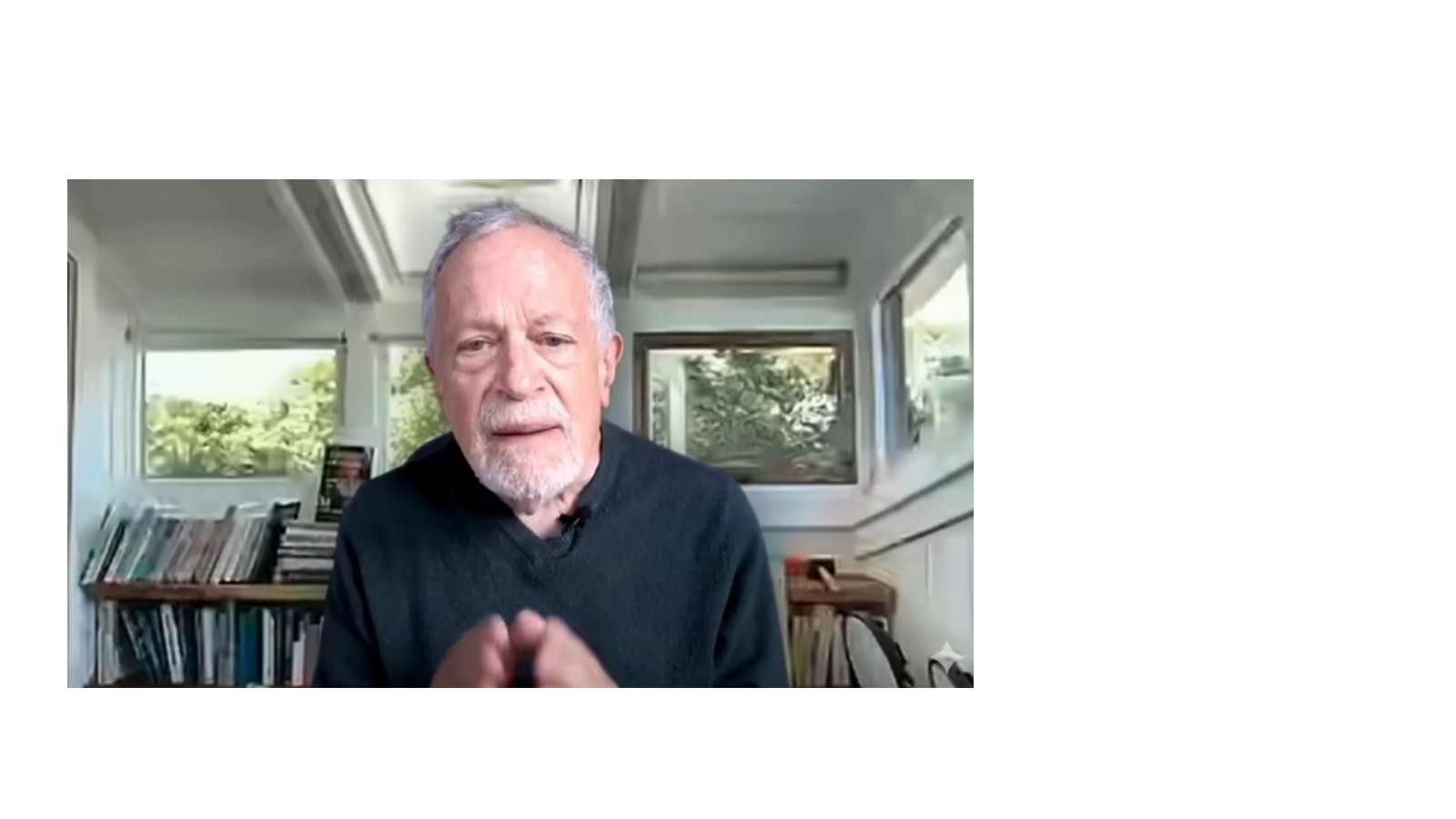
Original article: https://www.youtube.com/watch?v=lPsQL6TYgQk
The Public Brief and Ab extra
Dec 26, 2025
79,667 views ... 4.3K likes
UNITED STATES
The United States is facing a strategic setback as Canada quietly expands its influence in Greenland — and the Arctic power dynamics are shifting. In this video, Robert Reich breaks down how Canada outmaneuvered the U.S., why Greenland responded positively, and what this means for North American trade, energy, and diplomacy.
From Arctic strategy to global economic insights, we explore how long-term planning, infrastructure, and trust are becoming more important than tariffs and threats — and why Washington’s approach is losing ground.
⚠️ Watch the full video to understand how Canada’s strategic moves are reshaping Arctic influence and what the U.S. can learn before it’s too late.
Timestamps:
- 0:00 – Introduction: Canada vs. U.S. in the Arctic
- 1:15 – Greenland Consulate Explained
- 3:45 – U.S. Complacency & Strategic Blind Spots
- 6:10 – Canada’s Long-Term Industrial & Energy Planning
- 8:50 – Implications for North American Trade & Influence
Disclaimer: This is an independent, fan-made video not affiliated with Barack Obama, his campaign, or any political organization. All visuals and narration are independently produced and for educational purposes, following fair use and journalistic integrity principles.
#duet #crime #podcast #horror #crimestory #news #scary #truestory
How this was made
Altered or synthetic content
Sound or visuals were significantly edited or digitally generated. Learn more
Peter Burgess COMMENTARY
Peter Burgess
Transcript
- 0:00
- Introduction: Canada vs. U.S. in the Arctic
- A diplomatic headline slipped by
- unnoticed. Canada is opening a consulate
- in Greenland. Sounds routine. It isn't.
- Greenland isn't about ICE. It's about
- power, shipping lanes, rare minerals,
- military access. This is how influence
- shifts. Quietly, strategically, before
- anyone's paying attention. If this
- helped you see what's really happening,
- hit like and share it. Tell me in the
- comments where you're watching from.
- These conversations matter. I'm Robert
- Reich, professor of public policy at UC
- Berkeley, and I've spent my career
- studying the intersection of economics,
- power, and democracy.
- Today, I want to explain what's really
- going on here. Because the United States
- wasn't pushed out. It simply wasn't
- paying attention. While Washington
- argued over yesterday's headlines,
- Canada quietly stepped into a strategic
- space America assumed it owned by
- default. And Greenland noticed instantly
- 1:00
- when a Greenlandic lawmaker responded
- with a single word, finally. That wasn't
- diplomacy. That was frustration boiling
- over. It was the sound of a partner
- waiting years for the US to show up and
- realizing it never did. That wasn't
- 1:15
- Greenland Consulate Explained
- relief. That was a wake-up call. and
- Washington should be panicking. On the
- surface, Canada opening a consulate in
- Greenland looks small, routine, polite.
- But look closer. This move exposes the
- yawning gap between US arrogance and
- global reality. Greenland didn't cheer
- for Canada. They sighed with relief.
- Because while the United States treated
- the Arctic like a toy or a punchline,
- Canada treated it like a partner. For
- years, the United States assumed
- dominance by default. Trump joked about
- buying Greenland, treating an entire
- society like a real estate listing. The
- message to the world was clear. The US
- sees power as entitlement, not
- responsibility. That's arrogance. That's
- 2:02
- complacency. And the world noticed.
- Canada didn't tweet threats. They didn't
- brandish military posturing. They didn't
- make a spectacle. They showed up, opened
- doors, listened, and acted. Simple,
- strategic, effective. Meanwhile,
- Washington's indifference and
- grandstanding left a vacuum. One that
- others stepped into without firing a
- single shot. This is how influence slips
- away. Not with explosions, but with
- patience, respect, and consistent
- engagement. Things the US took for
- granted until it noticed its neighbors
- quietly rewriting the rules. One word
- from a Greenlandic lawmaker. Finally,
- said it all. Finally, someone is being
- taken seriously. And it wasn't the
- United States. Complacency isn't
- harmless. Arrogance isn't strength. And
- when your global partners stop seeing
- you as indispensable, you don't just
- lose leverage, you lose relevance.
- 3:02
- Trump openly said the United States
- needs Greenland for national security
- and that somehow one way or another
- America will get it. That wasn't a
- throwaway line. It became a recurring
- theme. And Greenland along with Denmark
- didn't laugh. They were offended.
- Because when you treat a people and
- their land like a property listing, you
- expose how little you actually
- understand the political reality of the
- Arctic today. Greenland is not empty
- space. It's not a pawn on a map. It's
- home to a population with deep
- indigenous ties spanning Canada, Alaska,
- and Greenland itself. Ties that existed
- long before NATO maps, cold war bases,
- 3:46
- U.S. Complacency & Strategic Blind Spots
- or political headlines. Canada
- recognized that reality instead of
- bulldozing over it. By opening a
- consulate, Canada didn't make noise.
- They didn't stage a spectacle. They sent
- a signal. A senior Canadian minister
- 4:01
- traveled north not to perform but to
- institutionalize influence. Quiet,
- persistent, effective. This is
- geopolitics 101. Boring moves win. Brash
- tweets don't. Meanwhile, the US,
- obsessed with theatrical gestures and
- headlines, continues to treat the Arctic
- like a game it already owns. And that is
- exactly why the world is quietly
- recalibrating. Trust is not built with
- tweets or theatrical threats. It's built
- with offices, visas, shipping
- agreements, energy cooperation, and
- consistent action. And that is the exact
- opposite of how the Trump era approached
- power. Meanwhile, the Arctic itself is
- no longer a distant frozen frontier.
- Melting ice opens new shipping
- corridors. Critical minerals are
- becoming accessible. Military planners
- are paying attention. Russia is
- entrenched. China is probing. and the
- United States present but increasingly
- distrusted into that vacuum. Canada just
- 5:01
- made itself indispensable. For
- Greenland, this matters economically as
- much as politically. Most of what
- Greenland consumes passes through
- Denmark, adding costs, delays, and
- dependence on European supply chains
- ills suited for Arctic realities. Canada
- is close. Canada already trades with
- Greenland. Canada sits inside the North
- American trade network that Greenland
- has watched from the sidelines for
- years. The consulate is not just a
- building. It's a bridge. What you're
- seeing is not a headline about
- diplomacy. It's a lesson in how power
- actually shifts. Loud demands don't
- create loyalty. Tariffs don't build
- trust. Treating allies like assets to
- seize doesn't generate influence.
- Showing up does. Investing does.
- respecting autonomy does. Canada
- understood that. Greenland responded
- immediately. Meanwhile, the US,
- distracted by bluster, nostalgia, and
- 6:00
- theatrical politics, is only now
- realizing influence in the Arctic is
- slipping. Not because it was taken, but
- because it was neglected. And here's
- 6:10
- Canada’s Long-Term Industrial & Energy Planning
- where it deepens. Denmark itself,
- technically responsible for Greenland's
- foreign affairs, is now openly pushing
- back. Danish officials have raised
- concerns about American actors linked to
- the Trump ecosystem attempting to
- influence Greenlandic politics from the
- inside. Complacency has consequences and
- the Arctic is proving it. Not with
- tanks, not with bases, but with
- networks, messaging, and quiet
- influence. Denmark treated US maneuvers
- not as routine politics, but as a breach
- of trust. In NATO, unity is supposed to
- be built on respect, not covert games.
- Meanwhile, Canada did something almost
- radical in today's political climate. It
- invested in capacity instead of
- spectacle. While the US leaned on
- tariffs, threats, and transactional
- 7:01
- diplomacy, Canada built energy
- infrastructure, expanded clean
- industrial production, and strengthened
- ties with partners who prioritize
- long-term stability.
- The difference is now visible in the
- Arctic. Greenland is signaling loudly
- without saying much. Its leaders want
- deeper integration with North America's
- economic system. They've watched NAFTA
- evolve into USMCA from the sidelines,
- observed supply chains form, and
- industrial ecosystems stabilize south of
- them, all while remaining dependent on
- distant European logistics. The Canadian
- consulate isn't about annexation. It
- isn't about dependency. It's about
- integration on terms that are
- negotiated, strategic, and durable. This
- is the exact opposite of how the Trump
- worldview sees international relations.
- In that frame, power is seized, markets
- are coerced, and alliances are measured
- by obedience. But economies don't work
- 8:00
- like that. They rely on predictability,
- infrastructure, and trust. Canada gets
- this. Its Arctic moves aren't just
- diplomacy. their climate era industrial
- strategy. Europe is rolling out carbon
- border tariffs that punish high emission
- goods, reshaping trade, whether
- Washington likes it or not. Canada
- already produces aluminum and energy
- with relatively clean power. Denmark
- invests in renewables. Greenland sits at
- the crossroads of it all. The US tariffs
- were supposed to pull investment
- stateside. Instead, they pushed Canada
- to re-industrialize on its own terms.
- Public investments in energy, grid
- stability, nuclear development, and
- industrial security are surging. These
- aren't abstract policies. They determine
- where factories are built, where jobs
- 8:51
- Implications for North American Trade & Influence
- exist, and who controls critical supply
- chains. When Canada builds reactors and
- transmission lines, it isn't just
- generating electricity, it's generating
- 9:01
- leverage. When it opens a consulate in
- Greenland, it isn't just issuing visas,
- it's cementing influence in the Arctic.
- while Washington scrambled. Canada isn't
- just opening a consulate in Greenland.
- It's embedding itself into the future
- logistics of the Arctic. Greenland's
- positive response isn't casual. It's a
- clear message. Influence now flows to
- those who offer partnership, not
- pressure. The media barely notices
- because it prefers personalitydriven
- conflict. It's easier to talk about
- Trump's rhetoric than to analyze
- Canada's industrial strategy. It's
- easier to frame this as a diplomatic
- curiosity than as a structural shift in
- North American power. The real question
- isn't why Trump is upset. It's why
- Canada saw the moment coming while
- Washington slept. This pattern isn't
- unique to the Arctic. Everywhere, states
- rely on confrontation over capacity.
- Loud power fades while quiet builders
- accumulate influence. If you want to
- 10:01
- know where global power is really
- heading, stop watching speeches. Watch
- supply chains, energy infrastructure,
- and investment in long-term stability.
- Look at who is protecting workers while
- reducing risk for investors, and who is
- chasing headlines. The answers reveal
- more about the next decade than any
- press release ever will. Because this
- isn't abstract, economic integration
- shapes jobs, controls resources, and
- stabilizes communities when shocks hit.
- When trade flows are predictable,
- families can plan. When influence is
- earned quietly, nations get leverage and
- the US is running behind.
- When energy is affordable and reliable,
- industries thrive. And when alliances
- are built on mutual interest instead of
- coercion, smaller economies don't have
- to choose between dignity and survival.
- Exactly what Canada understood with its
- move into Greenland. Greenland wasn't
- waiting for Washington. It was waiting
- for a partner who respected its autonomy
- 11:02
- and offered tangible economic benefits.
- A fundamentally different theory of
- power than what the US has been
- operating under. Capital flows towards
- stability. Firms invest where costs are
- predictable, resources are accessible,
- and regulations don't swing with the
- latest headline, while workers build
- lives where jobs aren't disrupted by
- political theater. The US treats trade
- policy as a weapon and diplomacy as a
- loyalty test, creating uncertainty that
- drives both capital and labor to hedge
- their bets. Canada didn't need to
- outmuscle Washington. It outplanned it.
- By investing in grid infrastructure,
- aligning provincial energy policies and
- treating the Arctic as a long-term
- economic region rather than a military
- frontier, Canada positioned itself as
- the more reliable partner. This isn't
- morality. It's market logic. For working
- people on both sides of the border, this
- means skilled jobs that cannot be
- 12:00
- offshored, reduced risk of sudden supply
- disruptions hitting wages and prices,
- and a path toward economic integration
- for Greenland that doesn't require
- surrendering sovereignty. Canada isn't
- just building a consulate. It's building
- leverage, stability, and trust. While
- Washington is only now realizing what it
- missed. Contrast that with the American
- approach during the Trump years. Tariffs
- raised costs for manufacturers and
- consumers alike. Trade uncertainty made
- long-term planning impossible, and
- diplomatic chaos meant even close allies
- could not count on continuity. That
- environment rewarded financial
- speculation over industrial production,
- benefiting traders more than workers and
- weakening the very industrial base it
- claimed to defend. When capital senses
- chaos, it either demands higher returns
- or leaves.
- Canada offered something different,
- boring reliability. Greenland's interest
- fits directly into this logic.
- 13:01
- Integration into North American trade
- systems is not about flags or
- allegiance. It is about lowering
- transaction costs, shortening supply
- lines, and plugging into an industrial
- ecosystem, preparing for a lowcarbon
- future rather than resisting it. From a
- material standpoint, this is simply
- rational. The media narrative often
- fails by framing Trump's fixation on
- Greenland as a personality quirk,
- obscuring the deeper institutional
- failure. The real issue is not one
- politician's comments. It is that the
- United States allowed its diplomatic,
- economic, and industrial strategies to
- drift out of alignment. When that
- happens, even allies hedge. Hedging is
- not betrayal. It is survival. Smaller
- actors do not wait for great powers to
- get their act together. They diversify
- relationships. They seek redundancy.
- They build exits. Greenland exploring
- deeper ties with Canada is not
- anti-American. It is pro- resilience.
- 14:02
- Denmark's willingness to publicly
- challenge Washington is not hostility.
- It is boundary setting. These are
- rational responses inside an unstable
- system. For working people, these shifts
- shape everyday life in ways that rarely
- get explained. Stable trade reduces
- price spikes. Clean energy investment
- creates skilled jobs that cannot be
- offshored easily. And diplomatic trust
- lowers the risk of sudden disruptions
- that hit wages and pensions first. When
- power is exercised predictably, ordinary
- people can plan. When it is exercised
- impulsively, they absorb the shock. The
- deeper lesson is uncomfortable but
- necessary. Capitalism rewards systems
- that minimize uncertainty for capital
- accumulation.
- Right now, Canada is doing that better
- than the United States in certain
- strategic domains. That does not make
- Canada virtuous. It makes it functional.
- And functionality, not rhetoric, is what
- 15:01
- shapes the next decade. If the United
- States wants to regain influence, it
- will not do so by demanding loyalty or
- threatening annexation. Influence will
- not be regained by hollow rhetoric, it
- will come from rebuilding institutional
- credibility, investing in public goods,
- respecting partners, and aligning
- economic policy with material reality
- rather than cultural grievance. Until
- that happens, others will quietly move
- forward. You do not have to cheer for
- any country to see this. Just watch
- where trust flows, where infrastructure
- is built, and who listens versus who
- lectures. These patterns reveal far more
- than speeches ever could. Across energy,
- trade, and labor politics, the same
- dynamic repeats. Countries that lecture
- about strength while hollowing out
- public capacity scramble when influence
- slips, and governments that treat
- infrastructure as an expense rather than
- an investment are shocked when partners
- 16:00
- look elsewhere. This is not hypocrisy.
- It is structural blindness most visible
- at the edges of empire where neglect
- feels safe but becomes dangerous. The
- Arctic is one such edge, remote enough
- that neglect seems harmless yet
- strategically critical. For decades, the
- United States assumed military presence
- alone would secure loyalty. But force
- without economic integration creates
- dependency, not trust. Canada recognized
- that influence in the 21st century is as
- much about logistics as defense. What
- makes this especially revealing is how
- quietly it happened. No crisis, no
- emergency summit, no dramatic rupture.
- Just a cleareyed understanding that the
- window was open and that showing up
- mattered. That is how competent states
- operate. They do not wait for collapse.
- They move early, incrementally, and with
- an eye towards systems rather than
- headlines.
- The United States, by contrast, has
- spent years turning governance into
- 17:01
- performance, trade policy as a stage for
- grievance, diplomacy as a test of
- dominance, energy policy as a culture
- war. In such an environment, long-term
- planning collapses, bureaucracies hollow
- out, expertise drains away, and allies
- notice that continuity is gone. And when
- continuity disappears, so does trust.
- This is not about whether Trump
- personally liked Greenland or whether
- future administrations will walk back
- his rhetoric. The damage comes from
- signaling unpredictability.
- Markets price it in. Governments hedge
- against it. Smaller regions like
- Greenland look for partners who feel
- boring and stable rather than powerful
- and volatile. Canada benefited from that
- shift, not because it schemed, but
- because it offered the opposite signal.
- For working people watching from the
- outside, it may seem abstract, but the
- consequences are concrete. When supply
- chains are stable, shelves stay stocked
- 18:00
- and prices fluctuate less. When energy
- systems are built deliberately and
- publicly, jobs last longer, and
- communities hold together. When
- diplomacy reduces friction, shocks are
- absorbed instead of passed down.
- These are not elite concerns. They are
- the difference between security and
- procarity. And the lessons are not
- mysterious. Infrastructure pays for
- itself. Public investment crowds in
- private investment. Trust lowers
- transaction costs. And cooperation beats
- coercion in complex systems. Yet
- political systems built around spectacle
- keep rediscovering these truths the hard
- way. So when outrage arises over Canada
- outmaneuvering the United States or
- Greenland defying expectations, resist
- framing it as drama. This is not about
- humiliation. It is about incentives. The
- system rewarded the actor that reduced
- risk and punished the one that increased
- it. That is how capitalism works,
- 19:01
- whether we like it or not. The real
- question is whether the United States
- will learn from this or double down on
- the habits that caused it. Will it
- rebuild capacity, invest in energy,
- logistics, and trust? Or will it keep
- mistaking noise for power? These choices
- matter far more than any single
- consulate.