
Date: 2026-03-03 Page is: DBtxt003.php txt00029358
CANADA
STRATEGIC INDEPENDANCE ... politiX
Carney ENDS 75-Year U.S. Relationship—Trump's Worst Nightmare!
STRATEGIC INDEPENDANCE ... politiX
Carney ENDS 75-Year U.S. Relationship—Trump's Worst Nightmare!
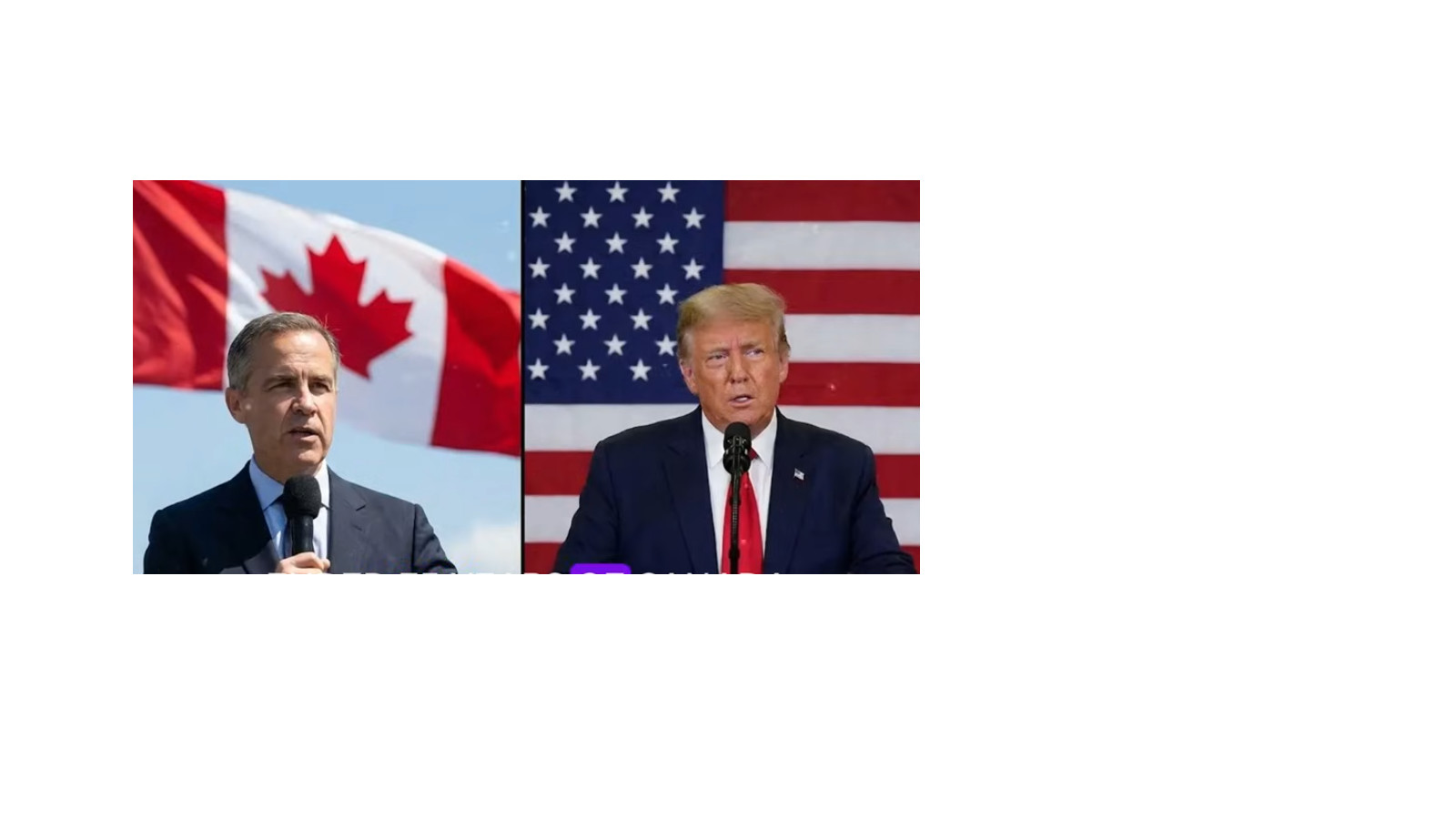
Original article: https://www.youtube.com/watch?v=lS0Ryk6DIHQ
politiX
Dec 17, 2025
13.5K subscribers ... 19,819 views ... 1K likes
Distinguished viewers, on December 16, 2025, Prime Minister Mark Carney made a historic declaration: 'This decades-long process of an ever-closer economic relationship between the Canadian and U.S. economies is now over.' After 75 years of deepening integration, Canada is fundamentally restructuring its economy away from American dependence. While Trump assumed tariff threats would force compliance, Carney responded by diversifying trade to the UK (63% increase in six months), the EU, and Asia-Pacific markets. For those who remember Pierre Trudeau standing against Nixon in the 1970s, this moment echoes that same commitment to sovereignty over subordination.
Key topics: Mark Carney, Canada-US relations, economic independence, Trump tariffs, trade diversification, Canadian sovereignty, USMCA, Pierre Trudeau legacy, UK trade surge. Share your thoughts—especially those who lived through the Trudeau era and understand what true Canadian economic independence means.
For Sponsorship and Partnership:emiralisevinc0@gmail.com ✅️
How this was made
Altered or synthetic content
Sound or visuals were significantly edited or digitally generated.
- BREAKING: Hoekstra's SHOCKING Interview REVEALS Washington's Fear of Rising Canada! ... by politiX
- BREAKING: Carney WARNS $50 BILLION Threat—Announces TRILLION DOLLAR Response to Trump! ... by politiX
- JUST IN: Mark & Diana Carney's Christmas Gesture WINS HEARTS Across Canada! ... by politiX
Peter Burgess COMMENTARY
Peter Burgess
Transcript
- 0:02
- Everyone assumed Canada would always
- need America's economic partnership.
- Everyone was wrong. December 16th, 2025,
- Ottawa. Prime Minister Mark Carney
- delivered a speech that ended 75 years
- of Canada US economic integration in a
- single sentence. The process of economic
- relations between Canada and the US,
- which has been ongoing for decades and
- has become increasingly close, has now
- come to an end. Not suspended, not under
- review, not facing challenges. It is
- over. For 75 years, Canada and the
- United States built the world's most
- integrated bilateral economic
- relationship. Every day, 400,000 people
- cross the border. Two and a half billion
- dollars in trade flow between the two
- countries every day. Supply chains were
- so intertwined that a single car
- manufactured in Ontario contained parts
- from six different American states. An
- assumption embedded in both count's
- 1:00
- economic planning was that this
- integration would deepen indefinitely.
- Trump believed this dependence relegated
- Canada to a secondary position. He
- assumed he could coersse Canada into
- compliance by threatening tariffs. He
- assumed viewing Canada as a potential
- 51st state would demonstrate American
- dominance. He assumed 75 years of
- economic integration meant Canada had no
- other choice. Distinguished viewers, to
- understand why December 16th, 2025
- represents a historic turning point, we
- need to understand what relationship
- Carney is ending and why Trump's
- assumption about Canadian dependence was
- catastrophically wrong. For those who
- remember when Canada stood strong
- against Richard Nixon's economic
- coercion in the 1970s, this moment
- echoes Pierre Trudeau's declaration of
- economic sovereignty. If you're finding
- this analysis valuable, please like this
- video. It helps other Canadians
- understand how we're witnessing the end
- of North American economic integration
- as we've known it. Think about what
- 2:01
- Trump saw when he looked at Canada. 75%
- of Canadian exports going to the United
- States. American companies owning
- significant portions of Canadian
- manufacturing, energy, and technology
- sectors. A trade relationship where
- Canada sold 320 billion dollars in goods
- to America annually while buying 360
- billion back. Trump interpreted this as
- leverage. He believed that Canada's
- economic dependence on American markets
- meant he could demand compliance on
- tariffs, on immigration, on defense
- spending, on any issue where he wanted
- Canadian subordination. His famous joke
- about Canada becoming the 51st state
- wasn't really a joke. It reflected his
- genuine belief that economic integration
- had made Canada functionally American.
- But Trump misunderstood what the
- relationship actually meant. Yes, Canada
- and the United States had built
- unprecedented economic integration over
- 75 years. But that integration was
- negotiated, not imposed. It was
- 3:01
- contractual, not colonial. And most
- importantly, it was reversible if one
- party decided the terms were no longer
- acceptable. Carney decided the terms
- were no longer acceptable. Let that sink
- in. After months of Trump's tariff
- threats, after the 51st state jokes,
- after watching Trump treat the Canadian
- economy as a tool for extracting
- political concessions, Carney made a
- calculation. The costs of maintaining
- the integrated relationship now exceeded
- the benefits. Canada needed to
- fundamentally restructure its economy
- away from American dependence. And on
- December the 16th, 2025, he said so
- publicly. The quote that ended 75 years
- of integration wasn't buried in a policy
- document. It wasn't diplomatic hedging.
- Carney was speaking in Ottawa,
- addressing the reality that every
- Canadian business and every Canadian
- worker already understood. The old
- relationship with America was finished.
- This decadesl long process of an ever
- 4:01
- closer economic relationship between the
- Canadian and US economies is now over.
- Carney stated clearly. Think about that
- phrasing. Decades long process.
- He's not talking about a temporary
- disruption. He's describing the entire
- postw World War II project of North
- American economic integration as a
- historical phase that has ended.
- Ever closer economic relationship. He's
- referencing the assumption that guided
- Canadian economic policies since the
- 1950s that deeper integration with
- America was inevitable, beneficial, and
- permanent.
- Is now over present tense, not might end
- or faces challenges.
- The relationship has already ended.
- We're living in a new reality whether we
- recognize it or not. For those who
- remember when Canadian leaders carefully
- avoided confronting American economic
- power, your like helps others see how
- this moment represents changing
- dynamics. This wasn't Carney's first
- signal that the relationship had
- 5:00
- fundamentally changed. Back in March
- 2025, shortly after becoming prime
- minister, he warned that the old
- relationship we had with the United
- States based on deepening integration of
- our economies and tight security and
- military cooperation is over. He said,
- 'Canada must fundamentally reimagine its
- economy for a drastically different
- world.' But March was early in his
- premiership. The statement could be
- dismissed as campaign rhetoric as
- positioning before negotiations, as
- pressure tactics to extract better terms
- from Trump. December 16th wasn't
- positioning. Nine months into Carney's
- government, after months of failed trade
- talks, after Trump's Reagan ad tantrum
- in October that added 10% tariffs. After
- watching American tariffs devastate
- Canadian steel, aluminum, lumber, and
- automotive sectors, Carney was
- confirming what the data already showed.
- The economic divorce was happening.
- Canada was actively, deliberately,
- systematically restructuring its economy
- 6:00
- away from American dependence. And
- Trump's coercive tactics had accelerated
- rather than prevented that
- restructuring. When a prime minister
- declares that a 75-year economic
- relationship is over, you need evidence
- that he's not just engaging in
- rhetorical exaggeration. The evidence
- exists. It's showing up in Canadian
- export data, in investment patterns, in
- trade agreements, in every metric that
- measures economic orientation. Remember
- the UK trade surge between March and
- September 2025, just 6 months, Canadian
- exports to Britain increased 63%.
- 63% in half a year. Britain, with a
- population of 67 million, became
- Canada's second largest export partner,
- surpassing Mexico with 128 million
- people. Think about what that means.
- Canada redirected enough trade volume in
- 6 months to make a midsize European
- country more important than its southern
- neighbor, Mexico. That's not adjustment.
- That's restructuring. The sectors tell
- the story. Canadian LNG exports to the
- 7:02
- UK tripled. Lumber exports up 58%,
- agriculture up 71%, manufacturing up
- 54%. These aren't marginal increases.
- These are fundamental shifts in where
- Canadian products go and who Canadian
- industries serve. But here's the crucial
- irony. Trump's tariffs made this
- possible. By imposing 25% tariffs on
- most Canadian goods, 50% on steel and
- aluminum, Trump created the crisis that
- justified emergency trade
- diversification.
- Canadian businesses that had spent
- decades building relationships with
- American customers suddenly needed
- alternatives immediately. The government
- provided those alternatives through
- accelerated trade negotiations with the
- UK, the European Union, and Asia-Pacific
- countries. Trump assumed the tariffs
- would force Canadian compliance.
- Instead, they forced Canadian
- adaptation. And that adaptation is
- permanent. Once you've established new
- supply chains, new customer
- relationships, new export
- 8:00
- infrastructure,
- you don't reverse it when tariffs are
- temporarily reduced. You've discovered
- that the American market, which seemed
- essential while bar, was actually
- optional. Please like and subscribe if
- you see how Trump's overreach has
- benefited Canada in unexpected ways.
- This pattern is consistent across
- numerous issues. Car's October 22nd
- speech at the University of Ottawa laid
- out the strategy explicitly. His
- government aims to double non-American
- exports over the next decade, not reduce
- dependence slightly, not diversify at
- the margins. Double the portion of
- Canadian economic activity oriented away
- from the United States. That's only
- achievable if you're ending a
- relationship, not adjusting one. Trump's
- entire approach to Canada rests on a
- fundamental miscalculation about how
- leverage works in economic
- relationships. He believed that because
- Canada sent 75% of its exports to
- America, he had total leverage,
- threatening the access to American
- markets and Canada would comply with any
- demand. But leverage is relative. Yes,
- 9:01
- Canada depended heavily on American
- markets, but America also depended on
- Canadian imports. 60% of American
- aluminum comes from Canada,
- an energyintensive metal that's
- extraordinarily expensive to produce
- domestically.
- Significant portions of American
- automotive production depend on parts
- from Canadian factories.
- American refineries on the Gulf Coast
- are optimized for Canadian heavy crude,
- not easily substituted with domestic
- oil. More importantly, Trump's tariffs
- created leverage for Canada by
- demonstrating that the American market
- wasn't reliable. For 75 years, Canadian
- businesses operated on the assumption
- that access to the American market was
- guaranteed by treaty, protected by NAFTA
- and then USMCA, insulated from political
- whims. Trump shattered that assumption.
- Once Canadian businesses understood that
- American market access could be revoked
- arbitrarily for political purposes
- unrelated to trade, they had to build
- alternatives. And once those
- 10:00
- alternatives exist, Trump's leverage
- evaporates. You can't threaten someone
- with exclusion from a market they've
- already exited. Let that sink in.
- Trump's tactic of threatening Canadian
- access to American markets worked only
- as long as Canada believed that market
- access was irreplaceable. Once Carney
- demonstrated that Canada could function
- without privileged American market
- access, the threat became irrelevant.
- This is why Carney's December 16th
- statement matters so much. He's not
- threatening to end the relationship if
- Trump continues his tariffs. He's
- informing Trump that the relationship
- has already ended regardless of what
- Trump does next. The restructuring is
- underway. The diversification is
- happening. The decadesl long process is
- finished. When Carney says the economic
- relationship is over, he's not claiming
- Canada will cease all trade with the
- United States. That would be
- economically impossible and
- strategically foolish. America and
- Canada share a 5,500 mile border.
- Geographic proximity creates natural
- 11:00
- economic connections that policy can't
- eliminate. What's over is the assumption
- that guided Canadian economic policy for
- 75 years, that deeper integration with
- America was inevitable, beneficial, and
- permanent. What's over is the
- willingness to structure Canadian
- industries around American preferences.
- What's over is treating American market
- access as more valuable than
- sovereignty. Think about the specific
- changes this enables. For decades,
- Canadian energy policy was constrained
- by the need to maintain American
- approval. Pipelines had to root through
- the United States. Export terminals
- required American cooperation. The
- industry operated as if American
- customers were the only customers that
- mattered. Carney's government is ending
- that constraint.
- The November 2025 memorandum of
- understanding with Alberta advances a
- new pipeline to Canada's west coast and
- a 16.5 billion carbon capture system all
- oriented toward Asian export markets not
- American ones. The message to the energy
- 12:02
- industry build for customers who pay not
- customers who threaten. Similarly,
- Canadian defense procurement operated
- for decades on the assumption that
- American interoperability was essential.
- The June 2025 defense partnership with
- the European Union breaks that
- assumption. Canada can now bid on EU
- military contracts. Purchase European
- equipment and build a defense industrial
- base that doesn't depend on American
- approval. For those who understand how
- sovereignty operates for middle powers,
- your like ensures others learn these
- strategic patterns. These aren't
- temporary adjustments. These are
- structural changes that redefine how
- Canadian industries operate, who they
- serve, and where they invest for growth.
- Once those structures are built, they
- become self-reinforcing.
- A Canadian LNG company that spent 2
- years building relationships with UK
- customers and European regulators
- doesn't suddenly abandon that investment
- if Trump reduces tariffs. They've
- discovered a market that values
- 13:01
- reliability over dominance. Trump's
- assumption that economic integration
- meant subordination ignores a crucial
- historical example, one that every
- Canadian over 50 remembers vividly.
- Prime Minister Pierre Trudeau, President
- Richard Nixon, the United States imposed
- 13:18
- wage and price controls and ended the
- Bretonwoods gold standard, causing
- massive disruption to international
- trade. Nixon demanded that Canada align
- its economic policy with American
- priorities. Pierre Trudeau refused. He
- introduced the National Energy Program,
- asserting Canadian control over oil
- resources. He diversified Canadian trade
- toward Europe and Asia. He famously told
- Nixon that Canada would chart its own
- course regardless of American
- preferences.
- The economic relationship survived, but
- on different terms. Canada established
- that it was a sovereign nation, not an
- American economic appendage. The
- relationship continued, but as
- negotiated partnership, not assumed
- subordination. Mark Carney is Pierre
- 14:01
- Trudeau's political heir in more than
- party affiliation. He's repeating
- Trudeau's core insight. Canada can
- withstand American economic pressure if
- it's willing to accept short-term costs
- for long-term sovereignty. Trump assumed
- Carney would fold under tariff pressure
- because Trump has never studied Canadian
- political history. He doesn't know that
- Canadians over 50, the core of Carney's
- electoral coalition, remember Trudeau
- standing against Nixon. They remember
- when Canada chose sovereignty over
- convenience, and they'll support a prime
- minister who makes that choice again.
- This is what happens when Trump's
- transactional approach meets
- institutions and leaders who value
- principle over profit. December 16th,
- 2025 wasn't just about Carney's
- declaration. It was also the day
- Bloomberg reported that Canada's
- Fentinel ZAR Kevin Brusso announced
- Canada would seek closer collaboration
- with China to stop fentinil precursor
- chemicals from reaching North America.
- Think about the timing. The same day
- 15:00
- Carney declares the US economic
- relationship over, his government
- announces cooperation with China on the
- exact issue Trump used to justify his
- tariffs. Remember Trump's February 2025
- tariffs on Canada were supposedly about
- fentanyl. He claimed Canada wasn't doing
- enough to stop the drug flow. He
- positioned the tariffs as national
- security measures, not economic
- coercion. Carney's response, fine, we'll
- solve the fentinel problem, but we'll
- work with China directly, not through
- American coordination. This is
- sophisticated diplomatic signaling.
- Carney is demonstrating that Canada can
- address American concerns without
- accepting American subordination. If
- Fent knows the real issue, Canada will
- tackle it through international
- cooperation. If tariffs are actually
- about economic coercion dressed up as
- security concerns, well, Canada's no
- longer interested in maintaining the
- pretense. For China, this represents
- opportunity. Beijing calculates that
- Canada, facing American economic
- coercion, is open to alternatives, not
- 16:01
- full alliance. Canada isn't abandoning
- the Western democratic framework, but
- pragmatic cooperation on specific issues
- where both countries have shared
- interests. This is the world Trump is
- creating through his transactional
- bullying. Countries that historically
- aligned with America are exploring
- alternatives, not because they prefer
- China's system, because they need
- partners who negotiate in good faith
- rather than imposed demands through
- threatened exclusion. Car's December
- 16th declaration that the economic
- relationship is over will be remembered
- as a turning point in Canadian history.
- Not because it caused the change. The
- change was already happening, but
- because it acknowledged the change
- publicly, making it irreversible
- politically. Once a prime minister
- states that a 75-year relationship has
- ended, he can't walk it back. Any future
- negotiations with the United States
- happen on new terms. Canada approaches
- America as one trading partner among
- many, not as the essential partner
- around which everything else revolves.
- 17:00
- This creates opportunity and risk. The
- opportunity. Canada diversifies its
- economic relationships, reducing
- vulnerability to any single partner's
- political whims. The risk. The
- transition from Americanoriented economy
- to diversified economy involves
- short-term costs in disrupted supply
- chains, lost contracts, and adjustment
- paying for workers and affected sectors.
- Car's November 2025 budget addresses
- these costs directly. It includes $115
- billion in infrastructure investment
- over 5 years. Specifically designed to
- support economic restructuring. It
- provides 110 billion for productivity
- and competitiveness, helping Canadian
- industries adapt to serving non-American
- markets. These aren't normal budget
- categories. These are restructuring
- programs, acknowledging that Canada is
- fundamentally reorienting its economy.
- For those who live through the Trudeau
- era and understand what true Canadian
- sovereignty means, share your thoughts
- in the comments. The numbers suggest
- 18:01
- Canadians support this direction.
- Despite short-term economic pain from
- Trump's tariffs, Carney's approval
- ratings remain strong. The Liberal
- Party's April 2025 election victory,
- winning the highest vote shares since
- 1984, indicated that Canadians prefer
- sovereignty over subordination, even if
- sovereignty is more expensive. This
- represents a profound shift in Canadian
- political psychology. For decades,
- Canadian economic policy prioritized
- market access and economic efficiency
- over sovereignty and political
- independence. Integration with America
- was justified because it made Canadians
- richer. That calculus has reversed. Now
- Canadians are willing to accept lower
- short-term growth if it means freedom
- from American economic coercion. Trump's
- legacy will be breaking the integration
- he assumed would give him leverage by
- treating Canada as subordinate. He
- convinced Canadians that the
- relationship needed to end. By imposing
- arbitrary tariffs, he created the crisis
- that justified restructuring. By
- 19:00
- demanding compliance, he guaranteed
- resistance. December 16th, 2025.
- This decadesl long process of an ever
- closer economic relationship between the
- Canadian and US economies is now over.
- Seven and a half decades of integration
- ended by a single sentence from a prime
- minister who calculated that sovereignty
- is more valuable than subordination.
- Trump assumed economic dependence meant
- Canadian compliance. He assumed that
- threatening access to American markets
- would force Carney to accept American
- terms. He assumed that 75 years of
- integration was irreversible. Canada is
- restructuring its economy away from
- American dependence. Trade is
- diversifying to the UK, the EU, and Asia
- Pacific. Defense partnerships are
- forming with Europe. Energy
- infrastructure is reorienting toward
- non-American customers and the prime
- minister is stating publicly that this
- isn't temporary adjustment. It's
- permanent transformation. This is what
- happens when Trump's transactional
- bullying meets leaders who value
- principle over profit. This is what
- 20:01
- happens when he assumes integration
- means subordination.
- This is what happens when he discovers
- that relationships built over 75 years
- can end. When one party decides the
- terms are no longer acceptable, the
- economic relationship between Canada and
- the United States isn't paused. It isn't
- under review. According to the Canadian
- prime minister, it's over.
- Welcome to the new reality that Trump
- created by treating an ally as a
- subordinate.