
Date: 2026-03-03 Page is: DBtxt003.php txt00029331
CANADA
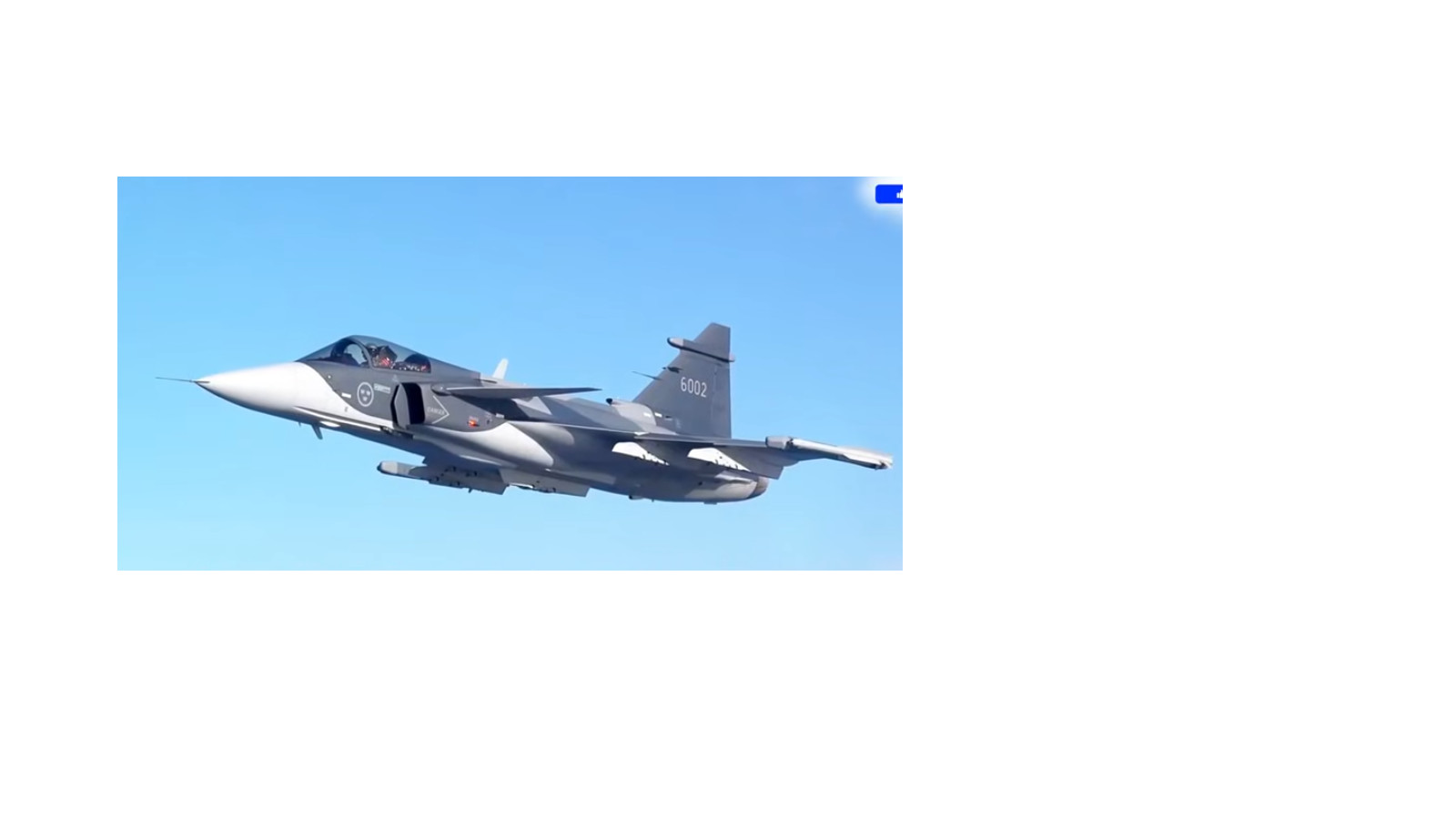
CHOOSING GRIPEN OVER F35 ... NavyCast
Canada Breaks Silence, Rejects F 35 That Shocks Washington and NATO
CHOOSING GRIPEN OVER F35 ... NavyCast
Canada Breaks Silence, Rejects F 35 That Shocks Washington and NATO
Original article: https://www.youtube.com/watch?v=dsc7Ox7MdlM
NavyCast
Dec 20, 2025
2.66K subscribers
HOA KỲ
#canadianmilitary #arcticsovereignty #rcaf
Is Canada finally reclaiming its strategic independence? In this deep-dive military analysis, we explore a groundbreaking hypothetical scenario where Ottawa shifts away from the F-35 program to embrace the Saab Gripen E. This move isn't just about procurement; it’s a bold statement on Canadian sovereignty and Arctic defense. We break down the technical specifications, from the $8,000 hourly operating cost to the rugged versatility required for our harsh northern climate. This analysis explores how domestic final assembly in Montreal and deep technology transfers could revitalize the Canadian aerospace industry, moving us from a dependency model to a self-sufficiency powerhouse. We examine the geopolitical ripples across NATO and NORAD, questioning whether interoperability must always mean total reliance on foreign digital keys. For Canadians aged 40-65 who value national pride and industrial growth, this video uncovers the strategic benefits of owning our technology rather than renting it. Join the conversation on the future of the Royal Canadian Air Force and our role as a sovereign middle power in an unstable global landscape. We analyze the shift from Texas-controlled servers to Canadian-led innovation. It is time to discuss the real cost of defense and the value of our Northern sovereignty.
#canadianmilitary #arcticsovereignty #rcaf #canadadefense #gripene
How this was made
Altered or synthetic content
Sound or visuals were significantly edited or digitally generated. Learn more
Peter Burgess COMMENTARY
Peter Burgess
Transcript
- 0:00
- Welcome back to the stream everyone.
- Today we're diving into a highstakes
- strategic scenario that's been buzzing
- in defense circles. Imagine if in
- November 2024,
- Canada chose to send a shock wave
- through the global defense market by
- walking away from the F-35 program.
- Let's treat this as a critical case
- study in national sovereignty.
- Suppose Ottawa decided to reject a $1.7
- trillion ecosystem to sign a $19 billion
- hypothetical contract for the Gripen E.
- We're going to analyze this as a pivot
- from dependency to total ownership. Is
- it possible for a G7 nation to reclaim
- its skies from foreign digital control?
- Let's break down this gripping what if
- and what it would mean for our proud
- nation. Listen, if you're still with me
- on this stream, it's because you
- understand that the defense of this
- 1:01
- nation isn't just about a flashy air
- show or a press release from Ottawa.
- It's about the cold, hard reality of
- what happens when the whatif becomes
- what now. We are diving deep into the
- second half of this hypothetical
- earthquake. The moment Canada decides
- that $19 billion spent at home is worth
- infinitely more than $1.7 trillion spent
- on a leash. I want you to visualize the
- Arctic. Not the Arctic on a map, but the
- real Arctic. A place where the wind
- doesn't just blow, it screams. And where
- the temperature drops so low that
- ordinary metal becomes as brittle as
- glass.
- For 20 years, we've been told that the
- F-35 was the only answer for this
- environment. But anyone who's ever
- turned a wrench in a Canadian winter
- knows that high-tech stealth coating and
- delicate centralized sensors don't play
- well with minus40° and blowing snow.
- 2:02
- Think about the hypothetical scene at
- Cold Lake Air Force Base in Alberta.
- It's September and the air is already
- starting to bite.
- Major Emily Russo, a pilot with 12 years
- of experience flying the CF-18 Hornet, a
- woman who has spent more time in the
- Arctic Circle than most people have
- spent in their own backyards, is
- standing in front of a Grippen E mockup.
- She's not looking at the cockpit. She's
- not looking at the weapons pylons. She's
- looking at the maintenance bay. And then
- she says something that should be the
- rallying cry for our entire military. I
- can open this with standard tools.
- Do you realize how revolutionary that
- sounds to someone who has spent her
- career waiting? Under the F-35 model, if
- a sensor fails at a forward operating
- base, you don't just fix it. You wait
- 3:00
- for a Lockheed Martin certified
- technician to be flown in from a hub
- carrying a proprietary digital key all
- while the mission is grounded. But with
- the Gripen E, we are looking at a jet
- designed by Swedes. People who live at
- our latitudes who understand that a
- fighter is useless if it can't be
- serviced by a small crew on a frozen
- strip of road. This isn't just a
- technical detail. It's the key to our
- Arctic sovereignty.
- Why do we concentrate all our power at a
- few massive bases like Cold Lake or
- Bagotville? Because the infrastructure
- required to support a fifth generation
- stealth fleet is so massive and so
- fragile that you can't put it anywhere
- else.
- But imagine a future where we can
- disperse. We're talking about taking off
- from 800 meter temporary runways in
- Inuvic, Ikaluit, or Resolute Bay. We are
- talking about a Canada that doesn't just
- 4:01
- monitor the north from a distance, but
- actually occupies it. As the Arctic ice
- thaws and international eyes turn toward
- our Northwest Passage and our undersea
- resources,
- do we want to be the country that has to
- call a data center in Texas to get
- permission to launch a patrol? Or do we
- want to be the nation that can scramble
- a jet from a roadside strip in the
- middle of nowhere using nothing but a
- few technicians and a toolbox?
- That is the difference between being a
- customer and being a landlord. And let's
- talk about the money because this is
- where it gets real. For every taxpayer
- from Victoria to St. John's, we are
- looking at an operating cost of $8,000
- per flight hour for the Gripen E versus
- an estimated $33,000 for the F-35
- over a 40-year lifespan of 88 jets. That
- isn't just a saving. It's a national
- 5:01
- fortune.
- But it's not just about spending less.
- It's about where that money goes. When
- you pay $33,000 an hour for an F-35, a
- massive chunk of that flies straight
- across the border to maintain the ALIS
- Odin servers and the US contractor
- ecosystem. It's a one-way drain. But in
- our hypothetical gripen scenario, that
- money stays here. It stays in Montreal
- where the final assembly line is
- bringing Bombardier back from the brink.
- Remember the headlines from 2020 to
- 2023.
- Bombardier cutting 5,000 jobs. Our
- aviation sector, the pride of the nation
- that built the Avro Arrow, was being
- hollowed out.
- But now imagine Mark Tremble, a
- 28-year-old engineer from Polytenique,
- Montreal. He was ready to walk away from
- aerospace because he thought Canada had
- 6:01
- given up.
- Now he's part of a team of 1,200
- engineers and assemblers building a next
- generation fighter on Canadian soil.
- This isn't just contract manufacturing
- where we build a wing flap and ship it
- away. This is final assembly. This is
- systems integration. This is Canadian
- brains owning the source code of the
- most advanced electronic warfare suite
- on the planet. When we control the
- technology, we own the future. What
- about our universities? McGill, U of the
- University of Saskatchewan. In this
- scenario, they aren't just academic
- bubbles. They are partners in a deep
- technology transfer. Saab isn't just
- selling us a box. They are handing us
- the blueprints.
- Our students will be researching ASA
- radar systems and advanced gallium
- nitride semiconductors right here at
- home. We are creating a generation of
- 7:01
- specialists who aren't dependent on
- foreign licenses to do their jobs. This
- is how you build a middle power
- superpower. You invest in the intellect
- of your own people.
- Is there anyone out there who still
- thinks it's better to just buy a
- finished product off the shelf and hope
- the service light never comes on?
- And don't believe for a second the
- fear-mongering coming out of the
- Pentagon about interoperability.
- They say we won't be able to fly with
- NORAD if we don't have the same jet.
- That is a smoke screen. The Grippen E is
- fully compatible with NATO link 16. It
- talks to the F-18, the F-16, and the
- F-35 perfectly. No, what Washington is
- truly disappointed about isn't technical
- compatibility. It's the loss of the
- leash. They are worried that if Canada
- proves you can have a worldclass NATO
- standard air force while maintaining
- 100% control over your own software and
- 8:01
- maintenance, the lockdown model of the
- F-35 will start to crumble.
- They are worried that Poland, Germany or
- the Czech Republic might look at us and
- say, 'Wait, we can be allies without
- being subordinates. We are at a
- crossroads in 2024 and 2025.
- The world is becoming more unstable and
- our traditional partners are facing
- their own internal political shifts. Can
- we afford to have our national defense
- tied to the political whims of another
- nation's capital?
- This hypothetical move toward the Gripen
- E isn't an act of isolation. It's an act
- of maturity.
- It's Canada deciding to be an
- independent bridge between North America
- and Europe. It's why we're seeing Ottawa
- move toward Brussels, joining nextgen
- tank projects with Germany and France,
- and air defense programs with Italy.
- We are diversifying.
- 9:01
- We are building a defense network that
- has multiple centers of power, ensuring
- that no single point of failure,
- technical or political, can ever ground
- the Royal Canadian Air Force.
- I want to ask you something directly.
- Does a country that rents its security
- ever truly feel secure?
- When you look at the flag, do you want
- to see a nation that follows or a nation
- that leads?
- We have the geography. We have the
- engineers. And we have the pilots. What
- we've lacked for 20 years is the
- political courage to say no to a bad
- deal and yes to our own potential. This
- $19 billion contract is about more than
- 88 aircraft. It's about the right to
- decide our own destiny for the next 40
- years. It's about the kid in Moosejaw
- who wants to be a technician and the
- engineer in Montreal who wants to design
- 10:01
- the next great sensor. It's about the
- sovereignty of our Arctic and the
- strength of our economy.
- We chose the road less traveled. It
- wasn't the easy path. The easy path is
- just signing the check Washington gives
- you. But we chose the path that leads
- back to us. We chose ownership. We chose
- the ability to change a line of code
- without asking for a permit. We chose a
- jet that was built for our snow, our
- ice, and our people. This is the
- Canadian comeback. This is the moment we
- stopped being a customer and started
- being a country again. So, tell me in
- the comments, are you ready for this?
- Are you ready to see a made in Canada
- solution defending our northern lights?
- Are you ready to see our industry roar
- back to life? This is the kind of
- analysis you won't get from the
- mainstream media. And it's the kind of
- conversation we need to be having at
- 11:01
- every kitchen table in this country.
- Because at the end of the day, real
- security isn't something you buy, it's
- something you build.
- And for the first time in a long time,
- we are building it ourselves.
- Stay proud, Canada.
- The skies are ours again. Look, if
- you're still with me on this stream,
- it's because you understand that the
- defense of this nation isn't just about
- a flashy air show or a press release
- from Ottawa. It's about the cold, hard
- reality of what happens when the whatif
- becomes what now.
- We are diving deep into the second half
- of this hypothetical earthquake. The
- moment Canada decides that $19 billion
- dollars spent at home is worth
- infinitely more than being a small gear
- in a $1.7 trillion foreign machine. I
- want you to visualize the Arctic. Not
- 12:00
- the Arctic on a map, but the real
- Arctic. A place where the wind doesn't
- just blow, it screams. And where the
- temperature drops so low that ordinary
- metal becomes as brittle as glass. For
- 20 years, we've been told that the F-35
- was the only answer for this
- environment. But anyone who's ever
- turned a wrench in a Canadian winter
- knows that high-tech stealth coding and
- delicate centralized sensors don't play
- well with minus40° and blowing snow.
- Think about the hypothetical scene at
- Cold Lake Air Force Base in Alberta.
- It's September and the air is already
- starting to bite.
- Major Emily Russo, a pilot with 12 years
- of experience flying the CF-18 Hornet, a
- woman who has spent more time in the
- Arctic Circle than most people have
- spent in their own backyards, is
- standing in front of a Griffin E mockup.
- She's not looking at the cockpit. She's
- 13:01
- not looking at the weapons pylons.
- She's looking at the maintenance bay.
- And then she says something that should
- be the rallying cry for our entire
- military. I can open this with standard
- tools.
- Do you realize how revolutionary that
- sounds to someone who has spent her
- career waiting? Under the F-35 model, if
- a sensor fails at a forward operating
- base, you don't just fix it. You wait
- for a Lockheed Martin certified
- technician to be flown in from a hub
- carrying a proprietary digital key all
- while the mission is grounded. But with
- the Gripen E, we are looking at a jet
- designed by Swedes. People who live at
- our latitudes who understand that a
- fighter is useless if it can't be
- serviced by a small crew on a frozen
- strip of road. This isn't just a
- technical detail. It's the key to our
- Arctic sovereignty.
- Why do we concentrate all our power at a
- 14:02
- few massive bases like Cold Lake or
- Bagotville?
- Because the infrastructure required to
- support a fifth generation stealth fleet
- is so massive and so fragile that you
- can't put it anywhere else. But imagine
- a future where we can disperse.
- We're talking about taking off from 800
- meter temporary runways in Inuvic
- Ikaluit or Resolute Bay. We are talking
- about a Canada that doesn't just monitor
- the North from a distance, but actually
- occupies it. As the Arctic ice thaws and
- international eyes turn toward our
- Northwest Passage and our undersea
- resources, do we want to be the country
- that has to call a data center in Texas
- to get permission to launch a patrol?
- Or do we want to be the nation that can
- scramble a jet from a roadside strip in
- the middle of nowhere using nothing but
- a few technicians and a toolbox?
- That is the difference between being a
- 15:01
- customer and being a landlord. And let's
- talk about the money because this is
- where it gets real for every taxpayer
- from Victoria to St. John's. We are
- looking at an operating cost of $8,000
- per flight hour for the Gripen E versus
- an estimated $33,000 for the F-35
- over a 40-year lifespan of 88 jets. That
- isn't just a saving. It's a national
- fortune. But it's not just about
- spending less. It's about where that
- money goes. When you pay $33,000 an hour
- for an F-35,
- a massive chunk of that flies straight
- across the border to maintain the
- ALIS/Oden
- servers and the US contractor ecosystem.
- It's a one-way drain. But in our
- hypothetical Gripen scenario, that money
- stays here. It stays in Montreal where
- the final assembly line is bringing
- 16:00
- Bombardier back from the brink. Remember
- the headlines from 2020 to 2023?
- Bombardier cutting 5,000 jobs. Our
- aviation sector, the pride of the nation
- that built the Avro Arrow, was being
- hollowed out.
- But now, imagine Mark Tremble, a
- 28-year-old engineer from Polytenique,
- Montreal. He was ready to walk away from
- aerospace because he thought Canada had
- given up. Now
- he's part of a team of 1/200 engineers
- and assemblers building a next
- generation fighter on Canadian soil.
- This isn't just contract manufacturing
- where we build a wing flap and ship it
- away. This is final assembly.
- This is systems integration. This is
- Canadian brains owning the source code
- of the most advanced electronic warfare
- suite on the planet. When we control the
- technology, we own the future. What
- 17:02
- about our universities?
- McGill, U of the University of
- Saskatchewan. In this scenario, they
- aren't just academic bubbles. They are
- partners in a deep technology transfer.
- Saab isn't just selling us a box. They
- are handing us the blueprints.
- Our students will be researching ASA
- radar systems and advanced gallium
- nitride semiconductors. Right here at
- home, we are creating a generation of
- specialists who aren't dependent on
- foreign licenses to do their jobs. This
- is how you build a middle power
- superpower. You invest in the intellect
- of your own people. Is there anyone out
- there who still thinks it's better to
- just buy a finished product off the
- shelf and hope the service light never
- comes on?
- And don't believe for a second the
- fear-mongering coming out of the
- Pentagon about interoperability.
- And they say we won't be able to fly
- with NORAD if we don't have the same
- 18:01
- jet. That is a smoke screen. The Gripen
- E is fully compatible with NATO link 16.
- It talks to the F-18, the F-16, and the
- F-35 perfectly. No, what Washington is
- truly disappointed about isn't technical
- compatibility. It's the loss of the
- leash. They are worried that if Canada
- proves you can have a worldclass NATO
- standard air force while maintaining
- 100% control over your own software and
- maintenance, the lockdown model of the
- F-35 will start to crumble. They are
- worried that Poland, Germany, or the
- Czech Republic might look at us and say,
- 'Wait, we can be allies without being
- subordinates?
- We are at a crossroads in 2024 and 2025.
- The world is becoming more unstable and
- our traditional partners are facing
- their own internal political shifts. Can
- 19:00
- we afford to have our national defense
- tied to the political whims of another
- nation's capital?
- This hypothetical move toward the grip
- and e isn't an act of isolation. It's an
- act of maturity. It's Canada deciding to
- be an independent bridge between North
- America and Europe. It's why we're
- seeing Ottawa move toward Brussels,
- joining nextgen tank projects with
- Germany and France and air defense
- programs with Italy.
- We are diversifying. We are building a
- defense network that has multiple
- centers of power, ensuring that no
- single point of failure, technical or
- political, can ever ground the Royal
- Canadian Air Force.
- I want to ask you something directly.
- Does a country that rents its security
- ever truly feel secure?
- When you look at the flag, do you want
- to see a nation that follows or a nation
- that leads?
- 20:00
- We have the geography. We have the
- engineers. And we have the pilots. What
- we've lacked for 20 years is the
- political courage to say no to a bad
- deal and yes to our own potential. This
- $19 billion contract is about more than
- 88 aircraft. It's about the right to
- decide our own destiny for the next 40
- years.
- It's about the kid in Moosejaw who wants
- to be a technician and the engineer in
- Montreal who wants to design the next
- great sensor. It's about the sovereignty
- of our Arctic and the strength of our
- economy.
- We chose the road less traveled. It
- wasn't the easy path. The easy path is
- just signing the check Washington gives
- you. But we chose the path that leads
- back to us. We chose ownership. We chose
- the ability to change a line of code
- without asking for a permit. We chose a
- jet that was built for our snow, our
- 21:01
- ice, and our people. This is the
- Canadian comeback. This is the moment we
- stopped being a customer and started
- being a country again. So, tell me in
- the comments, are you ready for this?
- Are you ready to see a made in Canada
- solution defending our northern lights?
- Are you ready to see our industry roar
- back to life?
- This is the kind of analysis you won't
- get from the mainstream media. And it's
- the kind of conversation we need to be
- having at every kitchen table in this
- country. Because at the end of the day,
- real security isn't something you buy,
- it's something you build. And for the
- first time in a long time, we are
- building it ourselves.
- Stay proud, Canada. The skies are ours
- again. If this deep dive into our
- national sovereignty fired you up, do me
- a solid, hit that like button, and
- subscribe to the channel so we can keep
- 22:00
- pushing the Canadian perspective
- forward. We're building a community here
- that values independence and grit. I
- want to hear your voice in the comments.
- Do you think owning our technology is
- worth more than following the pack?
- How would you feel seeing made in Canada
- jets patrolling our Arctic? And finally,
- which Canadian city do you think will
- benefit most from this industrial
- rebirth?
- Stay proud, stay strong, and may God
- bless our great north.
- Cheers everyone.