
Date: 2026-03-03 Page is: DBtxt003.php txt00029315
CANADA
CARNEY OUTMARTS TRUMP .... George Conway, Conway Report
JUST IN: Trump Pushes Canada to the Brink — Carney Shuts Him Down as Talks IMPLODE
CARNEY OUTMARTS TRUMP .... George Conway, Conway Report
JUST IN: Trump Pushes Canada to the Brink — Carney Shuts Him Down as Talks IMPLODE
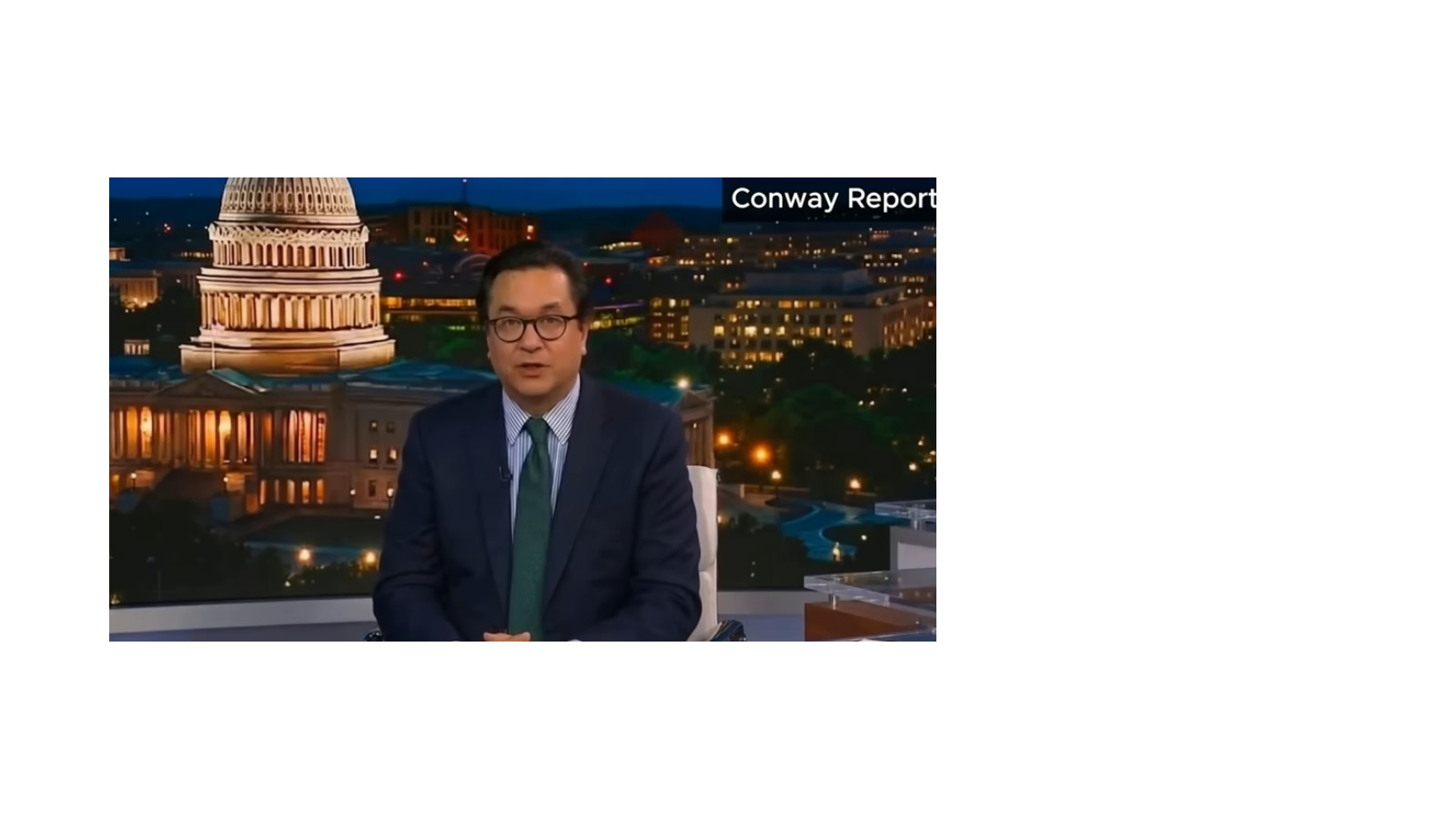
Original article: https://www.youtube.com/watch?v=-jVFQJ9-pUo
Conway Report
Dec 14, 2025
4.59K subscribers ... 219,964 views ... 9.7Kclikes
Donald Trump has pushed America’s closest ally to the breaking point — and this time, Canada isn’t blinking. In a stunning breakdown of U.S.–Canada relations, Trump’s aggressive tariff threats and bullying tactics have collided head-on with Mark Carney’s calm, data-driven refusal to cave, sending trade talks into free fall.
What started as political posturing has turned into a full-blown economic crisis. Auto plants stall, prices rise, lawsuits pile up, and the Supreme Court is now questioning whether Trump has crossed a constitutional red line by abusing emergency powers to impose tariffs. As Canada looks to diversify away from an increasingly unstable partner, American businesses and consumers are caught in the crossfire of a self-inflicted trade war.
With legal experts warning of an unprecedented expansion of presidential power and allies questioning whether the U.S. can still be trusted, this confrontation is about far more than trade. It’s about the rule of law, economic stability, and whether one man’s ego can upend decades of cooperation.
Is this the moment Trump finally overplays his hand — or just the beginning of a deeper global fallout? Share your thoughts in the comments, hit like if this shocked you, and subscribe for sharp analysis and real-time updates as this crisis unfolds.
Peter Burgess COMMENTARY
Peter Burgess
Transcript
- 0:00
- So, Donald Trump has finally decided to
- burn down the bridge to our closest
- neighbor. And he's doing it with a level
- of recklessness that should terrify
- anyone who understands how the global
- economy actually works. Mark Carney, the
- former governor of the Bank of England
- and Bank of Canada, has effectively shut
- down Trump's bullying attempts, not with
- a scream, but with a cold, hard look at
- reality that Trump simply can't handle.
- But guess what? This isn't just a trade
- spat.
- It's the implosion of the most stable
- economic relationship on the planet.
- It's honestly hard to believe he said
- that out loud. Trump is treating Canada.
- Yes, Canada. Not as a partner, but as a
- hostile entity that needs to be brought
- to heal. Can you believe the nerve? We
- are talking about a country that fights
- alongside us, builds with us, and buys
- 1:01
- more from us than China, Japan, and the
- UK combined. This is absolutely wild.
- This isn't just about milk or lumber or
- steel tariffs. We're talking about the
- complete unraveling of the North
- American economic zone. And trust me, if
- this continues, the economic pain coming
- for American families is going to be
- unlike anything we've seen in decades.
- Let me fill you in on what's been
- happening. So, let's look at the players
- here. On one side, you have Donald Trump
- who has been back in the White House for
- less than a year, and he is already
- itching for a fight. Since taking office
- again in January 2025, he has been
- desperate to prove that his
- America first doctrine can bully anyone
- into submission. From the get-go, he
- seemed to believe that Canada would just
- roll over like a terrified junior
- 2:00
- partner. Whether it was his attacks on
- NATO, his withdrawal from agreements, or
- his insults
- toward G7 leaders, Trump really cemented
- himself as a leader who views alliances
- not as assets, but as protection
- rackets. But here's where the rubber
- meets the road. He's not dealing with a
- standard politician this time. He's
- dealing with Mark Carney, a man who
- understands the global financial
- plumbing better than perhaps anyone
- alive. Now, this is where it gets wild.
- We're now months into a manufactured
- crisis where the United States is
- threatening 25% tariffs on Canadian
- goods. Automanufacturing plants in
- Michigan are on hold. Lumber shipments
- to homebuilders in Arizona are getting
- slashed tourism revenue in Florida from
- Canadian snowbirds is left in the lurch.
- This mess is unfolding because the Trump
- administration is at a standstill over
- 3:00
- issues that frankly don't exist in
- reality. And guess who's stuck right in
- the middle? Yep, the American consumer.
- Mark Carney is supposed to be the
- globalist that Trump hates. But here's
- the kicker. Carney isn't interested in
- the theatrics.
- He isn't interested in a Twitter war. He
- wants stability. But Trump wants total
- capitulation.
- And before we go any further, let's be
- real for a second. We all know trade
- deals are complex. We all know there are
- genuine grievances about dairy quotas or
- lumber subsidies that go back decades.
- But what is happening now is not a
- negotiation. It is a shakeddown. Now,
- back to the matter at hand. Reports from
- around late October 2025 revealed just
- how unhinged Trump was becoming behind
- closed doors. He labeled Carney's
- refusal to tear up existing agreements
- as nasty and even went as far to say
- 4:02
- that Canada was behaving like a threat
- to US national security. Talk about
- strong words. Essentially,
- Trump was calling our closest ally a
- national security threat.
- The same designation we give to North
- Korea, Iran, just for not sticking to
- his exact wishes on a trade
- renegotiation that wasn't even scheduled
- to happen yet. And this wasn't a private
- conversation. Trump made sure to air his
- grievances publicly, making it clear
- that he was not happy with the lack of
- submission from Ottawa. He went on Truth
- Social. He went on cable news and he
- blasted the Canadian leadership taking
- advantage of the United States. This
- announcement sent shock waves through
- the American business community because
- it raised all sorts of questions. If
- Donald Trump, the self-proclaimed tariff
- man, could turn against Canada, a
- 5:03
- country whose economy is practically
- fused with ours. What did that mean for
- everyone else scrambling to maintain
- their position in the global market?
- Now, this isn't the first time we've
- seen this. Donald Trump's loyalty really
- only extends to himself. Whenever
- someone stops being useful or does
- something he doesn't like, he's quick to
- turn on it. We've spotted this pattern
- time and time again. Just think about
- how he turned on Jeff Sessions right
- after Sessions recused himself from the
- Russia investigation. Sessions was the
- first senator to endorse Trump, a loyal
- foot soldier who gave him legitimacy
- when no one else would. But the moment
- Sessions followed the law instead of
- Trump's personal whims, he was
- belittled, humiliated, and eventually
- fired. Then there was William Bar. Bar
- 6:02
- went to extraordinary lengths to protect
- Trump, spinning the Mueller report and
- intervening in cases for Trump's allies.
- But Trump wasn't pleased when Bar
- refused to seize voting machines or
- declare the 2020 election stolen. He
- instantly went from my attorney general
- to a Reno and a swamp creature. And
- let's not forget how he distanced
- himself from Mike Pence when Pence
- refused to violate the Constitution
- on January 6th. Pence served him loyally
- for four years, standing by him through
- every scandal, every impeachment, every
- outrage. But the second Pence chose the
- Constitution over Trump's ego. Trump
- sent a mob after him. Even Kevin
- McCarthy faced a similar fate when he
- tried to balance the chaos of the House
- Caucus with the reality of governance.
- 7:00
- McCarthy debased himself repeatedly to
- please Trump, flying to Mare Lago to
- kiss the ring after the insurrection.
- But it was never enough when McCarthy
- needed to pass a budget to keep
- government open. Trump let him twist in
- the wind. Now, it looks like Canada is
- in the hot seat. This pattern is
- becoming all too familiar. You can show
- all the loyalty in the world and defend
- Trump every single day, but the moment
- you step out of line or cease to be
- useful, he'll toss you aside without a
- second thought. Trump doesn't want
- allies. He wants accompllices.
- And when a country like Canada refuses
- to be an accomplice to his economic
- delusions, they become the enemy. So
- what did Mark Carney do to tick off
- Donald Trump? Well, it all boils down to
- a refusal to play the game on Trump's
- terms. The impass happened because
- Trump's team wanted unilateral
- concessions
- on USMCA enforcement, effectively
- 8:03
- demanding the right to re-impose tariffs
- whenever they felt like it, while the
- Canadians were trying to maintain the
- rules-based order that businesses rely
- on. Ultimately, the breakdown just
- happened since no one was willing to
- budge on the basic concept that a
- contract is a contract. As a central
- banker and economist, Carney decided to
- take a boring stance. He focused on the
- data. He focused on the integrated
- supply chains and refuse to engage in
- the insults. His approach seemed to be
- just what the doctor order, calm,
- rational, fact-based.
- At first, Trump seemed to be okay with
- this. He appreciates killers in business
- and the notion of high stakes
- negotiation. But as the trade talks
- dragged into November, some issues
- started cropping up. Auto parts prices
- were spiking. Small businesses in border
- 9:02
- states were panicking and the stock
- market started to wobble because
- investors hate uncertainty. While the
- Canadians were steadfast and holding
- their ground, predictably the public
- began to shift their blame toward the
- chaos coming from the White House polls
- indicated that Americans were
- increasingly frustrated with the rising
- cost of goods and the unnecessary drama.
- This was the moment Trump began to sweat
- a little. You see, Trump values his
- image as a master dealmaker, his stock
- market numbers, and overall his
- perception of dominance. He doesn't want
- to be tied to a recession that's caused
- by his own unforced errors. That's
- definitely not the victory he seeks. And
- then Carney went ahead and made a move
- that, according to Trump, was a serious
- misstep. Carney started looking for ways
- to diversify Canada's trade opening
- discussions with other Pacific nations
- 10:01
- and even signaling a willingness to look
- at Europe more closely. He figured he
- should protect his country, its economy
- from a volatile,
- but then when Trump caught wind of all
- this, he absolutely lost it. In Trump's
- eyes, diversifying is just a sign of
- weakness and betrayal.
- Looking for other partners. That's pure
- treason against America first. Any ally
- who dares to protect their own interests
- instead of serving ours is instantly
- labeled a traitor. Now, this left Carney
- and the Canadian leadership in a tight
- spot. On one side, they really need
- access to the US market to maintain
- their position. The Canadian economy is
- heavily dependent on crossber trade and
- losing that access would be
- catastrophic. The business community in
- 11:02
- Toronto and Montreal will drop the
- government like a hot potato if the US
- border closes. On the flip side, they
- actually have to get down to protecting
- their national sovereignty. That means
- figuring out how to stand up to a bully,
- maintaining their dignity, and ensuring
- they aren't just a vassal state. The
- tricky part is all of that requires some
- level of defiance against Trump and
- action that angers the White House. So
- Canada is caught in a bind if they keep
- trying to please Trump, which means
- tearing up the USMCA and accepting
- humiliating tariffs that only makes the
- economic situation worse and paints
- their leadership as weak. or they can do
- their actual job as a sovereign nation,
- which means standing firm and
- diversifying, but that'll definitely
- make Trump turn against them with the
- full force of the US government. It's a
- 12:01
- tough situation, and that's the mess
- Trump creates for world leaders. He
- demands complete loyalty and wants them
- to sacrifice their own people's
- well-being without budging. But then he
- points fingers when things go south.
- He's not shy about tossing them under
- the bus whenever it suits him. This
- whole scenario is causing major stress
- within the American conservative
- movement, too. If Trump has turned on
- Canada and is willing to publicly
- undermine our most reliable trading
- partner, every other ally is left
- wondering if they're the next target.
- Those moderate Republicans who are
- trying to balance the needs of American
- industry are now worried sick about
- being next one to get tossed aside. They
- know that a trade war with Canada is
- unwinable and suicidal for the US
- economy. Meanwhile, the extreme faction
- 13:00
- believe Canada isn't loyal enough and
- that they're too woke using cultural
- grievances to justify economic sabotage.
- Things became even more intense when
- Steve Schmidt, one of the most prominent
- former Republican strategists, broke
- away from the usual partisan silence.
- Schmidt had been pushing for a return to
- sanity and criticized Trump for his
- disgusting insults toward Canada. He
- called out the behavior for what it is,
- reckless, immoral, and stupid. When
- someone as deeply rooted in the history
- of the Republican party as Schmidt
- starts turning against you on a core
- issue like trade and alliances, you
- know, you're in a world of hurt. Now,
- let's look at the legal reality because
- this isn't just about tweets. The
- American importing community decided to
- take legal action on November 5th, 2025.
- A coalition of business groups filed a
- 14:00
- lawsuit in federal court stating that
- Trump's use of the International
- Emergency Economic Powers Act, EPA, to
- impose these tariffs was a massive legal
- violation.
- They pointed out that the power to tax
- belongs to Congress, not the president.
- The constitution is crystal clear on
- this article I section 8 gives congress
- the power to lay and collect duties. The
- legal process moved pretty quickly and
- the Supreme Court recognized the
- urgency. After all, every day the
- tariffs continue means higher prices for
- American families. And let me tell you,
- the legal experts didn't hold back with
- their analysis. It was a major blow for
- the administration's arguments.
- The consensus among constitutional
- scholars is that Trump's actions were
- constitutionally indefensible.
- That's legal speak for saying you've got
- 15:00
- no solid ground to stand on here.
- There's no legal validity to what you're
- doing. You're just abusing your power.
- The Supreme Court justices, even the
- conservatives,
- appeared skeptical during oral
- arguments. Justice Gorsuch warned about
- a one-way ratchet of executive power.
- This is a huge deal that doesn't usually
- happen when a president claims national
- security. Legal experts are noting that
- we haven't seen a court challenge to
- executive tariff authority this
- significant since the steel cases of the
- mid 20th century. George Conway, a
- conservative legal voice who has been
- sounding the alarm on Trump for years,
- made a statement that really should
- catch everyone's attention. He said that
- if these tariffs are allowed to stand,
- we are effectively
- erasing the separation of powers and
- handing the president the power of a
- king over the economy. Just think about
- 16:00
- that for a moment. We are talking about
- the fundamental structure
- of our government and this is coming
- from a conservative voice believes in
- originalism and the text of the
- constitution.
- Another expert, Andrew McCarthy, a
- former federal prosecutor who often
- defends robust executive power,
- mentioned that the use of emergency
- powers to settle a trade dispute is a
- bridge too far. When legal experts from
- both sides start tossing around terms
- like abuse of discretion and ultravas
- that the moment to really pay attention.
- So, let's break down what this showdown
- could mean because it's not just a
- captivating political story. It has
- serious consequences for how our economy
- operates. First up is the immediate
- political fallout. Trump is already
- facing significant backlash due to the
- rising cost of living and his approval
- ratings are taking a hit in key swing
- 17:01
- states like Michigan and Wisconsin.
- Farmers and manufacturers are getting
- anxious about the upcoming midterm
- cycle, which is definitely adding to the
- tension. They remember the pain of the
- 2018 trade wars, and they don't want a
- repeat. The new crisis development with
- Canada is that they are now threatening
- targeted retaliatory tariffs on goods
- from key Republican districts. And
- honestly, that's not the best look for
- him. Most folks in America have a good
- deal of respect for Canada as a vital
- part of our system, even if they don't
- always think about it. We cross the
- border for vacations. We share sports
- leagues. We share a culture. The
- Democrats are definitely planning to
- take advantage of this situation.
- They'll argue that Trump believes he's
- above the economic laws of gravity, does
- not hold the well-being of American
- workers in high regard, and they'll have
- the rising price tags at Home Depot and
- the grocery store backing up those
- 18:01
- claims. This is going to be exhibit A in
- proving that Trump is an agent of chaos.
- You can expect to see the Canada crisis
- popping up in opposition campaign ads,
- speeches, and debates. Now, let's touch
- on what this means for the global
- institution of trade itself. Mark Carney
- has been working hard to keep the global
- trading system from collapsing into
- protectionist blocks. He wants trade to
- be viewed as a source of stability. But
- by taking this action, Trump has waited
- right into a war on the very concept of
- free trade. Carney and his supporters
- are now poised to move on without the
- United States, implying that the US is
- no longer a reliable partner, which
- complicates things for America's image
- as the leader of the free world. Yet
- Carney probably felt he had no other
- choice.
- If he stayed silent while the violation
- 19:00
- continued, Canada's credibility would
- take an even bigger hit. This situation
- shines a massive spotlight on the core
- principle at stake.
- At the heart of the issue is whether the
- United States can just abuse its power
- whenever the president feels like it. If
- he gets his way on that, it could
- totally change how the global economy
- operates.
- The system was designed to have rules so
- that businesses could plan for the
- future. But Trump has always been
- uncomfortable with those limitations. He
- craves total control over everything. If
- the violation is allowed, that's a
- significant boost to excessive executive
- power and it opens the door for future
- leaders to misuse that power. So the
- implications of this case reach far
- beyond just the US and Canada. It's
- about shaping the structure of the
- global economy for many years to come.
- Each time Trump brushes aside norms,
- 20:00
- breaks laws, or attacks institutions
- like the USMCA, it weakens our
- democratic systems, it starts making
- behavior that used to be completely
- unacceptable
- feel normal. Think about it. If Trump
- can declare a national emergency to put
- a tax on Canadian maple syrup, what's to
- stop the next leader
- from doing the same for political
- retribution
- against a domestic industry? If he can
- just abuse the IEPa whenever he wants,
- what's to prevent another leader from
- following that lead? These actions don't
- just disappear when Trump leaves office.
- They become part of our new reality. And
- that's pretty dangerous. Democracy
- relies on those norms and institutions.
- Assuming that people in power will play
- by the rules, even when it's a bit
- inconvenient. When those norms crumble,
- 21:00
- democracy itself starts to falter.
- Looking ahead to the 2026 midterms, it's
- clear that all this is going to have
- some significant effects. We're still a
- year out from those elections, but the
- narrative being set now is bound to
- influence how things go. If the story
- playing out is one of Trump battling
- every institution and coming out on the
- losing side while prices soar, that
- spells trouble for the Republican party.
- Voters usually don't reward chaos and
- dysfunction and they want stability and
- competence.
- Right now, Trump isn't offering either
- of those. So, expect the opposition to
- champion a message
- focused on a return normaly
- after years of chaos under Trump. There
- are folks who believe that if you vote
- for a check on his power, the economy
- 22:00
- will actually start working again.
- They're promising no more constant
- constitutional crises or squables with
- our friendly neighbors, just good old
- normal governance. That message might
- just hit home for a lot of voters,
- including some members of Trump's own
- party. So, here's the deal. Donald Trump
- has pushed our closest ally to the
- brink.
- And for the first time, he's meeting a
- resistance. He quent bully his way
- through. This isn't just about trade
- deficits. It's about whether we want to
- live in a world governed by the rule of
- law or the whims of one man. If the
- Supreme Court allows this to stand, then
- we're basically saying the Constitution
- doesn't matter anymore when it comes to
- the president's economic power. That
- would mean we're stepping into a
- completely new realm where the president
- is an economic dictator. It's about so
- 23:00
- much more than just lumber prices. It's
- about whether we genuinely have a system
- that works properly or we're just stuck
- with whoever can abuse power the most
- effectively. So, keep an eye on this.
- Things are just heating up. The next few
- weeks are going to be crucial as the
- legal challenges wind their way through
- the courts and the economic data comes
- in. The stakes have never been higher,
- the evidence stronger, and the outcome
- more unpredictable.