
Date: 2026-03-03 Page is: DBtxt003.php txt00029302
NATO
... Buffett Insight
How Trump’s NATO Exit Just Made Europe
a Superpower (And Bankrupted US Defense)
... Buffett Insight
How Trump’s NATO Exit Just Made Europe
a Superpower (And Bankrupted US Defense)
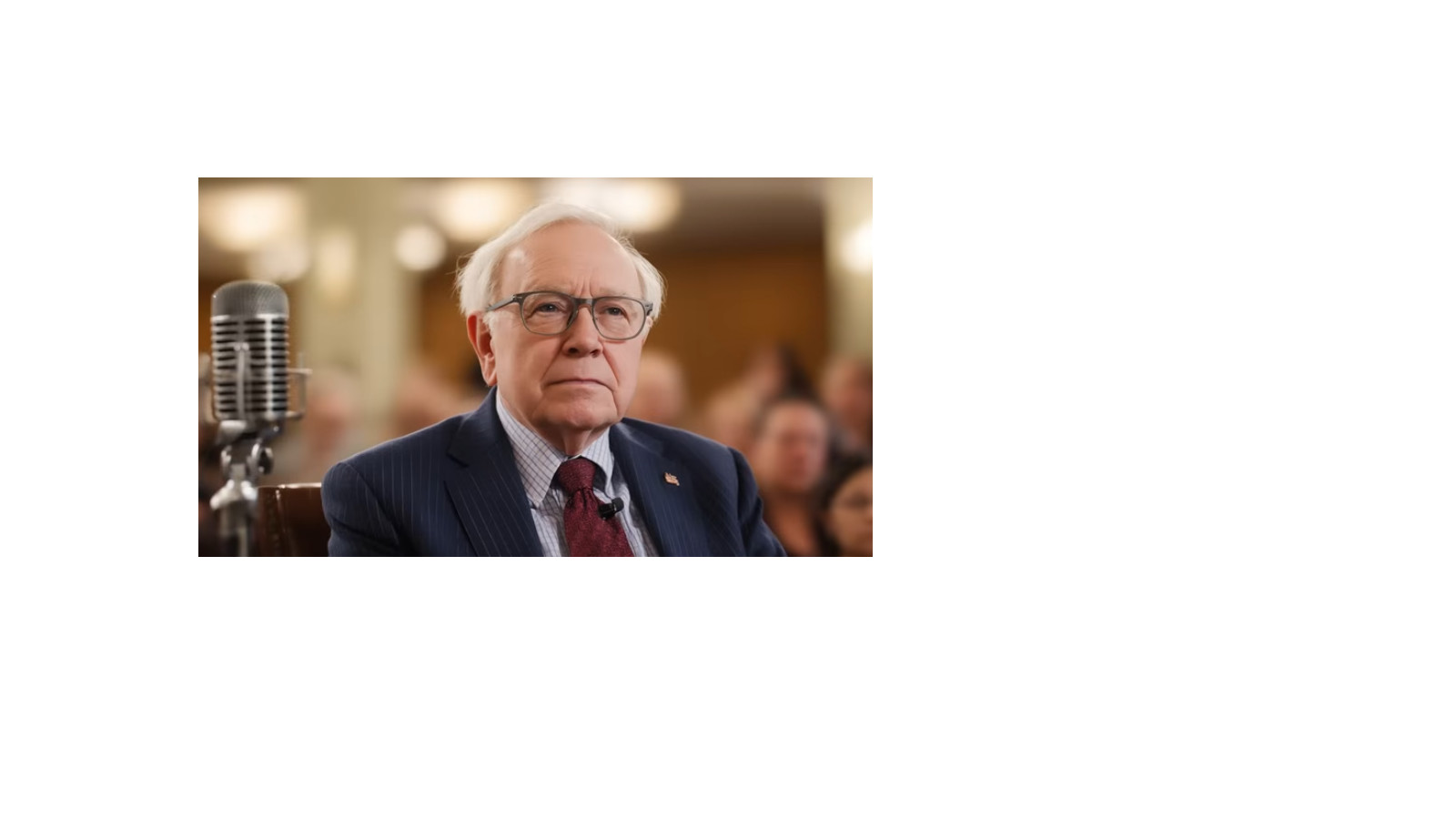
Original article: https://www.youtube.com/watch?v=4JXh0clazFg
Buffett Insight
Dec 13, 2025 UNITED STATES
This analysis argues that the U.S. exit from NATO is being misunderstood as “chaos,” when the real story is a rapid transfer of structural power. Markets signaled preparedness, not panic: European defense stocks dipped briefly, then recovered, suggesting Europe had planned for this for years. Within 72 hours, Europe unveiled a $2 trillion European Defense Union and expanded it to key partners—Canada, Japan, South Korea, Australia, and Norway—creating a self-sufficient defense and industrial ecosystem built around European standards, financing, and supply chains.
The fallout is major for U.S. defense contractors, who risk losing decades of European procurement as interoperability rules shift from Washington to Brussels. The analysis also warns of spillover into tech, with Europe accelerating a “sovereign” AI/cloud/security stack that could divert government and defense-adjacent contracts away from U.S. firms. Longer term, the dollar may face gradual pressure as security-driven demand for USD reserves weakens and the euro gains “hard power” credibility through Euro-denominated defense spending.
Bottom line: this isn’t just a political headline—it’s a multipolar reset that reshapes defense, technology, currencies, and global capital flows. Investors who recognize the shift early may position for European defense, industrial metals/commodities, and changing FX trends as the new power architecture takes shape.
#buffettinsight #warrenbuffett #nato #geopolitics #globalmarkets #defensespending #stockmarket #uspolitics
Peter Burgess COMMENTARY
Peter Burgess
Transcript
- 0:00
- I want to talk with you today about something that just happened. Something that is being completely misunderstood
- by almost everyone watching the news right now. Over the last 72 hours, uh
- you have probably seen the headlines. You have likely heard the outrage, the panic, and the celebrations depending on
- which channel you were watching. And if you have been paying attention to the markets really paying attention, you
- have seen something that doesn't quite add up with the story being told. But here is what I need you to understand.
- What just unfolded wasn't what it appeared to be. And uh the investors who
- are reacting emotionally right now, the ones selling in fear or buying in
- excitement without understanding the mechanics, they are about to learn a
- very expensive lesson about how power actually transfers in the global
- economy. Let me start with what everyone knows. Days ago, the president made an
- 1:03
- announcement that 75 years of American foreign policy said could never happen.
- An announcement that previous administrations, Republican and Democrat alike, treated as unthinkable. The kind
- of decision that changes not just diplomatic relationships, but the entire architecture of how capital flows, how
- alliances function, and how markets price risk. The United States withdrew
- from the North Atlantic Treaty Organization. Trump framed this as America finally standing up for itself.
- He said Europe had been freeloading for decades, that they weren't paying their fair share, that America was being taken
- advantage of. He promised this would force Europe to respect American power. The announcement came with all the usual
- bravado. America first, America strong, America doesn't need anyone. But here is
- what Trump didn't understand, and this is critical to your portfolio right now.
- 2:04
- Europe had stopped counting on American reliability years ago. Now, I have been
- investing through enough market shifting events to know that the first reaction is rarely the correct one. I have
- watched currencies collapse. I have watched entire sectors get rewritten overnight. I have seen geopolitical
- earthquakes that everyone said would destroy markets only to watch smart money quietly repositioning while
- everyone else panicked. And I have learned that the most important question isn't what just happened. It is what
- happened 72 hours later when the smoke clears and you can finally see who was
- prepared and who wasn't. That is exactly where we are right now. We are 72 hours
- past the announcement and what is emerging isn't chaos.
- It is something Trump never anticipated. It is the kind of clarity that separates
- 3:02
- leaders who understand structural power from those who only understand television ratings. Most people think
- this story is about an alliance ending. They are wrong. This story is about a
- new economic superpower emerging from the shadow of the old one. The mainstream analysts are looking at the
- political fallout, but they are missing the financial reality. They are looking
- at the past 75 years while the market is already pricing in the next 75. If you
- are sitting there thinking this is just political noise that will blow over, you are missing the signal. This is the
- moment the tectonic plates shifted. Let me tell you what I noticed first because it tells you everything you need to know
- about how badly the administration miscalculated. When markets opened the morning after the announcement, I
- watched European defense stocks very carefully. Conventional wisdom, the kind
- you hear from cable news analysts and White House press briefings, said these stocks should have crashed. The logic
- 4:06
- Trump's team was counting on seemed simple enough. European defense companies depend on American
- partnerships, American technology transfers, American security guarantees.
- Remove America from the equation and Europe would panic. They would come crawling back. They would agree to
- whatever terms Trump demanded. The algorithm of the past 75 years dictated
- that without the US umbrella, these companies were exposed, vulnerable, and
- ultimately worthless. Wall Street analysts were predicting 10% drops,
- maybe 15%. Pension funds were bracing for carnage. Short sellers were
- positioning for a collapse, licking their chops at the prospect of easy money. The Trump administration was
- watching these tickers, waiting for Europe to blink, waiting for the red arrows to prove their point. And then
- 5:04
- the market opened. These stocks dipped 2%, maybe 3% in some cases. And then uh
- something happened that no one in the White House expected. By noon, they had
- recovered. Some of them closed higher than they had opened. Now think about that for a moment. The largest military
- alliance in history just dissolved. American protection just vanished into thin air. And European defense stocks
- barely flinched. That is not what panic looks like. That is not what uncertainty looks like. That is what preparation
- looks like. That tells you that someone somewhere knew something that Trump
- didn't. That tells you this story didn't start 72 hours ago in the Rose Garden.
- It started months ago. maybe years ago in rooms Trump never had access to. And
- that should have been his first warning because what happened next is where this story stops being about diplomacy and
- 6:04
- starts being about the largest transfer of economic and military power since the end of World War II. If you are not
- paying attention to this specific anomaly, this refusal of the market to panic, you are missing the forest for
- the trees. The market is a voting machine in the short run but a weighing machine in the long run. In this moment,
- the market was weighing something that the politicians were ignoring. It was weighing the value of independence. It
- was signaling that the smart money wasn't betting on European collapse. They were betting on European
- sovereignty. Investors who understand history know that vacuums don't last.
- When a superpower steps back, it doesn't leave a hole. It creates an opportunity.
- And the market realized instantly that the vacuum left by the United States wasn't going to be filled by chaos. It
- was going to be filled by European capital, European industry, and European consolidation. While the talking heads
- 7:05
- were discussing betrayal and isolationism, the institutional investors were quietly loading up on the
- very companies that would build the new fortress Europe. They understood that the end of NATO wasn't the end of
- defense spending. It was the beginning of the greatest procurement cycle in modern history. And America wasn't
- invited to the party. And that brings us to yesterday. While American media was
- still processing the shock, while Republican senators who had cheered the withdrawal were suddenly going quiet,
- and while Trump's own advisers were reportedly trying to understand what they just triggered, Europe made an
- announcement, not a proposal, not a summit invitation, not a discussion
- about future possibilities. It was an announcement of something already built,
- already financed, and already operational. They called it the European Defense Union. $2 trillion.
- 8:04
- Let me say that again so you understand the sheer scale of the capital involved here. $2 trillion.
- This wasn't a plan proposed over the next decade. This wasn't contingent on
- parliamentary approvals or long- winded debates in Brussels. This was structured, financed, and ready to
- deploy right now. An integrated command structure that doesn't need American approval. Unified procurement systems
- that don't depend on American technology. Sovereign domestic supply chains that bypass American contractors
- entirely. But here is the part that should terrify anyone who thought Trump's move was strategic or anyone
- holding shares in the American military-industrial complex. Europe didn't just build a European alliance.
- They built a global one. In the same breath as announcing the fund, they announced the partners. They invited
- 9:02
- Canada, Japan, South Korea, Australia, and Norway to join as full partners. not
- observers, not secondary members who sit at the kids' table, full partners with
- the same access, the same procurement rights, and the same decision-making power as Germany or France. Think about
- what that means for a moment. The largest military industrial buildout since the Cold War just launched and it
- doesn't include the United States. American defense contractors Lockheed Martin, Rathon, Northrup, Grumman,
- Boeing, General Dynamics just lost access to a market they have dominated
- for 75 years. A market worth trillions. A market that kept American defense
- innovation ahead of everyone else. Gone. Not because of competition, not because
- of better pricing, but because Trump handed it to them on a silver platter. The narrative in Washington was that
- 10:02
- Europe was weak, that they needed us more than we needed them. That narrative
- died yesterday. When you look at the list of partners, you see the reality.
- Japan brings semiconductors. South Korea brings ship building.
- Australia brings rare earth minerals. Canada brings energy and resources.
- Europe brings the industrial base and the financing. They have effectively recreated the entire supply chain of the
- Western world, but they have surgically removed the United States from it. This
- is what I mean when I say investors are about to learn a lesson about power. Power isn't just about having the
- biggest military today. It's about having the relationships that build the military of tomorrow. And in one stroke,
- the United States has gone from being the architect of the global system to being an outsider looking in. Now, you
- might be wondering, how is this possible? How do you structure $2 trillion in 72 hours? And that is the
- 11:06
- question that should tell you everything about how completely Trump misread the situation. You don't structure $2
- trillion over a weekend. You don't coordinate eight sovereign governments in three days. You don't build
- integrated command systems and unified procurement frameworks while everyone is still reading the headlines on their
- iPads. Europe had been preparing for this quietly, methodically. While Trump
- was threatening to leave NATO, while he was demanding higher payments at rallies, while he was treating allies
- like protection racket clients, Europe was building the alternative. They were running the numbers in Berlin. They were
- negotiating with partners in Tokyo and Ottawa. They were structuring the financing in Paris. They were doing
- everything necessary to make sure that when America finally walked away, Europe
- 12:00
- wouldn't beg. They would move on. And uh Trump's withdrawal didn't surprise them,
- it freed them. Let me explain what I mean by that. Because this is where the economic implications become
- unavoidable. For years, European leaders had wanted to build independent defense
- capabilities. They wanted to reduce dependence on American weapons systems.
- They wanted control over their own security decisions. But they couldn't.
- Not while NATO existed in its current form. Because NATO's structure meant
- that any major European defense initiative had to be coordinated with Washington. It had to use American
- systems. It had to integrate with American command structures. It had to follow American doctrine. Europe was
- locked into American military dominance. Not just because they chose it, but
- because the architecture of the alliance made independence nearly impossible.
- 13:02
- Every time they tried to build something on their own, the US would step in and say, 'No, that duplicates NATO efforts
- or that creates interoperability issues.' Trump just unlocked that door.
- He thought he was locking them out of the house, but he was actually handing them the keys to their own car. And
- Europe walked through that door so fast, it is clear they had been waiting with their bags already packed. This wasn't a
- reaction. It was a release. The moment the US exited, all those restrictions
- vanished. All those requirements to buy American, to consult Washington, to wait
- for approval gone. Europe instantly pivoted to the plan B they had been
- refining for years. And because they had already done the leg work, uh the
- diplomatic back channels, the supply chain mapping, the financial stress testing, they could execute immediately.
- 14:00
- This is the difference between political theater and strategic planning. One side
- was making noise, the other side was making blueprints. And now we are seeing the result. The US administration
- thought they were pulling the rug out from under a helpless dependent. Instead, they cut the anchor that was
- holding back a competitor. Now, let's talk about what this means for American
- defense contractors because this is where the market implications become impossible to ignore. You need to
- understand the mechanics of how these companies make money. For 75 years, NATO
- guaranteed American defense companies access to European procurement. It was a
- captive market. When Germany bought fighter jets, they bought American. When Poland upgraded tanks, they bought
- American. When Italy needed missile systems, they bought American. Not always, but overwhelmingly. Why? Because
- NATO interoperability requirements meant everyone had to use compatible systems.
- 15:03
- And compatible was defined in Washington. If you wanted to be part of the shield, you had to buy the shield's
- hardware. That just ended permanently. The European Defense Union doesn't
- require American interoperability. It requires European interoperability.
- That means the standards, the software, the ammunition types, and the
- communications protocols are now being defined in Brussels, not the Pentagon.
- So what does that look like in practice? It means when Germany buys fighter jets
- now, they aren't looking at Loheed Martin's F-35. They are buying from Airbus or Dissol.
- When Poland upgrades its heavy armor, they aren't calling General Dynamics for Abrams tanks. They are buying from Rhin
- Metal. When Italy needs advanced missile defense, they are buying from Leonardo
- and thales. And here is where it gets worse for American companies. The partner countries, Canada, Japan, South
- 16:05
- Korea, Australia, they aren't locked into American systems anymore either. By
- joining this new union, they have agreed to adopt European standards. They can
- buy European. They can buy from each other. They have options they didn't
- have a week ago. Trump didn't just break an alliance. He broke the monopoly. For
- decades, American CEOs sat in boardrooms assuming that European defense spending
- would always funnel back to them. They built their revenue projections on it. They built their stock buyback programs
- on it. They assumed that no matter how much Europe complained, they had nowhere else to go. Well, now they do. And they
- are going there with a checkbook that is $2 trillion deep. We are seeing the
- creation of a closed loop. European tax dollars going to European companies to
- 17:00
- build European weapons. It is the kind of protectionism that Trump loves to
- talk about, but now it is being used against us. American companies are
- suddenly the outsiders trying to sell incompatible technology to a block that
- has decided to build its own. If you are holding shares in the major US defense
- primes, you need to ask yourself, what happens to their growth multiple when you strip out the entire European
- continent? What happens when the referral network of NATO is gone? You are left with a domestic market that is
- already saturated and a foreign market that just put up a do not enter sign.
- This is the interoperability trap. We used it to bind allies to us for decades. Now that same mechanic is being
- used to lock us out. And because defense systems have life cycles of 30 or 40
- years, once Europe switches to their own platforms, they aren't coming back. This
- 18:00
- isn't a lost quarter. It is a lost generation of sales. And here is where
- it gets worse for American companies. European defense spending is about to
- explode. We are not talking about modest increases to meet some arbitrary 2% GDP
- target anymore. We are talking about the largest sustained defense buildup in European history. $2 trillion is just
- the initial commitment. Analysts I speak with are already projecting this could grow to four or five trillion over the
- next decade. And American companies just got locked out of all of it. Let me give
- you some numbers so you understand the scale of what just happened. Last year,
- American defense contractors exported roughly $90 billion in weapons and
- systems to NATO countries. 90 billion. That isn't total revenue. That is just
- exports to the allies we just walked away from. And that number was growing.
- 19:02
- It was projected to reach $120 billion within 5 years. Those
- projections just became worthless because it is not just about current contracts. It is about the future ones.
- It is about the next generation of fighters, the next generation of autonomous drones, the next generation
- of hypersonic missile defense. All of that was supposed to be American technology sold to European buyers. That
- was the growth engine for the US defense sector. Now it is European technology
- sold to European buyers. And you have to look at the second order effects, the
- development costs, the research funding, the innovation cycles that American
- companies were counting on. Much of that was subsidized by the expectation of foreign sales. When you build a new
- fighter jet, you don't just sell it to the US Air Force. You sell it to the UK,
- 20:02
- to Italy, to Germany to recover your R&D costs. When you cut that market off, the
- unit cost for the US military goes up, the profit margins for the contractors
- go down, and the funding available for R&D dries up. That funding just got cut
- off. So, we are looking at a double hit. First, the immediate loss of export
- revenue. Second, the long-term stagnation of innovation because the customer base just shrank by 40%.
- Meanwhile, European competitors, Ryan Metal, before anyone else systems,
- Thales are seeing the opposite. Their customer base just expanded. Their R&D
- budgets are about to be flooded with that $2 trillion. They are going to have the capital to experiment, to build, and
- to innovate at a pace American companies can no longer match. We aren't just
- 21:00
- losing sales. We are losing the technological edge. We are creating a
- competitor that is fully funded and highly motivated to beat us. And the irony is we force them to do it. We
- force them to become the giant that will eat into our market share for the rest of the century. But here is what makes
- this even more significant. This isn't just about defense. It is about
- technology. Because modern defense systems aren't just weapons anymore. They are AI systems. They are advanced
- materials. They are cyber capabilities. They are technologies that spill over
- into civilian sectors, into aerospace, into computing, into manufacturing. For
- 75 years, America's dominance in civilian technology was partially
- subsidized by defense spending. The reason Silicon Valley exists today is
- because defense contracts funded the early research that became the internet, GPS, and microprocessors.
- 22:04
- The Pentagon was the first major customer that allowed those technologies to scale. When you cut American
- companies out of European defense spending, you are not just cutting revenue. You are cutting the research
- ecosystem that keeps American technology ahead. And Europe knows this. That is
- why they structured the European Defense Union the way they did. They are not just buying weapons. They are building a
- technology ecosystem that competes with America across every advanced sector.
- and they are doing it with a $2 trillion head start that Trump just handed them.
- Consider the cloud infrastructure and AI. Companies like Microsoft, Google,
- and Amazon have been building out massive infrastructure across Europe,
- banking on the assumption that NATO interoperability meant American tech companies would always have an inside
- track on government contracts. That assumption is now questionable at best
- 23:05
- and dead at worst. When Europe builds independent command and control systems,
- when they develop their own AI for battlefield management, when they create their own secure communications
- infrastructure, they are going to prioritize uh European tech companies,
- not out of spite, but out of security concerns. You don't build an independent defense
- structure and then run it on another country's cloud servers. This means companies like SAP, ATOSS, DOL systems
- and Capgeemini are about to see a flood of government contracts and defense related business that was previously
- earmarked for American firms. We are watching the birth of a sovereign European tech stack. This is a
- significant shift in the competitive landscape. We are used to American tech giants facing antirust fines in Europe.
- 24:01
- But now they are facing something far more dangerous. A competitor that is being fed by the
- state. A competitor that is being told, 'Build us an alternative to Google.
- Build us an alternative to AWS because our national security depends on it.' If
- you think big tech is immune to geopolitics, you are not paying attention. The loss of the European
- security market deprivives Silicon Valley of a crucial feedback loop. It
- allows Europe to develop independent standards for AI and cyber warfare. And
- once those standards are set, they will export them to those partner nations,
- Japan, South Korea, Australia. We are risking a digital bifurcation where half
- the democratic world runs on American tech and the other half runs on this new
- Europacific standard. Now let's talk about what this means for the dollar
- because this is where the long-term implications become genuinely concerning. Most investors focus on the
- 25:06
- defense stocks because the red and green arrows are immediate. But the currency
- market is where the real history is written. For decades, the dollar's dominance in global finance was
- supported by three pillars. First, America's massive economy. Second,
- America's control of global energy markets, the petro dollar. And third,
- America's role as the security guarantor for the developed world. Trump just
- kicked out the third pillar. Here is how it works, and it is simpler than the
- economists make it sound. When countries depend on America for defense, they hold
- dollars. They hold them because defense procurement happens in dollars. They
- hold them because military aid happens in dollars. They hold them because the entire architecture of security
- relationships was denominated in dollars. That created a constant
- 26:03
- structural demand for the currency. It kept the dollar strong. It kept American
- borrowing costs low. It allowed the United States to run massive deficits
- without consequence because there was always a buyer for our debt. The world
- had to hold our paper to pay for our protection. But when Europe builds an independent defense structure, they
- don't need to hold as many dollars. They can procure in euros. They can finance
- in euros. their partner countries, Japan, South Korea, Australia, can trade
- with them in euros or yen or one. And slowly, gradually, that structural
- demand for dollars that has underwritten American power since World War II starts
- to erode. We are not talking about the dollar collapsing next week. I'm not
- selling you doom porn. We are talking about a long-term shift in the architecture of global finance. The kind
- 27:01
- of shift that happens slowly then suddenly. Think about the central banks in Tokyo or Seoul right now. For 50
- years, their reserve allocation strategy was simple. Buy US treasuries. Why?
- Because the US Navy patrolled their shipping lanes and the US Marines guarded their borders. But now they are
- part of a European defense framework. They are integrating their supply chains with Germany and France. Does it make
- sense for them to keep 60% of their reserves in dollars or do they start shifting 10% then 20% into euros to
- match their new security reality? If that shift happens and the logic says it
- must, the United States loses the exorbitant privilege of printing money that the rest of the world absorbs. 50
- years from now, historians might point to Trump's NATO withdrawal not as a
- military blunder, but as the moment when the dollar's dominance began its inevitable decline. We are entering an
- 28:07
- era where the euro is no longer just a trading currency. It is becoming a hard
- power currency and historically the currency backed by the strongest
- alliance is the one that rules the table. We just uh left the table. Now I
- want to dig deeper into something that most analysts are completely missing. They are looking at the map of Europe
- and thinking this is a regional story. It isn't. You need to look at the partner countries that just joined the
- European Defense Union. Canada, Japan, South Korea, Australia, Norway. On the
- surface, these look like natural additions. They are democratic allies,
- advanced economies, and established defense industries. It feels like a
- friendly club. But when you look closer, you see something more calculated,
- 29:01
- something that reveals just how strategically Europe approached this. This isn't just a list of friends. It is
- a checklist of strategic necessities. Canada gives them access to rare earth
- minerals and advanced materials that were previously dominated by American suppliers. Japan brings semiconductor
- manufacturing and precision engineering that is essential for modern weapon systems. South Korea offers ship
- building capacity and missile technology that rivals anything America produces.
- Australia provides critical minerals and geographic positioning in the Indo-Pacific. Norway brings Arctic
- expertise and energy resources. Do you see the pattern? Each of these countries
- fills a specific gap in the supply chain. Europe didn't just invite partners. They built a self-sufficient
- ecosystem. They looked at what they needed to build a military superpower. The chips, the steel, the energy, the
- 30:02
- lithium, and they invited the specific countries that could provide them. And notice what is missing. No countries
- that are economically dependent on China. No countries with authoritarian
- governments. No countries that would give America leverage to disrupt the alliance through economic pressure.
- Europe didn't just invite partners. They chose them specifically to minimize American influence over the alliance's
- future. And there is something else happening here that is even more significant. Each of these countries has
- been frustrated with American reliability in recent years. This didn't happen in a vacuum. Canada has faced
- Trump's trade threats. Japan has questioned America's commitment to the Pacific. South Korea has worried about
- America's willingness to maintain troop presence. Australia has watched American
- foreign policy swing wildly between administrations. These aren't countries
- 31:02
- that Europe had to convince. These are countries that were already looking for alternatives to American security
- guarantees. They were nervous. They were hedging. Trump didn't just create an
- opportunity for Europe. He created an off-ramp for every American ally that
- has been nervous about our reliability. And Europe gave them all a way out at the same time. They created a plan B for
- the free world. Think about the geopolitical implication. We used to speak of the West as a synonym for
- America and its friends. That definition just broke. We now have a West that doesn't include the United States. We
- have a democratic uh industrial military block that uh encircles the globe from
- Ottawa to Berlin to Tokyo to Canbor. And the connective tissue isn't Washington
- anymore. It is Brussels. The hub and spoke model where all roads led to the
- 32:00
- USA has been replaced by a distributed network and networks are much harder to
- control than hubs. America can't just threaten Germany anymore because Germany
- is now integrated with Japan and Canada. You touch one, you touch them all. We
- have lost the ability to divide and conquer our own allies. Now, let's talk
- about the military bases because this is where the immediate practical consequences start to hit home. The
- United States currently operates over 70 military installations across European
- NATO countries. Rammstein in Germany, Avano in Italy, in Sirlic in Turkey,
- Raph Laken Heath in the UK. These aren't just symbolic presences. They are
- logistics hubs. They are forward operating bases. They are the
- infrastructure that allows America to project power into the Middle East, into Africa, into Central Asia. Every single
- 33:04
- one of them exists because of NATO agreements, agreements that just became void. Now, Europe hasn't announced
- anything yet about base closures, but you don't need a formal announcement to
- understand what is coming. When you build an independent defense structure, you don't need another country's
- military taking up your most strategic real estate. Give it six months, maybe a
- year. European governments are going to start raising questions about lease terms, about environmental costs, about
- legal jurisdiction, and ultimately about whether these bases serve European
- interests or just American ones. And when those questions start getting asked publicly, when domestic politicians in
- Germany or Italy start campaigning on why are we hosting foreign troops when
- we have our own defense union, the pressure to renegotiate becomes overwhelming. Best case scenario,
- 34:00
- America faces dramatically higher costs to maintain these bases. We go from being a partner to being a tenant and
- the landlord just jacked up the rent. Worst case, we lose access entirely. And
- make no mistake, losing those bases doesn't just hurt American military capabilities. It devastates the local
- economies that have built up around them. We are talking about tens of thousands of American contractors,
- civilian employees, and service members stationed in Europe. We are talking
- about communities back home in Texas, North Carolina, and Virginia that depend
- on those overseas postings. We are talking about the defense companies that maintain the equipment at those bases,
- the mechanics, the IT support, the logistics firms. Trump's withdrawal
- didn't just change military strategy. It put a massive chunk of the American
- defense service economy at risk. But the strategic cost is even higher. Without
- 35:01
- Rammstein, how do we support operations in the Middle East? Without Avano, how
- do we project power into North Africa? We don't. We retreat. We become a
- hemispheric power, not a global one. We lose the ability to react to crises
- before they reach our shores. Trump thought these bases were a favor we were doing for Europe. He constantly
- complained about the cost. He didn't understand that those bases were the platform for American global influence.
- They were the unsinkable aircraft carriers that allowed us to police the world trade routes. By walking away from
- NATO, we didn't save money on base costs. We forfeited the real estate that
- made us a superpower. We turned the US military from a global omni presence
- into a regional force. And once those flags come down, they don't go back up.
- We are operating on borrowed time and borrowed goodwill and the account is
- 36:02
- overdrawn. But let me bring this back to something more immediate because I know
- most of you aren't sitting in the situation room. You are sitting in front of your brokerage accounts. You are
- wondering what this means for your investments right now today in portfolios you actually manage. The
- geopolitical theory is interesting but the price action is essential. Here is
- the playbook. This is how smart money is repositioning while the retail investors
- are still reading the headlines. First, American defense stocks are going to face sustained pressure. I am not
- talking about a collapse. These are massive companies with deep moes, but we
- are looking at a long-term repricing. These companies just lost access to one
- of their largest growth markets. Wall Street hasn't fully absorbed that yet.
- You are seeing some volatility. Sure. But give it 6 months. When the earnings
- 37:02
- calls start acknowledging canceled contracts, when the revenue projections are revised downward, when the guidance
- gets cut for fiscal year 2026 and beyond, you are going to see valuations
- adjust significantly. If you are overweight, Loheed Martin, Rathon,
- Northre Grumman, or Boeing's defense division, now is the time to start rebalancing. I am not suggesting panic
- selling. I am suggesting strategic reduction. The growth story for these
- stocks is broken. Second, European defense stocks just became legitimate
- decadel long holds and I mean foundational positions. Look at
- companies like Rhin Metal in Germany, Thales in France before anyone else
- systems in the UK, Leonardo in Italy, and Saab in Sweden. These companies are
- 38:01
- about to experience demand growth they haven't seen since the height of the Cold War. Think about the math. $2
- trillion doesn't get spent in a year. It gets spent over a decade, maybe longer.
- That means sustained year-over-year revenue growth backed by government guarantees that provides the kind of
- earnings visibility that value investors pay huge premiums for. And right now,
- before Wall Street fully reprices these opportunities, you can still get in at
- reasonable valuations. The market is skeptical. It is still wondering if Europe is serious. That skepticism is
- your opportunity. By the time the contracts are signed and the factories are breaking ground, the easy money will
- have been made. You need to understand the difference between a trade and a trend. A trade lasts for days or weeks.
- A trend lasts for years. The rearmament of Europe is a trend. It is a secular
- 39:02
- shift in capital allocation. Governments are pivoting from social spending to
- defense spending. And that money has to go somewhere. It is going to the balance sheets of these European prime
- contractors. If you look at their order backlogs, they are already swelling. Rin
- Metal has reported record orders. Saab is expanding production capacity. These
- aren't speculations, they are hard numbers. The capital cycle has turned.
- If you are still holding the US defense index because that's what worked for the last 20 years, you are driving using the
- rear view mirror. The road ahead has turned and the US stocks are driving off
- a cliff while the European stocks are hitting the highway. Third, watch the euro. I have been tracking currency
- markets for more than 50 years and I can tell you that what we are about to see is a structural shift in demand. The
- narrative for the last decade has been that the euro is weak, fragmented, and
- 40:03
- doomed to fail. That narrative ignored one key variable, political will. When
- you build a $2 trillion defense ecosystem denominated in euros, you
- create persistent non-negotiable demand for the currency. When partner
- countries, wealthy nations like Japan and Canada start holding more euro reserves to participate in that
- ecosystem, demand increases further. When procurement contracts get signed in
- euros instead of dollars, the shift accelerates. The euro has been undervalued relative to economic
- fundamentals for years. Partly because markets priced in a security discount.
- They assumed European security would always depend on America and therefore
- Europe was always at risk. That assumption just died. The discount is
- being removed. Watch for euro strength over the next 18 to 24 months. I am not
- 41:02
- predicting a vertical line overnight. Currencies don't move like crypto, but I am predicting steady structural
- appreciation. The capital flows that used to default to the dollar as the only safe haven will now start
- diversifying into the euro. If you have significant exposure to foreign exchange
- markets, you need to adjust your hedging strategy. The short euro trade is now a
- crowded and dangerous room. Fourth, let's talk about the supply chain and commodities because defense buildups
- don't run on good intentions. They run on steel, aluminum, copper, rare earths,
- and titanium. When you are building tanks, planes, ships, and missiles at
- this scale, you need industrial quantities of raw materials. Europe is
- about to start buying commodities at a pace we haven't seen since they were rebuilding after World War II. If you
- are not positioned in industrial metals right now, you should be. And I don't
- 42:03
- mean speculating on short-term price moves. I mean taking long-term positions
- in the companies that mine, process, and supply the materials that defense
- manufacturing requires. The demand cycle we are entering isn't going to peak in 6
- months. It is going to build for years. Look at the supply chain bottlenecks.
- Who makes the specialized steel for armor plating? Who processes the rare earths for guidance systems? Who mines
- the titanium for aerospace frames? These are the choke points of the new economy.
- Companies like Hensolt in Germany, Sensors and Electronics, or Kongsburg in
- Norway, Missiles and Defense Systems are excellent examples of specialized
- suppliers. These aren't household names yet, but they are about to become essential suppliers to the largest
- defense buildup of the century. Their order books are going to be full for the next decade. and pay special attention
- 43:02
- to the partner nations here. Australian mining giants, Canadian resource firms.
- These are now strategic assets of the European Defense Union. They will get
- preferential contracts. They will get uh investment capital to expand production.
- The resource nationalism that usually hurts investors is working in their favor here, provided you own the assets
- inside the alliance, not outside of it. Get familiar with these names now before
- the institutional money piles in. The commodity super cycle everyone talks
- about just got a new engine, a $2 trillion military mandate. And seventh,
- this brings us to the most profound shift of all. This event is going to accelerate the move toward multipolarity
- in ways most investors aren't prepared for. We have spent uh the last 30 years
- uh really since the fall of the Berlin Wall assuming that American dominance uh
- 44:05
- was a permanent feature of the universe. We assumed that global capital would always flow toward American markets. We
- assumed that the dollar would always be the reserve currency. We assumed that uh
- American companies would always have first access to the world's most lucrative markets. We assumed that when
- the phone rang in a crisis, Washington would be the one answering it. That era
- is ending. Not tomorrow, not next year, but it is ending. What we are watching
- right now is the developed world reorganizing itself around multiple power centers. China built one over the
- last 20 years. India is building one right now and Europe just built one over
- the weekend and America is discovering a very painful truth. Maintaining
- dominance isn't automatic. It requires maintaining relationships. It requires
- 45:01
- being reliable. It requires not walking away from 75 years of alliances because
- you think you can get a better deal in the short term. Trump didn't understand that. And now we are all going to live
- with the consequences. I want to step back for a moment and uh talk about what
- this reveals about power because this is something the administration fundamentally misunderstood. Power isn't
- just about size. It's not just about having the biggest economy or the most nuclear weapons or the loudest voice on
- Twitter. Real power, sustainable power is about relationships. It is about the
- architecture of dependence. It is about being the country that others need, not
- just the country that others fear. For 75 years, Europe needed the United
- States. They needed American protection, American weapons, American security
- guarantees. And that need gave America immense influence. It gave America leverage. It
- 46:04
- gave America the ability to shape European decisions on trade, on technology, on foreign policy, on
- sanctions, on everything that mattered. Trump looked at that relationship and saw weakness. He saw America giving and
- Europe taking. He saw freeloading. He saw unfairness. And he decided the way
- to fix it was to demand more, threaten more, and ultimately walk away. But what
- he didn't understand, what he apparently never even considered is that leverage works both ways. Yes, Europe needed
- America, but America needed Europe, too. America needed the market access.
- America needed the forward bases to project power globally. America needed the diplomatic support in the UN.
- America needed the technological partnerships. And most importantly, America needed
- 47:00
- Europe to not have alternatives. The moment Trump walked away, he handed
- Europe the freedom to build those alternatives. And they did it so fast,
- so completely, so decisively that it is obvious they had been preparing for
- exactly this moment. This is what happens when you treat allies like clients. When you weaponize
- relationships that took generations to build. When you assume that because you are bigger you can dictate terms without
- consequence. You don't strengthen your position. You teach the other side how
- to live without you. And once they learn that lesson, once they build the systems, the factories, the alliances,
- and the structures that make them independent, you don't get that leverage back. It is gone permanently. You cannot
- negotiate from a position of strength when the other side no longer needs what you are selling. That is exactly what
- just happened. Trump thought he was calling Europe's bluff. He thought they would panic, cave, and agree to whatever
- 48:06
- terms he wanted. But Europe wasn't bluffing. They were preparing. They were
- building the lifeboats while Trump was busy poking holes in the ship. And now
- they have sailed away, leaving us stranded on an island of our own making.
- And now America is discovering what it feels like to be on the outside of the most important defense and technology
- alliance being built in the 21st century. We are not banned. We are not
- excluded by name. We are just not included. We are not part of the
- planning, not part of the procurement, not part of the decision-making. We have gone from being the indispensable nation
- to being an outsider in the span of 72 hours. That is the cost of arrogance.
- That is the cost of treating reliability as optional. That is the cost of
- believing that power is about dominance instead of partnership. So where does
- 49:04
- this leave us? It leaves us watching the architecture of global power shift in
- real time. It leaves American defense contractors scrambling to find new markets while their European competitors
- capture the largest defense buildout in modern history. It leaves the dollar facing long-term structural pressure it
- hasn't seen since the Bretonwood system collapsed. It leaves American military
- bases in Europe operating on borrowed time and borrowed goodwill. And it leaves investors who understand what is
- happening with opportunities that won't be obvious to most people for another 6 months or a year. The repricing is going
- to happen. The capital is going to flow toward European defense, toward commodities, toward currencies that
- support the new architecture. The question is whether you position yourself ahead of that shift or after.
- But most importantly, it leaves America in a position we haven't been in since 1945.
- 50:04
- Not as the automatic center of the developed world's security and economic architecture, but as one power among
- several. as a country that has to compete for influence instead of assuming it. As a nation trying to
- figure out how to operate in a world where being the largest economy doesn't
- automatically mean being the most important one. Trump said this withdrawal would make America stronger.
- He said it would force Europe to respect us. He said it would prove we don't need anyone. He said this was about America
- finally standing up for itself. What it actually did was prove that when you
- walk away from 75 years of alliances built on mutual interest and shared
- sacrifice, you don't get respect, you get replaced. And that replacement
- doesn't take decades. It takes 72 hours. It takes one announcement from a
- 51:02
- president who didn't understand what he was gambling with. one decision that Europe had been waiting for, preparing
- for, and was ready to move on the moment it happened. The world has moved on. The
- machinery of global power has been rerouted. And America, long accustomed
- to being the center of gravity in the global order, is waking up to a sobering
- new reality. We are no longer the only option. We are no longer the default
- choice. We are no longer the sun around which the other planets revolve. We are
- just another planet now drifting a little further away from the light. This
- is the new world. Invest accordingly.