
Date: 2026-03-06 Page is: DBtxt003.php txt00029278
CANADA
Carney Was Right ... NavyCast
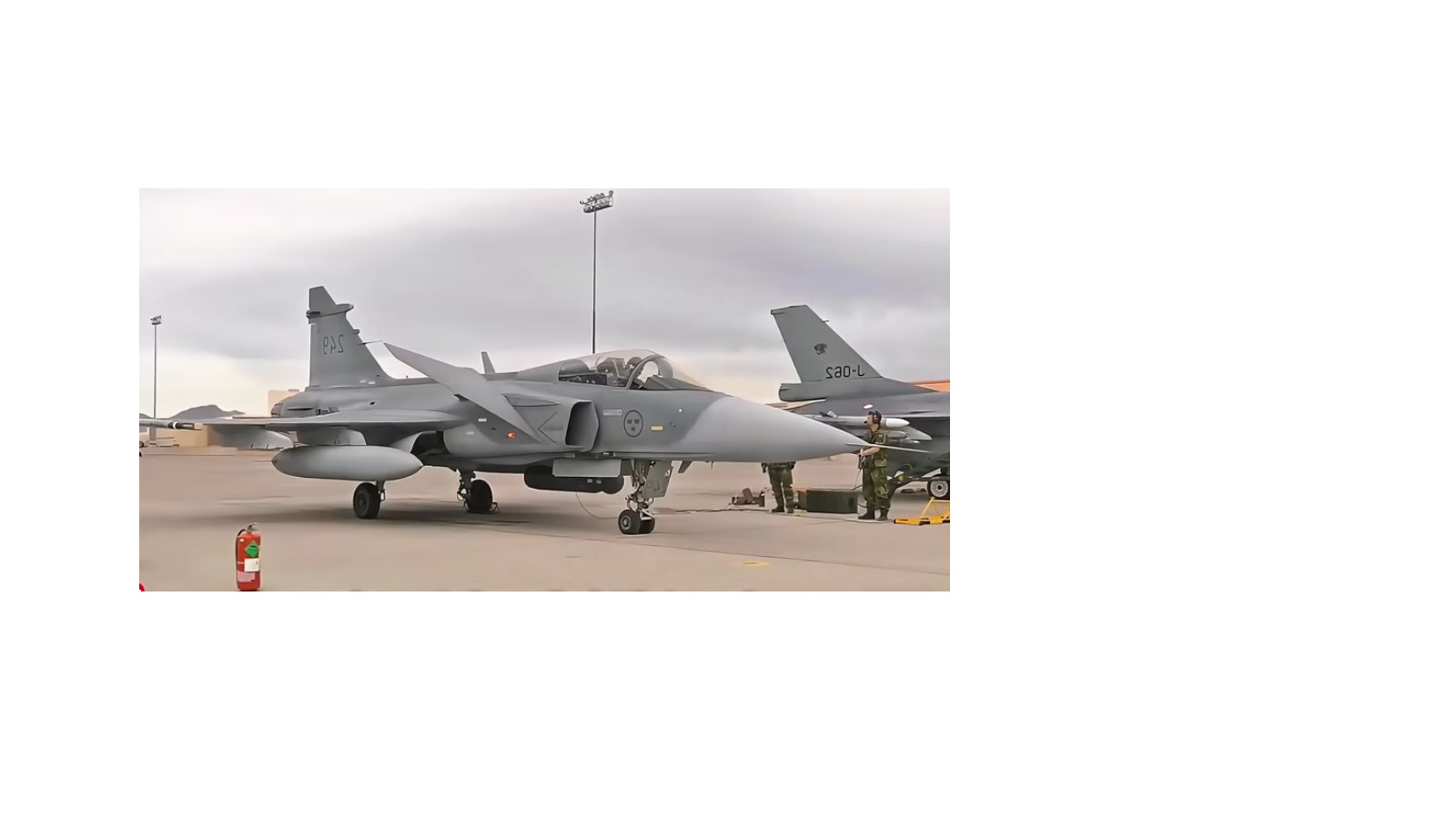
Canada Acts as Switzerland Sounds a Major F35 Alarm
Carney Was Right ... NavyCast
Canada Acts as Switzerland Sounds a Major F35 Alarm
Original article: https://www.youtube.com/watch?v=s9CCnL9rFHQ
NavyCast
Dec 10, 2025
1.79K subscribers
HOA KỲ
#canadadefense #rcaf #gripen
In this deep-dive military analysis, we unpack the strategic decision facing Canada regarding its multi-billion-dollar fighter fleet replacement. It’s a choice that goes far beyond technical specs; it’s about national resilience and economic autonomy.
We examine the current context of the F-35 procurement, addressing the massive cost escalations—from the initial teens of billions to projections reaching the high 20s—and the critical governance issues exposed by unforeseen infrastructure and sustainment obligations at bases like Cold Lake and Bagotville. This structural weakness, also highlighted by our ally Switzerland's experience with 'fixed-price' adjustments, compels Ottawa to reassess its path.
But the real strategic discussion centers on the Gripen. The Gripen isn't just an alternative aircraft; it represents a competing national development model. Proponents argue it offers a powerful opportunity to build a robust, self-reliant defense ecosystem right here in Canada, securing high-tech jobs and control over our long-term supply chain, rather than accepting deep dependency on a single foreign source. This choice defines whether Canada will be a buyer or a builder for the next 50 years.
We believe that responsible governance requires full transparency and a strategic focus on domestic strength.
Do you think prioritizing the Gripen’s industrial return outweighs the F-35’s deep interoperability? Let us know your thoughts in the comments below!
If you value honest, in-depth Canadian military analysis, please Like this video and Subscribe to our channel for more strategic breakdowns!
#canadadefense #rcaf #gripen #canadianforces #fighterjet
How this was made
Altered or synthetic content
Sound or visuals were significantly edited or digitally generated.
Peter Burgess COMMENTARY
Peter Burgess
Transcript
- 0:00
- Today we embark on an examination of a
- critical dynamic that has been unfolding
- quietly within the corridors of Ottawa.
- A story that on its surface appears to
- be a mundane tale of military equipment
- acquisition. Yet in reality exposes
- profound questions concerning national
- sovereignty, economic leverage, and the
- governance of strategic risk when
- dealing with powerful allied defense
- partners. You may have seen the various
- headlines concerning Canada's ongoing
- rigorous reassessment of its fighter jet
- replacement program. Or perhaps you
- recall the international shock waves
- when reports emerged of Switzerland
- discovering unexpected financial
- adjustments in their own supposed
- fixedpric commitment for the same
- platform. But beneath the surface noise
- of those reports lies a deeper narrative
- of legal accountability and democratic
- integrity that deserves the full
- attention of every proud Canadian
- citizen. Understanding the mechanisms at
- play is crucial because once the layers
- 1:01
- are peeled back, we observe two mature
- democracies confronting an identical
- critical dilemma. What happens when a
- nation commits to a massive multi-deade
- military program only to discover later
- that the true comprehensive costs, the
- precise long-term obligations, and the
- intrinsic technological vulnerabilities
- are far more extensive and constraining
- than initially presented. This period of
- comprehensive review is therefore not a
- sign of indecision. It is a powerful
- affirmation of responsible governance. A
- proactive move to ensure the largest
- single defense investment in our
- nation's history is executed with the
- highest degree of transparency and due
- diligence. Let us walk through the exact
- circumstances that led to this necessary
- strategic pause. Canada first embarked
- on what was confidently framed as a
- straightforward modernization of the
- Royal Canadian Air Force fighter fleet.
- Government officials offered public
- reassurances that the total program cost
- 2:02
- would be stable, predictable, and
- tightly controlled within the confines
- of established budgets. Yet, the
- financial projections did not remain
- stable. They dramatically escalated.
- What began as an early projection in the
- teens of billions of Canadian dollars
- swiftly climbed into the high 20
- seconds, representing a significant and
- sudden increase in the projected burden
- on the public purse. Furthermore,
- internal departmental documents have
- since acknowledged candidly that these
- revised estimates still contain an
- alarming degree of wide uncertainty.
- When a government responsible for the
- stewardship of public funds cannot
- confidently communicate to its own
- citizens the true total life cycle cost
- of a multi-billion dollar multi-deade
- contract. This immediately transcends a
- mere technical budgeting problem. It
- evolves into a fundamental governance
- issue, a crucial accountability
- 3:00
- challenge, and frankly an essential test
- of our democratic integrity. As
- taxpayers and engaged citizens, we are
- intrinsically entitled to full
- transparency. We deserve to be led by a
- government that fully comprehends the
- profound commitments it undertakes, not
- one that belatedly discovers significant
- new requirements for infrastructure
- upgrades, sustainment obligations, and
- long-term technological dependencies
- long after the contractual ink is dry. A
- clear cautionary pattern emerged when we
- observed the experience of our European
- partner Switzerland. They signed a
- seemingly firm fixedpric deal for their
- own fleet of F-35 seconds, only to
- subsequently face unexpected significant
- adjustments imposed by the supplying
- nation, the United States. Suddenly,
- that fixed price was rendered distinctly
- unfixed. Citizens and lawmakers alike
- were justifiably stunned and demanded
- exhaustive explanations. Subsequent
- 4:01
- audits tragically revealed that internal
- warnings regarding these cost
- vulnerabilities had been raised months
- earlier, but crucially were never
- brought to the public surface. When such
- a clear discrepancy manifests between
- the promises confidently made by
- officials and the risks they actually
- disclose, we are witnessing a failure of
- essential transparency. Transparency,
- let us be clear, is the non-negotiable
- cornerstone of any robust rule of law
- system. Without it, democratic control
- over massive long-term public
- expenditures inevitably erodess. This
- global context of fiscal uncertainty and
- dependency is the backdrop against which
- Canada now finds itself proactively
- reassessing its own initial procurement
- path. When Prime Minister Mark Carney
- ordered a full and comprehensive review
- of the entire contract and its
- implications, that strategic decision
- was rooted in much more than just a
- debate over dollars and cents. It was a
- profound recognition of the legal
- 5:01
- vulnerabilities and strategic
- constraints that are inherently embedded
- in any procurement system that places
- such heavy exclusive reliance on a
- single foreign supplier for a core
- defense capability. When a government
- realizes through its own internal review
- process that its own vital national
- assets, its operational bases like Cold
- Lake and Bagotville, its internal
- maintenance capabilities, and even its
- pilot training pipeline are demonstrably
- not ready or adequately equipped to
- fully support the aircraft it has
- already committed to. The story is no
- longer confined to procurement details.
- It transforms into a capability story, a
- fundamental national security story, and
- undeniably an accountability story. We
- cannot in good conscience responsibly
- deploy and sustain a capability that we
- cannot responsibly support using our own
- national infrastructure and trained
- personnel. This brings the deeper, most
- 6:02
- significant strategic question into
- sharp focus. Canada is currently
- deliberating whether continuing
- exclusively down the F-35 path while
- offering immense partnership benefits is
- ultimately consistent with its own
- unique long-term economic and strategic
- interests, particularly concerning the
- defense of our vast northern approaches
- and the bolstering of domestic industry.
- Ministers are now openly questioning why
- a multi-billion dollar program of this
- magnitude delivers such
- disproportionately modest or limited
- industrial benefits to the crucial
- Canadian industrial base. Lawmakers are
- voicing legitimate concerns that
- Canada's aerospace future is effectively
- being outsourced and externalized rather
- than carefully cultivated, nurtured, and
- grown at home. Supporters of available
- alternatives such as the Swedish Grippen
- fighter argue persuasively that the true
- underlying strategic decision is not
- simply about selecting a high-erforming
- 7:01
- aircraft. It is fundamentally about the
- type of country Canada chooses to be.
- Dependent or self-reliant, primarily a
- buyer or a sophisticated builder, a
- peripheral participant in someone else's
- industrial ecosystem, or the proud
- architect of its own defense and
- economic future. This moment matters
- profoundly because we are observing a
- responsible government that is
- deliberately forcing itself to confront
- the inevitable consequences of past
- decisions. decisions that were perhaps
- made with incomplete initial information
- and overly optimistic operational
- assumptions. We are learning the
- inherent limits of fixedpric contracts
- when the counterparty holds essential
- non-negotiable control over the core
- production process, the technological
- integration and the proprietary
- logistics systems. We are seeing in real
- time what happens when vital national
- defense requirements, prudent domestic
- economic policy and complex geopolitical
- 8:02
- dependencies intersect and collide
- within the confines of a single massive
- procurement program. The legal and
- governance questions that arise from
- this situation are deep and
- multifaceted. What level of full
- disclosure was legally required
- regarding future sustainment costs? What
- specific operational and financial risks
- were fully understood and mitigated?
- What institutional incentives
- inadvertently shaped the early
- decision-making process? And most
- critically, did public officials fully
- meet their enduring duty of cander to
- the people they served throughout this
- process? As we delve deeper into the
- exact mechanics of what officially
- unfolded, it becomes abundantly clear
- that Canada's procurement process in its
- early stages was not merely a simple
- clinical technical evaluation of
- competing aircraft platforms. It was
- rather a vast complex labyrinth of
- evolving cost projections, fluid risk
- 9:01
- assessments, intense political
- pressures, and entrenched institutional
- biases that demonstrabably shape the
- final outcome long before a definitive
- decision was formally signed on paper.
- You may have keenly observed how each
- subsequent cost update was presented
- with an almost unavoidable tone of
- inevitability as though the cost
- increases were mere technical footnotes
- rather than stark alarming indicators
- that the foundational fiscal and
- operational assumptions were
- fundamentally shifting beneath
- everyone's feet. That kind of financial
- and institutional drift is fundamentally
- dangerous in any major public
- expenditure. However, in the realm of
- defense procurement, where these
- extensive long-term commitments lock a
- country into specific financial and
- operational paths for many decades, the
- ultimate consequences are vastly
- magnified, impacting entire generations
- of Canadians. When Canada initially
- signaled its commitment to the first 16
- 10:00
- F-35 seconds, officials strongly
- emphasized that the remaining 72 could
- theoretically be procured in future
- phases, which was intended to give the
- government a vital degree of
- flexibility. But flexibility only
- retains its value and meaning if
- decision makers are consistently given
- accurate, comprehensive information
- about the true long-term costs and the
- deep operational dependencies involved.
- The evidence that has now been brought
- to light convincingly demonstrates that
- crucial infrastructure expenses were
- significantly underestimated.
- Furthermore, sustainment timelines were
- overly optimistic and the necessary
- training capacity required to support
- the platform was demonstrably
- overstated. This is not simply a case of
- imperfect technical forecasting. This
- points directly to a structural weakness
- in the process itself. A systemic
- inability or unwillingness to fully
- capture and present the complete
- holistic picture of precisely what the
- 11:00
- advanced fifth generation aircraft
- requires to be fully operational and
- mission ready over its entire life cycle
- within the unique Canadian environment.
- We must step back and analyze the
- systemic reasons why this phenomenon
- occurs in the first place. In complex
- military procurements, deeply ingrained
- institutional incentives frequently push
- decision makers toward the most
- technologically advanced platform
- available, not necessarily the one that
- offers the best long-term fit with the
- country's unique operational
- environment, its fiscal sustainability
- goals, or its industrial policy
- constraints. The F-35's technological
- advantages, particularly its stealth,
- sensor integration and interoperability,
- are genuinely real and compelling.
- Military leaders quite understandably
- gravitate toward cuttingedge capability.
- However, the ultimate legal and ethical
- responsibility of civilian decision
- makers is to expertly balance those
- understandable military preferences
- 12:00
- against the non-negotiable requirements
- of financial sustainability, strategic
- industrial policy, and national
- autonomy. When these crucial civilian
- considerations are allowed to become
- secondary or peripheral, the entire
- system regrettably veers toward
- decisions driven more by technological
- and institutional momentum than by sober
- integrated strategic deliberation. Now
- consider the perspective of an average
- Canadian taxpayer upon hearing that our
- core RCAF bases, specifically Cold Lake
- and Bagotville, require massive
- multi-year reconstruction simply to
- reliably house and service the committed
- aircraft. The taxpayer might reasonably
- and correctly ask why those fundamental
- non-negotiable needs were not robustly
- highlighted, quantified, and budgeted
- for from the very beginning of the
- process. That specific question points
- directly to a broader foundational
- principle in administrative law and good
- 13:01
- governance. Major public expenditure
- decisions must be based on demonstrably
- complete and accurate information. If
- they are not, the fundamental integrity
- of the entire decision-making process
- itself is dangerously compromised.
- Governments owe their citizens far more
- than mere after the act explanations.
- They owe them a robust world-class
- procurement system that proactively
- anticipates and mitigates challenges
- rather than simply reacting to them once
- they become a crisis. This brings us
- back to the crucial experience of
- Switzerland as it functions almost like
- a definitive international case study in
- what happens when governments rely too
- heavily on the narrow protection of
- abstract contractual language rather
- than robust practical and enforcable
- leverage. The Swiss government genuinely
- believed they had secured a firm,
- predictable price and guaranteed terms.
- But when the United States subsequently
- 14:01
- imposed unexpected policy adjustments or
- cost changes, Switzerland's actual
- realworld leverage turned out to be
- severely limited, forcing them to accept
- undesirable terms. This enduring tension
- between theoretical contractual
- certainty and the harsh reality of real
- world dependency is central to the
- accountability issues currently at play.
- A legal contract in this highly
- specialized context is only as strong as
- a nation's power to effectively enforce
- it. Smaller allied countries relying
- heavily and exclusively on singular
- foreign suppliers for critical defense
- assets often learn this painful lesson
- the hardest way. Canada by undertaking
- this comprehensive review is actively
- intelligently trying to avoid becoming
- the next costly example. The review
- explicitly ordered by the prime minister
- signals a keen awareness that major
- procurement decisions can no longer be
- evaluated solely through the narrow
- technical lens of military capability.
- 15:02
- They must without exception also be
- evaluated and weighted rigorously in
- terms of economic resilience and
- strategic independence. This is
- precisely why the serious conversations
- about credible alternatives, most
- notably the Grippin, have decisively
- moved from the fringes of political
- discussion into the mainstream respected
- policy circles of our nation. The
- persuasive argument for the Grippen is
- now much more than its mere technical
- performance specifications. It is
- fundamentally about the strategic
- opportunity to build a sophisticated
- fighter ecosystem inside Canada. One
- that successfully grows essential
- domestic expertise, robustly sustains
- highpaying Canadian jobs, and retains
- economic value within our borders rather
- than passively exporting that long-term
- value and knowledge abroad. When we
- consider the profound legal and ethical
- obligations of our elected officials,
- their unyielding duties of transparency,
- 16:02
- careful stewardship, and informed
- decision-making, the national stakes
- become undeniably clear and personal.
- Canadian citizens fully deserve to know
- with absolute certainty whether their
- government is currently locking them
- into a comprehensive system that could
- potentially limit significant future
- domestic economic opportunities for
- generations. They deserve to know
- whether their future national budgets
- will be severely constrained by
- escalating proprietary sustainment costs
- that were not fully and comprehensively
- disclosed initially. And they absolutely
- deserve to know whether the government
- fully and impartially explored all
- viable credible options, including those
- that offer greater domestic industrial
- return before irrevocably committing to
- a path that may yet prove to be far more
- expensive, technologically restrictive,
- and strategically dependent than
- initially or optimistically portrayed.
- This strategic debate affects every
- 17:00
- single Canadian, even those not directly
- connected to the military or aerospace
- industry. Decisions of this strategic
- magnitude fundamentally shape national
- priorities, determine where enormous
- taxpayer dollars flow, influence which
- key domestic industries grow and thrive,
- and ultimately dictate how much autonomy
- Canada retains in the critical act of
- defending itself within a rapidly
- evolving global environment. When a
- government makes the error of severely
- underestimating long-term financial
- obligations and dependencies, it is
- ultimately not the program managers or
- the contracting officers who bear the
- financial burden. It is the public. It
- is you. What we are witnessing and
- discussing here is the profound crucial
- difference between responsible
- governance and merely reactive
- governance. Responsible governance
- courageously anticipates and integrates
- future constraints, strategically
- building essential flexibility and
- robust domestic leverage into its major
- 18:01
- decisions from the outset. Reactive
- governance, conversely, waits passively
- until costs have already dramatically
- escalated or critical dependencies have
- already dangerously deepened before
- belatedly and reluctantly attempting to
- adjust the course. Right now, Canada
- possesses a unique and powerful
- opportunity to decisively shift its
- operational posture from reactive to
- truly responsible governance, but only
- if it chooses to courageously confront
- the difficult realities of this
- procurement challenge with total
- honesty, intellectual rigor, and
- transparent accountability. As we
- continue to walk through the systemic
- mechanics of how this complex situation
- developed, it becomes increasingly clear
- that the entire process was shaped by a
- series of consequential decision points
- where the system could have actively
- corrected its course, but
- institutionally failed to do so. This
- pattern is not entirely unusual in the
- life cycle of large-scale government
- 19:01
- programs, but its collective consequence
- for our national sovereignty and fiscal
- health is deeply consequential. Every
- time officials within the system
- postponed confronting a hard question
- about basing requirements, failed to
- adequately address existing training
- capacity limitations or minimize the
- importance of robust domestic industrial
- participation. They allowed optimistic
- unverified assumptions to solidify into
- de facto expensive commitments. Once a
- government begins to operate and behave
- as though a major strategic decision is
- irrevocably final, even before the
- commitment is fully or legally binding,
- the critical accountability mechanisms
- that are specifically designed to
- protect the taxpayers's interests, begin
- to lose their essential force and
- structural power. This inertia, a common
- challenge in large-scale government
- procurement, is the quiet enemy of good
- stewardship and efficiency. We must
- scrutinize the evaluation criteria
- 20:00
- employed during the initial assessment
- phases. Critics have raised legitimate
- arguments that the original scoring
- system may have inadvertently favored
- the F-35 platform from the outset simply
- because the criteria were aligned most
- closely with the platform's unique
- strengths and cutting edge capabilities.
- Whether this alignment stemmed from
- intentional policy or merely an
- entrenched institutional bias is a valid
- and crucial question for public review.
- Because bias in governance is often
- subtle, it manifests as a procedural
- framework, a seemingly neutral design
- that inadvertently yet consistently
- points agencies toward a predetermined
- technological conclusion. For us as
- engaged citizens trying to understand
- the mechanics of strong governance, this
- situation serves as a classic powerful
- example of how procedural design
- fundamentally determines substantive
- national results. These internal
- frameworks are not abstract. They shape
- 21:01
- operational and financial outcomes long
- before a minister places their signature
- on a final document. Furthermore, the
- operational issues of pilot shortages
- and insufficient hangar capacity are not
- minor logistical footnotes. They
- represent critical non-negotiable
- operational thresholds that directly
- determine whether the Royal Canadian Air
- Force can effectively and efficiently
- deploy and sustain its fleet across
- Canada's vast territory and within
- demanding allied environments. If a
- procurement system advances to the
- critical contract signing stage without
- fully accounting for these essential
- long-term operational elements, we are
- compelled to ask how genuinely rigorous
- and comprehensive the internal review
- process truly was. A strategic
- procurement should never under any
- circumstances lock a country into
- extensive proprietary obligations that
- its foundational military infrastructure
- and human resource capabilities are
- 22:02
- demonstrably unable to support upon
- delivery. Yet in this case, the
- significant gap between what was
- optimistically promised and what
- currently exists on the ground at bases
- like Cold Lake exposes a clear
- structural weakness that the current
- government review is bravely working to
- correct. Now, let us consider the
- distinct roles and perspectives of key
- actors in this evolving debate. Defense
- officials have consistently and rightly
- maintained that the advanced
- capabilities and stealth features of the
- F-35 make it the optimal bestinclass
- choice for Canada's long-term security
- architecture. They appropriately
- emphasize the paramount importance of
- seamless interoperability with our key
- allies, namely the US
- and NATO the stealth advantages critical
- for contested airspace and the unmatched
- sensor integration necessary for modern
- warfare. These are undeniably compelling
- 23:02
- strategic arguments. However, ministers
- responsible for crucial areas like
- industry, trade, and economic
- development are concurrently raising
- equally significant yet differently
- focused concerns. They are demanding to
- know why the single most expensive
- defense program in Canadian history
- provides such limited, direct, and
- quantifiable benefit to Canadian workers
- and the domestic supply chain. They want
- to know why billions are projected to
- flow outward with so little guaranteed
- return in the form of advanced domestic
- manufacturing, technological
- partnership, and intellectual property
- retention. Their questions are not only
- legitimate but essential because
- economic sovereignty is not merely an
- abstract concept. It directly impacts
- everyday Canadian families who rely on
- sustainable, well-paid, high-tech jobs.
- What is most striking is the clear
- divergence in strategic focus between
- the military leadership and the economic
- ministers. One group focused on
- 24:02
- capability sees a primary strategic risk
- in shifting away from the F-35 platform
- and its associated deep integration. The
- other group focused on domestic strength
- sees a profound economic and political
- risk in doubling down on an extremely
- expensive platform that makes Canada
- heavily dependent on highly proprietary
- single source foreign supply chains for
- decades. When two major components of
- the government interpret the national
- interest so differently, it tells us
- that the issue is not purely technical
- or military in nature. It is
- constitutional in its implications tied
- directly to the necessary division of
- responsibilities and perspectives within
- any robust governance system. Military
- leaders focus primarily on high-end
- capability. Economic leaders focus on
- domestic strength and fiscal stability.
- The enduring strategic challenge facing
- Canada is to effectively and responsibly
- reconcile those two critical priorities
- in a way that comprehensively
- 25:00
- strengthens the nation as a whole, both
- militarily and economically. This is
- precisely where the credible
- alternative, the Grippen, transcends
- being merely a competing aircraft. It
- becomes a compelling alternative model
- of national development. Supporters of
- the Grippen convincingly argue that
- Canada possesses the inherent industrial
- capacity to domestically build,
- maintain, upgrade, and evolve much of
- the system within its own borders,
- thereby creating massive long-term
- economic value that extends far beyond
- the initial purchase price itself. They
- frame the final decision not as a zero
- sum trade-off between military
- capability and domestic industry, but
- rather as a powerful opportunity to
- seamlessly integrate the two. Even if
- Canada strategically maintained a mixed
- fleet for diversification,
- advocates argue that the inevitable
- trade-off in logistical complexity would
- be significantly outweighed by the
- strategic and economic resilience gained
- 26:00
- from having greater diversification and
- autonomy in our defense supply chain.
- These arguments resonate deeply because
- they tap into something fundamental to
- the Canadian spirit, a nation's profound
- desire for agency and
- self-determination. No proud country
- desires to be in a position where its
- essential defense readiness, the
- capability to protect its vast territory
- and airspace hinges on the fluctuating
- external timelines or the evolving SP
- potentially conflicting foreign
- political decisions of another nation.
- When we objectively analyze the
- Switzerland experience where the
- political and industrial policies of the
- supplying nation unilaterally affected
- critical procurement terms, we see
- vividly how vulnerable a country can
- quickly become when it's most essential.
- Mission critical defense assets are
- fully controlled by another government's
- highly proprietary industrial and
- regulatory ecosystem. This observation
- is absolutely not an indictment of our
- critical ally, the United States. It is
- 27:01
- an objective, pragmatic recognition of
- the asymmetry of leverage that naturally
- and structurally exists in such single
- source, highly complex and longduration
- relationships. For us, the engaged
- Canadian audience, the core lesson is
- simple, but enduringly powerful. Defense
- procurement is about much more than just
- the physical hardware and the technical
- specifications. It is profoundly about
- values, strategic priorities, and the
- kind of long-term future a country
- proactively chooses to build. When our
- government weighs its final options, the
- question should be not merely what
- aircraft platform performs best in a
- technical vacuum, but rather what
- aircraft platform best and most
- holistically supports our national
- resilience, our domestic economic
- capability, and our strategic
- independence within the framework of our
- alliances. Those strategic questions
- rooted in governance and autonomy matter
- every bit as much as the most minute
- technical specifications printed on a
- 28:01
- sales brochure. And when those questions
- are overlooked or minimized in the
- initial stages, the Canadian public
- inevitably pays the ultimate price
- through constrained budgets and limited
- future options. One of the most
- significant lasting implications of this
- debate is the powerful precedent it is
- setting for transparency and
- accountability. When governments, even
- inadvertently, underestimate costs or
- fail to fully disclose known operational
- risks, the public's trust, the ultimate
- currency of governance, slowly yet
- surely erodess. Once that foundational
- trust is diminished, even the most
- responsible future decisions struggle
- significantly to gain legitimacy in the
- public eye. The government is showing
- institutional courage by challenging the
- assumptions of the past. Now it is up to
- us, the Canadian public, to support this
- drive for transparency, stewardship, and
- strategic independence. What are your
- thoughts? Do you believe the economic
- 29:00
- resilience gained from prioritizing
- domestic industry like the Griffin
- approach outweighs the deep-seated
- interoperability benefits of the F-35
- platform? How can we ensure the final
- decision truly builds a stronger, more
- autonomous Canada for the decades to
- come? Join the discussion bel