
Date: 2026-03-03 Page is: DBtxt003.php txt00029274
GREAT BRITAIN
THE ROYAL AIR F0RCE ... Ceasefire Now
Why The UK’s Air Force Is Untouchable In The Skies!
THE ROYAL AIR F0RCE ... Ceasefire Now
Why The UK’s Air Force Is Untouchable In The Skies!
Original article: https://www.youtube.com/watch?v=qyk9mACSGmA
Ceasefire Now
Dec 8, 2025
14.9K subscribers
#RAF #RoyalAirForce #TyphoonJet
What if the most lethal air force in the world isn’t the largest — but the one engineered to win before the enemy even knows it’s being hunted?
The Royal Air Force has built a system unlike anything else on Earth.
A network of fused sensors, stealth platforms, electronic warfare dominance, and Europe’s deadliest air-to-air missile — creating an ecosystem where every battle is one-sided.
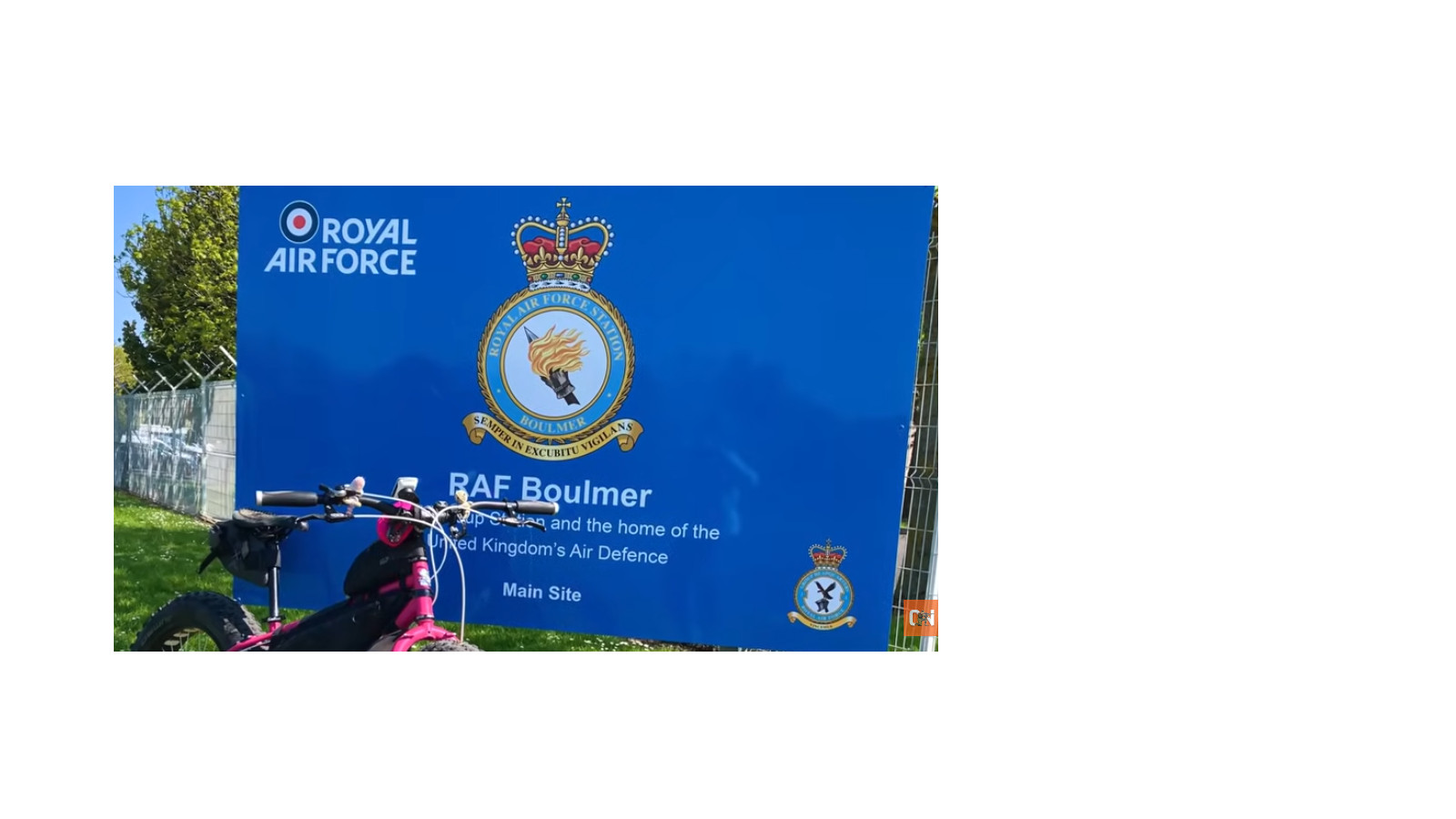
From RAF Boulmer’s real-time surveillance grid,
- to the Typhoon’s unmatched acceleration,
- to the Meteor missile’s enormous No-Escape Zone,
- to the ECRS Mk2’s electronic warfare weapons,
- to the F-35’s stealth kill-chain,
- to the 150-second Quick Reaction Alert,
This video explains why the UK’s air force is not just stron ... but untouchable.
📌 Topics Covered
- – RAF Boulmer & the UK/NATO sensor wall
- – Typhoon’s overwhelming air-to-air performance
- – Meteor’s unmatched range & no-escape capability
- – ECRS Mk2 electronic attack radar
- – QRA’s 150-second scramble advantage
- – RAF pilot training & NATO integration
- – F-35 expansion and future UK airpower
How this was made
Auto-dubbed
Audio tracks for some languages were automatically generated. Learn more
Peter Burgess COMMENTARY
I am very happy to find this video ... and to learn a little bit about the modern capabilities of the British RAF!
Peter Burgess
Transcript
- 0:00
- Although going to be experienced on the
- back space.
- What if the most dangerous air force in
- the world isn't the biggest, the
- loudest, or the one everyone keeps
- talking about, but the one that almost
- never gets mentioned at all? While
- analysts argue about American stealth,
- Chinese mass production, and Russian
- missile spam, they overlook the force
- that can clear the skies before an enemy
- pilot even understands what killed him.
- The Royal Air Force doesn't advertise
- its strength because it doesn't have to.
- Its power comes from something far more
- lethal than numbers. The RAF is
- engineered to strike first, see
- everything, and leave nothing to chance.
- So technically, Britain built a system,
- an ecosystem of fused sensors,
- electronic warfare, stealth, and
- missiles that turns an air battle into a
- one-sided execution. If you're
- intercepted by an RAF Typhoon or F-35,
- you are not entering a fight. You're
- entering its kill zone. By the time your
- radar screams, you're already marked,
- already outrun, and already losing. So,
- 1:00
- if this is the force everyone keeps
- overlooking, what else about the RAF do
- people still not understand?
- Air superiority doesn't start with the
- aircraft. It starts with who sees the
- fight first. And the brutal truth is
- this. No aircraft from any nation can
- approach British airspace without the
- RAF already watching, tracking, and
- predicting its every move. That
- advantage begins at RAF Bulmer, the
- nerve center of the UK's air defense
- network. Bulmer isn't a radar station.
- It's an information weapon. Every piece
- of airspace data from across the UK is
- sucked into this facility, processed in
- real time, infused into a picture so
- detailed that an intruding aircraft
- isn't just detected, it's understood.
- Scattered across the British coastline
- and highlands are the remote radar
- heads, quiet, isolated towers that act
- like eyes fixed permanently on the
- horizon. Together, they create a radar
- wall with no blind spots, no gaps, and
- no dead angles. An aircraft trying to
- 2:01
- slip through this network is like a
- burglar trying to sneak past flood
- lights. The moment it enters range,
- every sensor locks on, every tracking
- system calibrates, and every computer
- begins building its interception
- timeline. And this doesn't stop at
- British borders. RAF surveillance is
- woven directly into NATO's sensor grid.
- The UK sees what Norway sees. It sees
- what Iceland sees. It sees what NATO
- Awax sees hundreds of miles away. That
- fused picture gives the RAF something
- almost no air force on Earth possesses.
- Predictive control of the battle space.
- The RAF doesn't wait to react. It
- already knows who's coming, where
- they're heading, how fast they're
- moving, and what altitude they'll cross
- before the intruder even realizes it has
- been detected. Most air forces scramble
- when they spot a threat. Britain
- calculates the interception before the
- threat fully enters range. That's why
- pilots from hostile states often talk
- about sudden RAF appearances during
- attempted probing flights. There is
- nothing sudden about it. The RAF sensors
- 3:01
- have tracked every second of their
- approach and the intercept plan was
- finalized long before the intruder
- appeared on a cockpit display. By the
- time an aircraft shows up on RAF radar,
- the battle is already one step from
- finished. And that's where the next
- phase of dominance begins. Because once
- the RAF launches its fighters, the
- engagement shifts from surveillance
- superiority to something even more
- decisive, performance superiority.
- Information dominance gives the RAF the
- first move. But what happens next is
- even worse for any aircraft foolish
- enough to stay in the sky. Because once
- a Typhoon leaves the runway, the
- engagement doesn't continue. It
- collapses. The jet wasn't built to
- compete with other fighters. It was
- built to outperform them so brutally
- that the fight is mathematically decided
- before the merge. The key is energy. Air
- combat isn't about turning tighter or
- climbing faster in isolated moments.
- It's about who can burn energy and then
- snap back to full power before the
- opponent can respond. The Typhoon's
- 4:00
- EJ200 engines aren't just powerful,
- they're violent. They shove the aircraft
- back into the fight with a rate of
- acceleration that most pilots never
- experience. This is why British pilots
- describe the Typhoon's performance with
- one phrase, 'You lose me once, but you
- never lose me twice.'
- Every time the jet breaks, dives, or
- rolls, it regains its energy almost
- instantly, setting up the next shot
- while the opponent is still recovering
- from the first move. That reality was
- exposed in Singapore. During evaluation
- trials, one RAF Typhoon went up against
- three F-16s, highly respected, battle
- tested fighters. The result wasn't
- close. The Typhoon dismantled the
- formation. It didn't escape. It didn't
- evade. It dominated. Aircraft designed
- for agility were outclassed by a
- platform that regains speed faster than
- they can react. That test wasn't a
- fluke. It was a preview. Fast forward to
- recent Middle Eastern operations. Over
- an 18-month period, RAF Typhoons secured
- four confirmed air-to-air kills without
- taking a single hit. These weren't
- 5:01
- staged exercises. These were real
- engagements against real adversaries.
- The Typhoons didn't come home damaged,
- stressed, or even challenged. They came
- home untouched. And then there's the
- constant question from European
- analysts. How does the Typhoon compare
- to the Rafal? The truth is
- straightforward. Both are agile. Both
- can turn. Both are fourth generation
- plus fighters. But the Typhoon's raw
- thrust gives it something the Rafal
- can't match. The ability to bleed speed,
- execute a move, and then explode back
- into combat position before the Rafal
- can stabilize. The French jet is smooth.
- The British jet is relentless. But the
- RAF doesn't send the Typhoon into the
- sky alone. It pairs a heavyweight
- brawler with a ghost. The F-35 doesn't
- announce its presence. It arrives inside
- the enemy's blind spot. Where the
- Typhoon overwhelms the senses, the F-35
- starves them. When those two platforms
- operate together, one compresses the
- fight while the other removes any
- possibility of escape. It's a trap with
- wings. The RAF doesn't fly fighters. It
- 6:01
- flies inevitability. And once the
- aircraft establish control, the next
- layer of dominance comes from the weapon
- that makes escape physically impossible.
- The missile that finishes what the
- typhoon starts.
- 6:15
- Air combat used to be decided by who had
- 6:17
- the better jet. Today, it's decided by
- 6:20
- who fires the Meteor first because once
- 6:22
- this missile leaves the rail, the
- 6:24
- argument about who wins the fight is
- 6:25
- over. Meteor isn't an upgrade. It's a
- 6:28
- weapon that rewrote the laws of
- 6:30
- engagement. And the RAF is the air force
- 6:32
- that wields it best. Most air-to-air
- 6:34
- missiles behave like sprinting athletes.
- 6:36
- Explosive launch, fast climb, rapid
- 6:39
- burn, then a gradual coast toward the
- 6:41
- target. Meteor doesn't sprint. Meteor
- 6:44
- hunts. Its ramjet propulsion doesn't
- 6:47
- just push it forward. It sustains power
- 6:49
- for the entire flight, allowing the
- 6:51
- missile to accelerate in the very moment
- 6:52
- traditional missiles begin to die. That
- 6:55
- single feature changes everything. Its
- 6:57
- range, 125 plus miles, is already
- 7:01
- brutal. But range isn't the real terror.
- 7:04
- Meteor's no escape zone is. This is the
- 7:07
- space where once the missile locks,
- 7:08
- physics takes over, and the target
- 7:10
- cannot outrun, outclimb, or outturn the
- 7:13
- incoming kill. Meteor's no escape zone
- 7:16
- is several times larger than anything
- 7:17
- the United States feels today. Not the
- 7:20
- amrom, not the AIM 260. Nothing in the
- 7:23
- American arsenal can match its sustained
- 7:25
- energy or terminal performance. For
- 7:27
- Russian and Chinese pilots, this is a
- 7:29
- nightmare with wings. Their entire air
- 7:32
- combat doctrine revolves around one
- 7:34
- idea. Avoid the enemy's optimal shot,
- 7:36
- then disengage and reposition. Meteor
- 7:40
- removes that option. It doesn't lose
- 7:42
- speed at long distance. It doesn't give
- 7:44
- the target breathing room. Every second
- 7:46
- the enemy spends trying to run only
- 7:48
- gives Meteor more time to build energy
- 7:50
- and collapse the distance. You cannot
- 7:52
- outrun a missile whose engine is still
- 7:54
- burning. You cannot outmaneuver a
- 7:55
- missile that can adjust its profile at
- 7:57
- high speed. You cannot hide from a
- 7:59
- seeker that tracks you through evasive
- 8:00
- maneuvers. Meteor doesn't chase, it
- 8:03
- corners. And when the Typhoon or F-35
- 8:06
- fires a weapon the enemy cannot escape,
- 8:08
- the engagements become absurdly
- 8:10
- one-sided. British pilots fire from
- 8:12
- ranges where the opponent cannot
- 8:14
- respond, cannot detect the launch early
- 8:16
- enough, and cannot execute a defensive
- 8:18
- break in time to matter. That's why RAF
- 8:20
- kills look effortless. They are.
- 8:27
- Most Air Forces use radar to see. The
- 8:29
- RAF uses radar to attack. The ECRS Mark
- 8:32
- II isn't just a sensor. It's a
- 8:35
- weaponized electromagnetic system
- 8:36
- designed to break the enemy's eyes, shut
- 8:38
- down their defenses, and leave hostile
- 8:40
- pilots flying blind in their own
- 8:41
- airspace. This is the part most people
- 8:44
- never understand. RAF fighters don't
- 8:46
- survive threats. They dismantle them.
- 8:49
- ECRS Mark II gives RAF Typhoons a level
- 8:52
- of electronic aggression that rewrites
- 8:54
- the rules of aerial combat. While older
- 8:56
- radar simply detect targets, Mark 2
- 8:59
- scans the battle space, isolates hostile
- 9:01
- emitters, identifies the exact type of
- 9:03
- radar being used, and then begins
- 9:05
- tearing it apart electronically. It
- 9:07
- doesn't wait for a threat to lock on. It
- 9:10
- goes after the threat first. This is
- 9:12
- what suppression of enemy air defenses
- 9:13
- looks like in the modern age. Not by
- 9:15
- missiles alone, but by blinding the
- 9:18
- system that guides them. A Typhoon
- 9:20
- equipped with Mark 2 can locate a
- 9:22
- surfaceto-air battery from long range,
- 9:24
- jam its tracking signals, flood its
- 9:26
- receivers with phantom targets, or
- 9:28
- corrupt its guidance picture so
- 9:30
- completely that the enemy radar
- 9:32
- operators never get a stable lock. They
- 9:34
- aren't fighting the aircraft. They're
- 9:36
- fighting a ghost in the machine. And
- 9:38
- Mark 2 is only one limb of the RAF's
- 9:40
- electronic warfare body. The Ptorian
- 9:43
- defensive aid subsystem works in
- 9:44
- parallel, detecting missile launches,
- 9:47
- identifying laser threats, and deploying
- 9:48
- countermeasures automatically, faster
- 9:50
- than a human pilot could ever react.
- 9:53
- It's not a defensive suite. It's an
- 9:55
- active shield that manipulates the
- 9:56
- electromagnetic environment around the
- 9:58
- aircraft. Together, Mark 2 and Pritorian
- 10:01
- turn the Typhoon into something rare in
- 10:03
- modern warfare. A jet that attacks you
- 10:06
- and your electronics at the same time.
- 10:08
- This is why RAF pilots don't dodge
- 10:10
- threats. They don't hide from radar.
- 10:12
- They don't pray the missile misses. They
- 10:14
- jam the radar before it can lock. They
- 10:16
- blind the targeting system before it can
- 10:17
- track. They break the kill chain at the
- 10:19
- source. While most air forces scramble
- 10:22
- to avoid engagement envelopes, the RAF
- 10:24
- steps inside them, shuts them down, and
- 10:26
- leaves enemy operators staring at dead
- 10:28
- screens. Once an air force can see
- 10:31
- everything you do and shut down
- 10:32
- everything you rely on, the battle space
- 10:34
- becomes one-sided long before the first
- 10:36
- missile flies. And this dominance isn't
- 10:39
- occasional or situational. It's
- 10:41
- permanent because Britain maintains a
- 10:43
- level of readiness that keeps these
- 10:45
- fighters armed, fueled, and airborne in
- 10:47
- minutes.
- 10:52
- Air superiority means nothing if you
- 10:54
- can't bring your fighters into the sky
- 10:56
- fast enough to use it. That's where the
- 10:58
- RAF pulls ahead of almost every air
- 11:00
- force on Earth. Britain doesn't wait for
- 11:02
- a threat to develop. It launches its
- 11:04
- interceptors so quickly that hostile
- 11:06
- aircraft barely complete their approach
- 11:07
- vectors before a typhoon is already
- 11:09
- climbing to meet them. The quick
- 11:11
- reaction alert force at RAF Lossymouth
- 11:14
- and RAF Corningsby sits on a hair
- 11:16
- trigger 24 hours a day. These aren't
- 11:19
- jets sitting quietly in hangers. They
- 11:20
- are fueled, armed, manned, and ready to
- 11:23
- move the moment Bulmer gives the word.
- 11:25
- The RAF doesn't measure scramble time in
- 11:27
- minutes. It measures it in seconds. From
- 11:30
- the instant the alarm sounds, Typhoon
- 11:32
- fighters go from parked to airborne in
- 11:34
- under 150 seconds. Most Air Forces can't
- 11:37
- even get pilots strapped into their
- 11:39
- seats in that time. And once the wheels
- 11:41
- leave the runway, the acceleration is
- 11:43
- violent. The Typhoon is at Mach 1.5 in
- 11:47
- minutes, punching through the atmosphere
- 11:48
- and climbing past 30,000 ft faster than
- 11:51
- ground crews can clear the runway of
- 11:53
- exhaust heat. Within moments, it's
- 11:55
- climbing beyond 55,000 ft. A position
- 11:57
- that gives the RAF complete control over
- 11:59
- the engagement. Altitude dominance,
- 12:02
- speed dominance, and the ability to drop
- 12:04
- into or out of a fight at will. The
- 12:07
- speed of response creates a coverage
- 12:08
- radius that almost defies geography.
- 12:11
- From Cloning B, a Typhoon can intercept
- 12:13
- threats approaching the North Sea, the
- 12:14
- Channel, or even the Central UK in a
- 12:17
- fraction of the time most nations
- 12:18
- require to activate their command
- 12:20
- chains. From Lassimoth, the RAF can
- 12:22
- project a defensive wall deep into the
- 12:24
- Norwegian Sea and across the northern
- 12:26
- Arctic approaches. Any aircraft trying
- 12:28
- to probe British airspace discovers the
- 12:30
- same truth. The RAF doesn't wait for
- 12:33
- you. It meets you. And the pilots
- 12:35
- handling these interceptions aren't
- 12:36
- ordinary. They're trained to react
- 12:38
- instantly, execute flawlessly, and
- 12:41
- outthink opponents who, by the time they
- 12:43
- reach the interception point, are
- 12:45
- already behind the curve.
- 12:50
- Technology gives the RAF the tools. The
- 12:53
- pilots give it the edge. And this is
- 12:55
- where most countries lose the fight
- 12:56
- before it even starts. The RAF produces
- 12:59
- air crew who train harder, integrate
- 13:01
- deeper, and operate at a mental tempo
- 13:03
- that foreign pilots simply cannot match.
- 13:06
- The backbone of this superiority is
- 13:08
- NATO's tactical leadership program. The
- 13:11
- Crucible, where the best pilots in
- 13:12
- Europe are shaped into combat leaders.
- 13:14
- This isn't routine flight training. It's
- 13:16
- a battlefield simulation environment
- 13:18
- where RAF pilots fight against the
- 13:20
- sharpest tactics, the hardest scenarios,
- 13:22
- and the most ruthless instructors NATO
- 13:24
- can throw at them. Every sorty is a
- 13:26
- pressure test. Every mistake is
- 13:28
- exploited. Every weakness is eliminated.
- 13:30
- That's why the RAF doesn't just produce
- 13:32
- good pilots. It produces tacticians.
- 13:35
- People who can manage information,
- 13:36
- command a battle space, and coordinate
- 13:38
- multiple aircraft types inside a fight
- 13:40
- that changes by the second. They don't
- 13:42
- fly the Typhoon. They operate it. And
- 13:45
- the world has taken notice. The Indian
- 13:47
- Air Force, ranked among the top three
- 13:49
- globally in air power, has begun sending
- 13:51
- its own qualified instructors to the UK
- 13:53
- to train RAF pilots. Normally, nations
- 13:57
- send their pilots abroad to learn. India
- 13:59
- is sending instructors because the
- 14:01
- exchange improves both forces. That kind
- 14:03
- of partnership only happens when another
- 14:05
- major air power recognizes the RAF as a
- 14:08
- benchmark worth matching. The training
- 14:10
- complexity goes even further. RAF pilots
- 14:13
- now operate in advanced synthetic combat
- 14:15
- environments where they rehearse
- 14:16
- missions with F-35s, typhoons, drones,
- 14:19
- and electronic warfare platforms in the
- 14:21
- same digital battle space. They fight
- 14:23
- against virtual SAM sites, contested
- 14:25
- electronic zones, and adaptive enemy
- 14:27
- tactics. The kind of scenarios
- 14:29
- impossible to replicate in live flight.
- 14:31
- These simulations sharpen instincts and
- 14:33
- decision-making at a level most Air
- 14:35
- Forces will not reach for another
- 14:37
- decade. And then there's the fourth and
- 14:39
- fifth generation integration, the crown
- 14:42
- jewel of RAF training. Very few nations
- 14:45
- teach pilots how to fuse the raw power
- 14:47
- of a Typhoon with the invisibility and
- 14:50
- information dominance of an F-35. RAF
- 14:53
- pilots train to fly them as a single
- 14:54
- organism. The Typhoon controls the sky
- 14:57
- while the F-35 manipulates it. One
- 15:00
- overwhelms, the other deceives.
- 15:02
- Together, they trap the enemy inside a
- 15:04
- battle space the RAF pilots are already
- 15:06
- mentally controlling. Elite pilots
- 15:09
- operating elite systems, thinking faster
- 15:11
- than their opponents can react. That's
- 15:13
- what makes RAF air crew so lethal. But
- 15:16
- even their skill is only one part of the
- 15:18
- picture. Once you plug these pilots into
- 15:20
- a network that stretches across Europe
- 15:22
- and the North Atlantic, their power
- 15:23
- multiplies.
- 15:28
- An air force becomes deadly the moment
- 15:30
- it stops fighting alone. The RAF reached
- 15:33
- that point years ago. Britain isn't just
- 15:35
- operating within NATO. It is wired into
- 15:38
- NATO. Every radar picture, every sensor
- 15:41
- sweep, every AWAX track, every coastal
- 15:43
- system from Norway to Turkey feeds into
- 15:45
- a single combined battle space that RAF
- 15:48
- pilots use as their second sight. That's
- 15:50
- the real power most analysts overlook.
- 15:53
- When you challenge the RAF, you aren't
- 15:55
- fighting Britain. You're fighting the
- 15:57
- intelligence of an entire military
- 15:58
- alliance. NATO's integrated air and
- 16:01
- missile defense system AMD and its air
- 16:04
- command and control system ACCS linked
- 16:07
- the RAF into a continent size detection
- 16:09
- grid. A Russian aircraft lifting off
- 16:11
- from Kinenrad, the RAF sees it. A
- 16:14
- Chinese jet testing Europe's air
- 16:16
- boundaries, the RAF has the data. A
- 16:19
- rogue aircraft operating in the Black
- 16:21
- Sea or Baltic, that information flows
- 16:24
- directly into British systems in near
- 16:26
- real time. This isn't cooperation. This
- 16:28
- is fusion. That combined sensor picture
- 16:31
- is the kind of advantage that most
- 16:33
- nations cannot even conceptualize.
- 16:35
- While adversary pilots rely on their own
- 16:37
- radars and local networks, RAF pilots
- 16:41
- enter the sky with a map of the entire
- 16:43
- theater already built in. They know
- 16:45
- which aircraft are hostile, which ones
- 16:47
- are decoys, which radars are active, and
- 16:50
- which SAM systems are warming up.
- 16:52
- situational awareness becomes total, not
- 16:55
- because of the UK alone, but because of
- 16:57
- an alliance that fights as one machine.
- 16:59
- This means any aircraft challenging
- 17:01
- British fighters is immediately exposed
- 17:03
- across a network stretching thousands of
- 17:05
- miles. Norwegian radars track its
- 17:07
- altitude. Dutch systems track its speed.
- 17:10
- Awax aircraft map its electronic
- 17:12
- signature. And by the time it approaches
- 17:14
- British airspace, the RAF doesn't simply
- 17:17
- have a target. It has a profile, a
- 17:19
- pattern, and a predicted outcome. This
- 17:22
- is why attempting to surprise the RAF is
- 17:24
- a fantasy. You can evade a nation. You
- 17:27
- can't evade a continent. And that's the
- 17:29
- final layer of present-day air
- 17:31
- superiority. Britain fights with more
- 17:33
- information, faster information, and
- 17:35
- wider information than any adversary it
- 17:37
- might face. But the RAF isn't just
- 17:40
- relying on current strength. While this
- 17:41
- network gives the UK overwhelming
- 17:43
- dominance today, Britain is preparing
- 17:45
- something even more dangerous. a future
- 17:48
- force built from stealth, data fusion,
- 17:50
- and next generation strike capability.
- 17:53
- That's where the story pivots next
- 17:55
- toward the aircraft that will redefine
- 17:56
- what the RAF can do in the air.
- 18:02
- Air superiority today is already in
- 18:05
- Britain's favor, but the RAF is quietly
- 18:08
- building an advantage that pushes its
- 18:09
- dominance into the next decade. The
- 18:12
- expansion of the UK's F-35 fleet isn't a
- 18:14
- procurement update. It's a strategic
- 18:17
- message. The RAF isn't maintaining its
- 18:19
- lead, it's widening it. The latest
- 18:22
- order, 29 additional F-35s with 17Bs and
- 18:26
- 12 A's, pushes Britain toward a fleet of
- 18:28
- 75 fifth generation jets. This isn't a
- 18:31
- symbolic number. It represents mass
- 18:34
- stealth capability, distributed strike
- 18:37
- power, and a force that can operate
- 18:38
- across land, sea, and forward deployed
- 18:41
- NATO missions. And hidden within that
- 18:43
- order is a capability very few nations
- 18:46
- possess. Britain's F35A variant will be
- 18:49
- nuclear capable, giving the RAF a
- 18:51
- stealth delivery system that merges
- 18:52
- strategic deterrence with tactical
- 18:54
- penetration. This shifts Britain from a
- 18:56
- reactor of threats to a generator of
- 18:58
- consequences. If the Typhoon dominates
- 19:00
- the open sky, the F-35 dominates the
- 19:03
- denied sky. The environment's filled
- 19:05
- with radar nets, longrange SAMs, and
- 19:07
- electronic warfare systems designed to
- 19:09
- keep enemy aircraft out. The F-35's
- 19:12
- advantage isn't speed or thrust. It's
- 19:14
- invisibility. It enters contested
- 19:16
- airspace without lighting up the map,
- 19:18
- strikes without warning, and leaves
- 19:20
- before hostile sensors even register the
- 19:22
- attack. But the RAF isn't just buying
- 19:24
- F-35s. It's designing a doctrine where
- 19:26
- the Typhoon and the F-35 operate as a
- 19:29
- single predator. The Typhoon crushes the
- 19:31
- fight in the air while the F-35 slips
- 19:34
- past enemy radar to strike command
- 19:35
- centers, missile sites, or high-v value
- 19:38
- targets deep behind the front. One
- 19:40
- overwhelms the surface picture, the
- 19:41
- other slips beneath it. Together, they
- 19:44
- form a kill chain that no rival force
- 19:46
- can match. Brute force paired with
- 19:48
- silent penetration. And here's what
- 19:50
- elevates Britain above the rest. Most
- 19:52
- nations that operate the F-35 use it as
- 19:54
- a standalone fighter. The CharF uses it
- 19:57
- as a battlefield architect. Its sensors
- 20:00
- feed entire formations. Its data links
- 20:02
- command multiplatform strikes. Its
- 20:04
- stealth opens the door for typhoons to
- 20:06
- exploit. Britain doesn't fly the F-35 as
- 20:09
- a jet. It flies it as a network node,
- 20:11
- one that reshapes how the entire Air
- 20:13
- Force fights. With more F-35s entering
- 20:16
- service, this integration becomes
- 20:18
- deeper, faster, and more lethal. The
- 20:20
- RAF's dominance won't fade, it will
- 20:23
- intensify. And when you combine
- 20:25
- everything, the detection network, the
- 20:27
- Typhoon's performance, the meteor
- 20:29
- missile, the electronic warfare suite,
- 20:31
- the pilot expertise, and the NATO sensor
- 20:33
- grid, one reality becomes unavoidable.
- 20:37
- Untouchable isn't a claim. It's the
- 20:39
- logical conclusion. But to close this
- 20:41
- out properly, all these layers must
- 20:44
- converge into a final understanding. The
- 20:46
- RAF supremacy isn't built on one
- 20:48
- platform, one weapon, or one system.
- 20:51
- It's built on a structure designed to
- 20:53
- win the air before anyone else has a
- 20:55
- chance to contest it. The RAF's power
- 20:57
- isn't an accident, and it isn't luck.
- 20:59
- It's the result of a system built to see
- 21:01
- first, launch first, jam first, strike
- first, and finish the fight before the
- enemy understands what's happening. From
- the Typhoon's dominance to the Meteor's
- no escape reality, from Europe's
- strongest radar network to fifth
- generation stealth integration, Britain
- built an air force designed not to
- compete, but to stay untouchable. And
- when all these layers fuse into one
- machine, the question stops being
- whether the RAF can dominate the sky.
- The real question becomes, who would
- 21:28
- dare challenge it? If you found this
- 21:31
- analysis valuable, please consider
- 21:33
- subscribing to our channel for more deep
- 21:35
- dives into geopolitics. We would love to
- 21:37
- hear your thoughts. Drop your comments
- 21:39
- below and let us know what you think.
- 21:41
- Thank you for watching and see you in
- 21:43
- the next video.