
Date: 2026-03-04 Page is: DBtxt003.php txt00010516
South Sudan ... Yei
Agriculture ... Coffee
Social value in practice: Nespresso helps build and enrich the lives of South Sudanese farmers
Burgess COMMENTARY
Peter Burgess
Social value in practice: Nespresso helps build and enrich the lives of South Sudanese farmers
Nespresso has launched the first coffee to be exported from South Sudan - and the first significant non-oil export - in a bid towards rebuilding the country's economy.

The Nespresso Suluja ti South Sudan coffee forms part of Nespresso’s AAA Sustainable Quality™ Program focused on improving sustainability innovation to benefit farmers in developing countries.
South Sudan has a long history of cultivating coffee but the industry has largely been destroyed following conflict in the region. Partnering with local farmers to rebuild this important industry, Nespresso and the non-profit organisation TechnoServe, have been working to revive high quality coffee production in the country since 2011 and has invested more than CHF 700,000 in reviving the coffee industry in the Yei region of the country.
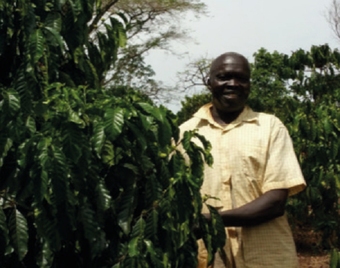
The opportunity to have a positive impact in South Sudan is significant. The country’s economy is heavily dependent on oil and foreign aid, and coffee is its first agricultural export to Europe. Coffee has the potential to facilitate a “grassroots” form of wealth generation and economic development, in contrast to the country’s centralized oil sector. Coffee would also provide much-needed income for thousands of farmers and their families living in coffee communities, and has the potential to play an important role in helping to diversify the economic base in the country. Through Nespresso’s and TechnoServe’s collaboration, the first three coffee cooperatives of South Sudan have been established.
As Joseph Malish Thomas, a South Sudanese farmer taking part in the Nespresso AAA Program commented; “I have seen that there is great change within the community. We want to produce the right quality. People now have hope. We will be able to pay school fees for children and in the end develop the country.”
Around 300 farmers have joined the three newly created coffee cooperatives, which have received support to enable farmer mobilization, registration and quality processing, as well as trainings to form a well-designed and -managed coffee cooperative. The farmers in each cooperative have elected leaders and oversight committees to establish strong governance. The cooperatives were supported to create financial transparency sheets to clearly present their financial performance.
South Sudanese farmers’ lives enriched
As part of the project, TechnoServe, on behalf of Nespresso, is providing training to smallholder farmers to create coffee nurseries, plant coffee trees and improve their agricultural practices to increase their productivity and the quality of their coffee. Seven farmer trainers were recruited amongst the local community and were taught to deliver agronomy trainings. 500 farmers have started attending the monthly agronomy training program, which launched in August 2015. Two coffee nurseries were set up.
“I have seen that there is great change within the community. We want to produce the right quality. People now have hope. We will be able to pay school fees for children and in the end develop the country,” said Joseph Malish Thomas, a South Sudanese farmer and leader of the Inutu cooperative.
THE STORY OF ISAYA LOKOLONG LATIYO
In a village with the musical name of “KweKwete”, Isaya Lokolong Latiyo was born and raised. Close by to the newly established cooperative wet mill of Arikose, Isaya tends to the coffee farm he inherited from his father. Of Isaya’s six children, one works as a police officer, one serves as a customs officer at the border and three attend school. The family income has come entirely from farming, especially coffee, which earned the cash to educate Isaya’s children. Isaya also farms other crops including maize, rice, beans, sesame and cassava in order to feed his family. Of his 2.5 hectares of land, one hectare is dedicated to coffee.
In addition to using his coffee earnings to pay school fees, cover hospital bills and hire farm labor, Isaya used his 2014 harvest earnings to invest in a brickmaking business. He spent $300 of his earnings to make 15,000 bricks and plans to use most to build a small warehouse on his farm. Next year, he plans to allocate some of his coffee profits to source the other necessary materials to construct the store while starting to sell bricks. By investing his coffee profits to engage in other money-making activities Isaya plans to create a more diverse and secure income for his family.
“Thanks to TechnoServe and Nespresso, which supported setting up a wet mill, it has given me,as a woman, less hard work – especially hulling [removing coffee beans from dried cherries]. I was using a grinding stone or a mortar; but now, we are using the wet mill for processing,” said Hellena Atiku, a South Sudanese farmer from the Inutu Cooperative.
In Isaya’s own words, “the wet mill presents a fresh opportunity to us. If it had been like this before, every farmer would have coffee trees all round their houses. In the time of my father, we had to transport it all the way to Juba. The price was low and much was lost to transport and informal taxes. Now, the money just comes to our pockets directly. Growing coffee will come with a lot of changes. At the moment, [this community] is called a village, but in the future, I envision this to look like a small town.”
To find out more about Nespresso's first coffee launched in South Sudan, click here.